
Metformin,
does it really help with Reduction of glycemia (HbA1c and fasting glucose) in type 2 diabetes, especially in newly diagnosed overweight patients, including evidence that intensive treatment reduced mortality and myocardial infarction in that population?
research showsMetformin is rated A because large and consistent reductions in HbA1c and fasting glucose have been repeated across many randomized trials in adults with type 2 diabetes. In a 35-trial meta-analysis, monotherapy lowered HbA1c by a mean 1.12 percentage points versus placebo; in a large 29-week placebo-controlled trial, HbA1c was 7.1% versus 8.6% and fasting glucose was 189 versus 244 mg/dL. UKPDS 34 also showed long-term glycemic separation and a clinical-outcome signal, but the hard-outcome benefit centered on an overweight subgroup with newly diagnosed disease, and a 2020 Cochrane review found continuing uncertainty for patient-important long-term outcomes. This A therefore applies to glycemic control as claimed, not to weight neutrality or a universal cardiovascular or mortality benefit. Gastrointestinal effects, lower vitamin B12, rare lactic acidosis, and renal restrictions are separated under safety.
ads claimMarketing and abbreviated summaries can expand first-line status into claims that metformin is a weight-loss drug, a universal cardiovascular protector, or a longevity medicine. The well-established effect is lower HbA1c and fasting glucose in type 2 diabetes. Average weight effects are generally neutral or modestly reducing, while cardiovascular and mortality effects require separate judgments by population and comparator.
Useful facts when choosing a product
- Metformin is a prescription biguanide available in immediate-release and extended-release formulations, with doses titrated according to formulation, kidney function, and tolerability. Instructions for different formulations are not interchangeable.
- Used alone, metformin rarely causes hypoglycemia, but the risk rises when it is combined with insulin or a sulfonylurea. Meal planning, glucose monitoring, and adjustment of companion medicines should follow the prescribing plan.
- Diarrhea, nausea, abdominal discomfort, and flatulence are common, and long-term use can lower vitamin B12 concentrations. Blood counts and vitamin B12 should be assessed when symptoms or risk factors warrant it.
- Severe renal impairment is a contraindication because accumulation raises the risk of lactic acidosis. Clinicians should decide whether to pause it around acute dehydration, hypoxia, severe infection, surgery, or iodinated-contrast procedures.
Chamgap Semantic Classification Code
Candidate index · review held
M.metformin.oral.glycemia-hba1c-and-fasting-glucose-in-type-2-diabetes-especially-in-newly-diagnosed-overweight-patients-including-evidence-that-intensive-treatment-reduced-mortality-and-myocardial-infarction-in-that-population.reduce.MULTIMedicinal interventions > Metformin > Oral > glycemia (HbA1c and fasting glucose) in type 2 diabetes, especially in newly diagnosed overweight patients, including evidence that intensive treatment reduced mortality and myocardial infarction in that population > Reduction claim > Multiple: primary unresolved
An automated migration candidate, not an issued permanent code; exact claim scope remains under review. This machine-generated migration candidate helps retrieval but is not a permanent assignment. The original verdict ID and URL remain authoritative.
What the research actually shows
DeFronzo and Goodman in 1995 randomized 289 adults inadequately controlled by diet to metformin or placebo and another 632 inadequately controlled by a sulfonylurea to combination or single-drug groups. At week 29 in the placebo-controlled protocol, HbA1c was 7.1% versus 8.6% and fasting glucose was 189 versus 244 mg/dL. Hirst in 2012 pooled 35 fixed-dose randomized trials of at least 12 weeks and estimated that metformin monotherapy lowered HbA1c by 1.12 percentage points versus placebo, although heterogeneity was I-squared 80%. UKPDS 34 followed 753 newly diagnosed overweight participants for a median 10.7 years and reported HbA1c of 7.4% versus 8.0% plus reductions in diabetes-related composite outcomes and death under a metformin-intensive policy. In contrast, the 2020 Gnesin Cochrane review of 18 longer trials and 10,680 participants judged evidence for patient-important comparative outcomes to remain very uncertain. Prediabetes prevention in verdict 871 is a different axis; this verdict concerns glucose lowering after type 2 diabetes is established.
Why this is classified as A (86)
A with 86 points is not based on HbA1c and fasting glucose surrogates alone. In 753 newly diagnosed overweight participants in UKPDS 34, the metformin-intensive policy reduced diabetes-related death by 42%, all-cause mortality by 36%, and myocardial infarction by 39%, with persistence in the 2024 long-term follow-up. Robust glycemic lowering across randomized trials provides supporting evidence. A subsequent randomized-trial meta-analysis, however, found no significant all-cause mortality reduction, RR 0.96, and the positive evidence is concentrated in a single UKPDS lineage and a specific subgroup; it should not be generalized as universal cardiovascular protection. Gastrointestinal effects, vitamin B12 lowering, lactic acidosis, and renal restrictions remain separate safety issues.
Counterpoint. Metformin alone may not achieve the HbA1c target, and its effect can diminish as diabetes progresses. Cardiovascular disease, heart failure, chronic kidney disease, or obesity may make an SGLT2 inhibitor, a GLP-1-based medicine, or another agent preferable early or in combination, so first-line status is not a universal one-drug answer.
Rejudgment record. Consistency recalibration (rule 1 surrogate clarification) — Prioritized large and repeated effects across randomized trials and meta-analysis for the claim-matched outcomes of HbA1c and fasting glucose in type 2 diabetes, with parity to the A grade for glycemic control in insulin glargine verdict 895, while limiting UKPDS hard outcomes to their overweight-subgroup context and recording uncertainty in long-term patient-important outcomes as a separate subclaim
Sub-claim grades by effect
This ingredient is marketed for several effects. A single overall grade blends strong and weak claims together, so each effect is graded separately here. The overall grade reflects the strongest disconfirming or core claim.
| Effect (sub-claim) | Grade | Basis |
|---|---|---|
| Reduction of HbA1c in adults with type 2 diabetes | A | A 1.12-percentage-point reduction versus placebo across 35 trials and values of 7.1% versus 8.6% in a large placebo-controlled trial provide large, repeated direct evidence. |
| Reduction of fasting glucose in adults with type 2 diabetes | A | Values of 189 versus 244 mg/dL in the 29-week placebo-controlled trial and concordant results from longer trials provide direct support. |
| Reduction of cardiovascular events and mortality in type 2 diabetes | B | UKPDS showed a positive signal in newly diagnosed overweight participants, but the 2020 Cochrane review found low certainty for comparative patient-important long-term outcomes. |
Cross-check — AI research and Codex final gate
Evidence Table
| Study | Design | Sample | Funding | Endpoint | Result | Weight |
|---|---|---|---|---|---|---|
| DeFronzo RA, Goodman AM. Multicenter Metformin Study Group trial. 1995 | Two multicenter randomized double-blind placebo- and active-controlled trials | 921 participants total; 289 in the placebo-controlled protocol and 632 inadequately controlled with a sulfonylurea | Supported by Bristol-Myers Squibb with investigator participation | Fasting plasma glucose and glycated hemoglobin at 29 weeks | In the placebo-controlled protocol, metformin produced lower HbA1c, 7.1% versus 8.6%, and fasting glucose, 189 versus 244 mg/dL. | Key direct placebo-controlled efficacy evidence |
| Hirst JA et al. 2012 | Systematic review and meta-analysis of randomized controlled trials | 35 trials in the main analysis and 7 dose-comparison trials | Mixed sponsorship across underlying trials; limited reporting for review-level support | HbA1c change over at least 12 weeks and dose response | Monotherapy lowered HbA1c by 1.12 percentage points versus placebo, with significant reductions also repeated in add-on settings, although heterogeneity was high. | Key replicated synthesis |
| UKPDS 34 (UK Prospective Diabetes Study Group trial). 1998 | Multicenter long-term randomized glycemic-policy trial | 753 overweight participants with newly diagnosed disease; median 10.7 years | Mixed United Kingdom public, charitable, and industry support | HbA1c, diabetes-related composite outcomes, diabetes-related death, and all-cause mortality | The metformin-intensive policy achieved HbA1c of 7.4% versus 8.0% and reduced composite and mortality outcomes, but the evidence was limited to newly diagnosed overweight participants. | Long-term glycemic and qualified hard-outcome support |
| Gnesin F et al. 2020 | Cochrane systematic review of randomized trials lasting at least one year | 18 randomized trials and 10,680 participants | Cochrane and academic work with mixed sponsorship among included trials | Mortality, serious adverse events, cardiovascular events, quality of life, and end-stage kidney disease | Whether metformin monotherapy improves patient-important long-term outcomes remained unclear because certainty was low and reporting sparse. | Limits generalization to hard outcomes |
Receipt — 6 References
All 6 cited sources were verified for existence at the original page (as of 2026-07-23).
Final verification and publication gate: Codex · Evidence date: 2026-07-23 · Corrections: none
Cite this verdict
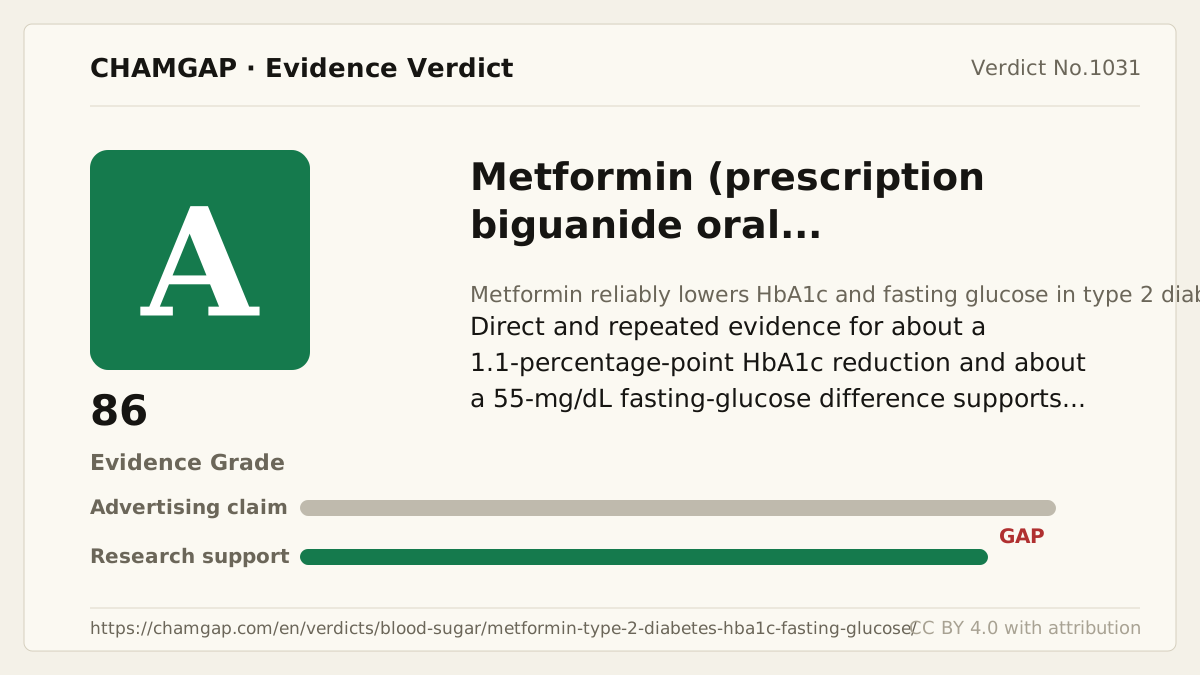
[Chamgap] Metformin x reduction of HbA1c and fasting glucose in adults with type 2 diabetes — Evidence Grade A·86. 6 cited sources checked. Source: https://chamgap.com/en/verdicts/blood-sugar/metformin-type-2-diabetes-hba1c-fasting-glucose/ · CC BY 4.0CC BY 4.0 — free to use with attribution; do not distort grades, numbers, or verdict meaning.
What this document does and does not do
Chamgap is an information source. It reports what research has and has not confirmed; it does not tell readers what to take or buy. That decision belongs to readers and, when needed, medical or legal professionals. This verdict reflects literature available up to the search date and may change as new research appears. Nothing here is medical advice.