
Empagliflozin,
does it really help with Glycemic control in type 2 diabetes and reduction of cardiovascular and kidney events?
research showsEmpagliflozin is rated A because large randomized trials repeatedly reduce direct hard outcomes including heart-failure hospitalization and chronic kidney disease progression. EMPA-REG OUTCOME reported hazard ratios of 0.62 for cardiovascular death and 0.65 for heart-failure hospitalization among 7,020 participants. In 3,730 EMPEROR-Reduced participants, heart-failure hospitalization had a hazard ratio of 0.69, while cardiovascular death was nonsignificant at 0.92. EMPA-KIDNEY reported 0.72 for kidney disease progression or cardiovascular death among 6,609 participants and was analyzed by Oxford independently from its funding source. Glucose lowering is a surrogate and cardiovascular-death results are mixed, but replicated heart-failure and kidney hard outcomes across major trials and the SGLT2 inhibitor class support A with 85 points.
ads claimMarketing can expand cardiorenal protection into a longevity drug or major weight-loss treatment for healthy people. Benefits must be interpreted within clinical indications such as type 2 diabetes, heart failure, or chronic kidney disease at risk of progression; they do not establish general-purpose weight loss.
Useful facts when choosing a product
- Empagliflozin is a prescription SGLT2 inhibitor sold as Jardiance. Treatment commonly starts at 10 mg once daily, with 25 mg used when appropriate for glycemic control; directions vary by indication and kidney function.
- Heart-failure and chronic-kidney-disease event reduction occurs independently of glucose lowering and was also shown in some patients without diabetes. This applies to patients with those diseases, not to prevention or weight loss in otherwise healthy people.
- Genital fungal infections and increased urination are common, while volume depletion and hypotension can occur. Hydration and kidney function require attention in older adults, diuretic users, and people at risk of dehydration.
- Rare ketoacidosis can occur even with normal or only modestly elevated glucose. Acute illness, fasting, surgery, heavy alcohol use, and insulin deficiency increase risk, so symptoms require prompt discontinuation and medical assessment.
Chamgap Semantic Classification Code
Candidate index · review held
UNK.empagliflozin.UNK.glycemic-control-in-type-2-diabetes-and-reduction-of-cardiovascular-and-kidney-events.reduce.MULTIUnknown > Empagliflozin > Unknown > Glycemic control in type 2 diabetes and reduction of cardiovascular and kidney events > Reduction claim > Multiple: primary unresolved
An automated migration candidate, not an issued permanent code; exact claim scope remains under review. This machine-generated migration candidate helps retrieval but is not a permanent assignment. The original verdict ID and URL remain authoritative.
What the research actually shows
EMPA-REG OUTCOME assigned patients with type 2 diabetes and established cardiovascular disease to empagliflozin 10 or 25 mg or placebo on top of standard care and reduced cardiovascular death and heart-failure hospitalization. EMPEROR-Reduced found that 10 mg reduced cardiovascular death or heart-failure hospitalization in heart failure with ejection fraction of 40% or less, irrespective of diabetes. EMPA-KIDNEY found that 10 mg reduced kidney disease progression or cardiovascular death across a broad chronic kidney disease population; Oxford designed, conducted, and analyzed this academically led trial. A 637-person, 24-week randomized trial also confirmed glycemic control as add-on to metformin, lowering HbA1c by about 0.6 percentage points more than placebo.
Why this is classified as A (85)
EMPA-REG with 7,020 participants, EMPEROR-Reduced with 3,730, and EMPA-KIDNEY with 6,609 repeatedly reduced direct outcomes such as heart-failure hospitalization and kidney progression in distinct high-risk populations, retaining A. Cardiovascular death was nonsignificant in EMPEROR-Reduced with a hazard ratio of 0.92, while hospitalization with a hazard ratio of 0.69 drove the benefit. Industry funding alongside independent Oxford analysis and the HbA1c surrogate lower the score to 85. Genital infection, dehydration, and euglycemic ketoacidosis remain separate safety issues.
Counterpoint. An A does not mean everyone should take the drug; it means clinical-event evidence is very strong in indicated patients. A clinician must still assess kidney function, volume status, infection and ketoacidosis risk, and concomitant medicines.
Rejudgment record. New verdict — Retained A because EMPA-REG, EMPEROR, EMPA-KIDNEY, and the SGLT2 inhibitor class repeatedly reduced hard outcomes of heart-failure hospitalization and kidney disease progression, while adjusting the score for nonsignificant cardiovascular death in EMPEROR-Reduced, hospitalization-driven benefit, the coexistence of industry funding and independent analysis, and the HbA1c surrogate
Sub-claim grades by effect
This ingredient is marketed for several effects. A single overall grade blends strong and weak claims together, so each effect is graded separately here. The overall grade reflects the strongest disconfirming or core claim.
| Effect (sub-claim) | Grade | Basis |
|---|---|---|
| Reduced heart-failure hospitalization | A | EMPA-REG and EMPEROR consistently reduced this hard outcome. |
| Reduced kidney disease progression | A | EMPA-KIDNEY showed a hard-outcome hazard ratio of 0.72 under independent analysis. |
| Reduced cardiovascular death | B | EMPA-REG showed a strong reduction, but EMPEROR-Reduced was nonsignificant with a hazard ratio of 0.92. |
| Glycemic control measured by HbA1c | B | This is a surrogate outcome with a moderate reduction magnitude. |
| Weight loss in healthy people without diabetes | ? | Direct efficacy evidence for this purpose is a separate question. |
Cross-check — AI research and Codex final gate
Evidence Table
| Study | Design | Sample | Funding | Endpoint | Result | Weight |
|---|---|---|---|---|---|---|
| Zinman B et al. 2015 EMPA-REG OUTCOME | Multicenter randomized double-blind placebo-controlled cardiovascular outcome trial | 7,020 patients with type 2 diabetes and established cardiovascular disease | Boehringer Ingelheim and Eli Lilly | Major cardiovascular events, cardiovascular death, all-cause death, and heart-failure hospitalization | Hazard ratios were 0.62 for cardiovascular death, 0.68 for all-cause death, and 0.65 for heart-failure hospitalization. | Key large hard-outcome randomized trial |
| Packer M et al. 2020 EMPEROR-Reduced | Multinational randomized double-blind placebo-controlled heart-failure outcome trial | 3,730 patients with heart failure and reduced ejection fraction | Boehringer Ingelheim and Eli Lilly | Cardiovascular death or heart-failure hospitalization and total heart-failure hospitalizations | The primary composite hazard ratio was 0.75, driven by heart-failure hospitalization at 0.69, while cardiovascular death was nonsignificant at 0.92. | Replicating large hard-outcome randomized trial |
| EMPA-KIDNEY Collaborative Group 2022 | Academically led multinational randomized double-blind placebo-controlled kidney outcome trial | 6,609 patients with chronic kidney disease at risk of progression | Boehringer Ingelheim and Eli Lilly grants plus public core support from UK MRC, BHF, and others; independent Oxford analysis | Kidney disease progression or cardiovascular death | Events occurred in 13.1% versus 16.9%, hazard ratio 0.72, with benefit across diabetes status. | Independently analyzed large hard-outcome randomized trial |
| Häring HU et al. 2014 | Randomized double-blind placebo-controlled glycemic trial | 637 patients with type 2 diabetes inadequately controlled by metformin | Boehringer Ingelheim | Change in HbA1c at 24 weeks | The 10-mg and 25-mg doses lowered HbA1c by about 0.6 percentage points more than placebo. | Supporting randomized glycemic surrogate trial |
Receipt — 4 References
All 4 cited sources were verified for existence at the original page (as of 2026-07-19).
Final verification and publication gate: Codex · Evidence date: 2026-07-19 · Corrections: none
Cite this verdict
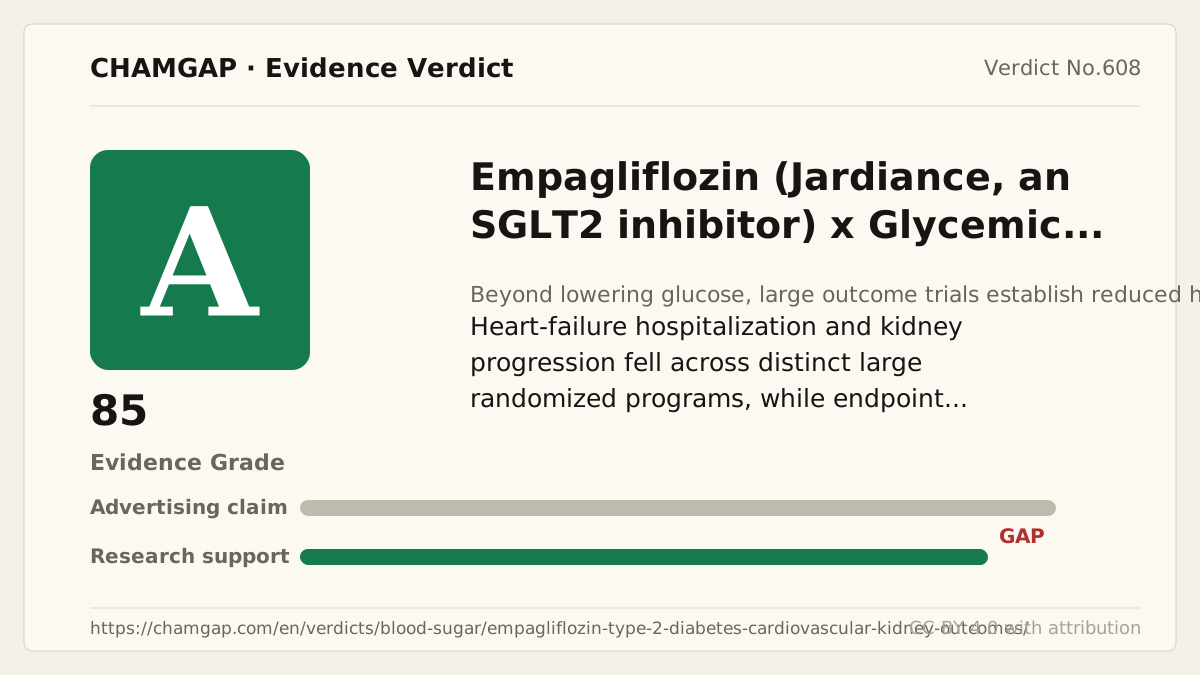
[Chamgap] Empagliflozin x type 2 diabetes control and reduced cardiovascular and kidney events — Evidence Grade A·85. 4 cited sources checked. Source: https://chamgap.com/en/verdicts/blood-sugar/empagliflozin-type-2-diabetes-cardiovascular-kidney-outcomes/ · CC BY 4.0CC BY 4.0 — free to use with attribution; do not distort grades, numbers, or verdict meaning.
What this document does and does not do
Chamgap is an information source. It reports what research has and has not confirmed; it does not tell readers what to take or buy. That decision belongs to readers and, when needed, medical or legal professionals. This verdict reflects literature available up to the search date and may change as new research appears. Nothing here is medical advice.