
Tibolone,
does it really help with Relief of postmenopausal vasomotor symptoms such as hot flashes and night sweats?
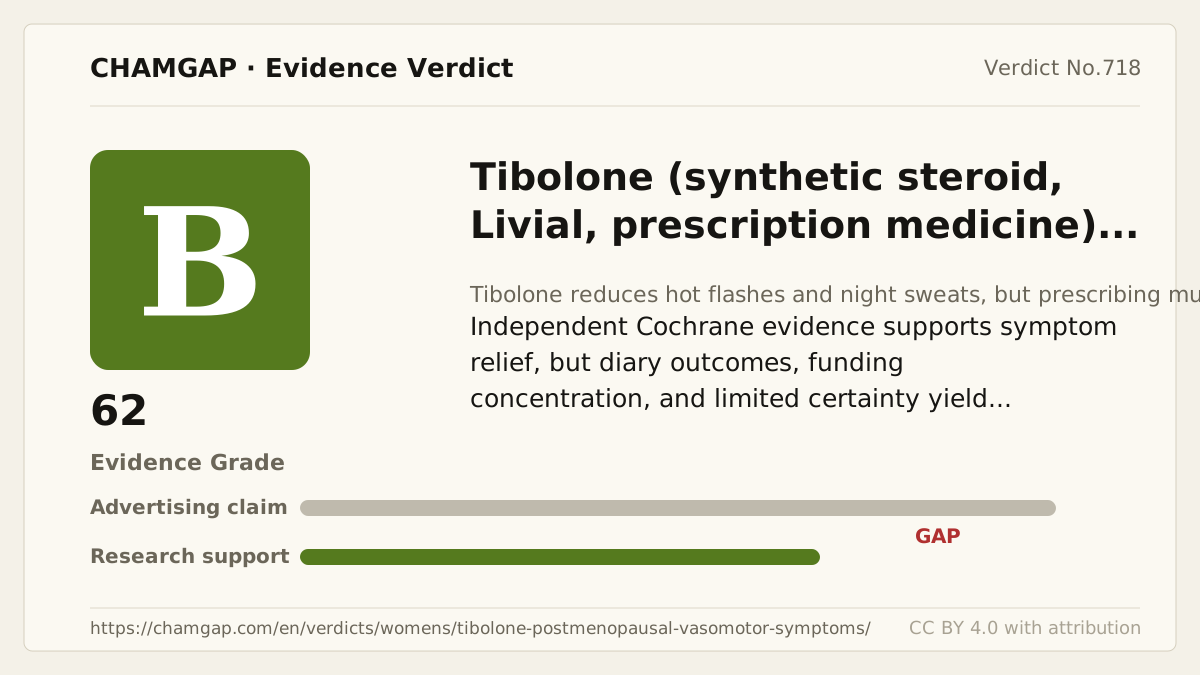
research showsTibolone is rated B because an independent Cochrane synthesis supports relief of postmenopausal hot flashes and night sweats. Seven placebo-controlled trials involving 1,657 women produced an SMD of minus 0.99 for vasomotor symptoms, and benefit remained minus 0.61 after high-attrition-bias trials were removed. The outcomes were direct but symptom-based hot-flash and night-sweat diaries, many included trials were manufacturer funded or had unclear funding, and certainty was limited. Independent meta-analysis supports B, but these limitations place it at the lower end with 62 points. Stroke in older women, breast-cancer recurrence, and venous thrombosis remain separate safety issues rather than efficacy downgrades.
ads claimDescriptions such as natural hormone balance, reversal of aging, or restoration of femininity obscure that tibolone is a prescription synthetic steroid with restricted use and important risks. Direct evidence supports relief of vasomotor symptoms in appropriately selected postmenopausal women, not cancer or cardiovascular prevention or universal vitality enhancement.
Useful facts when choosing a product
- Tibolone is an oral prescription synthetic steroid that forms estrogenic, progestogenic, and androgenic metabolites, and a common dose is 2.5 mg once daily.
- It is used after menopause is established; starting too soon after the final menstrual period can increase irregular bleeding, so the product label and prescriber's instructions take priority.
- A history or suspicion of breast cancer, unexplained vaginal bleeding, current or prior thromboembolic disease, stroke or myocardial infarction, and severe liver disease require contraindication screening or strong caution.
- Age, time since menopause, uterine and breast history, and thrombotic and cardiovascular risk should be assessed before treatment; new vaginal bleeding, chest pain, breathlessness, or unilateral weakness requires urgent care.
Chamgap Semantic Classification Code
Candidate index · review held
M.tibolone.UNK.postmenopausal-vasomotor-symptoms-such-as-hot-flashes-and-night-sweats.relieve.placeboMedicinal interventions > Tibolone > Unknown > postmenopausal vasomotor symptoms such as hot flashes and night sweats > Symptom-relief claim > Placebo
An automated migration candidate, not an issued permanent code; exact claim scope remains under review. This machine-generated migration candidate helps retrieval but is not a permanent assignment. The original verdict ID and URL remain authoritative.
What the research actually shows
Formoso 2016 reviewed 46 trials with 19,976 women and reported an SMD of -0.99 versus placebo for vasomotor symptoms across seven trials with 1,657 women, attenuating to -0.61 after high-attrition-bias trials were removed. Combined hormone therapy was slightly more effective than tibolone. Swanson 2006 randomized 396 women with at least seven moderate or severe hot flashes per day to 1.25 mg, 2.5 mg, or placebo and confirmed greater hot-flash reduction with both doses. On the safety track, LIFT enrolled 4,538 osteoporotic women aged 60 to 85 years and found increased stroke risk, while LIBERATE enrolled 3,098 women treated for breast cancer and found recurrence in 15.2% versus 10.7%, with a hazard ratio of 1.40.
Why this is classified as B (62)
The independent Cochrane synthesis of seven placebo-controlled trials and persistence of benefit at SMD minus 0.61 in sensitivity analysis support B for direct symptom relief. Hot-flash and night-sweat diary outcomes, high attrition bias, manufacturer funding concentration, and limited certainty place the verdict at lower-B with 62 points. Stroke, breast-cancer recurrence, and venous thrombosis remain separate safety concerns.
Counterpoint. When hot flashes and night sweats substantially impair sleep and daily life, tibolone can be an evidence-supported option. Prescribing requires a joint assessment of symptom burden and individual risk, with the shortest appropriate duration and a monitoring plan.
Rejudgment record. New verdict — Accepted the independent Cochrane synthesis of seven placebo-controlled trials with 1,657 women and persistence at SMD minus 0.61 after excluding high-attrition-bias studies, but assigned lower-B for symptom-diary outcomes, limited certainty, attrition bias, and manufacturer funding concentration; stroke, breast-cancer recurrence, and venous thrombosis were kept under safety
Sub-claim grades by effect
This ingredient is marketed for several effects. A single overall grade blends strong and weak claims together, so each effect is graded separately here. The overall grade reflects the strongest disconfirming or core claim.
| Effect (sub-claim) | Grade | Basis |
|---|---|---|
| Relief of postmenopausal hot flashes and night sweats | B | Multiple placebo-controlled trials and a moderate-certainty meta-analysis support direct symptom relief. |
| Other benefits such as bone density and fracture outcomes | B | The large LIFT trial found fewer fractures, but participants were older osteoporotic women and stroke risk must be considered separately. |
| Natural hormone balance or reversal of aging | ? | No human efficacy literature evaluates this synthetic prescription steroid under those marketing concepts. |
| Stroke risk in older women and recurrence risk after breast cancer | B | Large randomized trials directly establish this safety track, which is kept separate from symptom efficacy. |
Cross-check — AI research and Codex final gate
Evidence Table
| Study | Design | Sample | Funding | Endpoint | Result | Weight |
|---|---|---|---|---|---|---|
| Formoso G et al. 2016 | Cochrane systematic review and meta-analysis of randomized trials | Forty-six trials with 19,976 women; seven placebo-controlled vasomotor-symptom trials with 1,657 women | Independent Cochrane synthesis; many included trials were industry funded or did not disclose funding | Vasomotor symptoms including hot flashes and night sweats | The SMD versus placebo was -0.99 (95% CI -1.10 to -0.89), remaining -0.61 (95% CI -0.73 to -0.49) after high-attrition-bias trials were removed. | Key direct pooled efficacy evidence |
| Swanson SG et al. 2006 | Multicenter randomized double-blind placebo-controlled trial | Three hundred ninety-six postmenopausal women with moderate to severe vasomotor symptoms | Product-development trial with manufacturer involvement | Twelve-week hot-flash frequency and severity diaries | The 2.5-mg dose reduced hot flashes more than placebo at weeks 4, 8, and 12, and 1.25 mg did so at weeks 8 and 12. | Direct placebo-controlled confirmation |
| Cummings SR et al. 2008 LIFT | Large randomized double-blind placebo-controlled trial | 4,538 osteoporotic women aged 60 to 85 years | Sponsored by manufacturer Organon | Long-term fracture, cancer, cardiovascular, and stroke outcomes | Fractures decreased, but stroke risk increased in older women and the trial was stopped early. | Key safety evidence separate from symptom efficacy |
| Kenemans P et al. 2009 LIBERATE | Large randomized double-blind placebo-controlled noninferiority trial | 3,098 women in the intention-to-treat population after breast-cancer surgery with vasomotor symptoms | Sponsored by manufacturer Organon | Breast-cancer recurrence and vasomotor symptoms | Recurrence was 15.2% with tibolone and 10.7% with placebo, HR 1.40 (95% CI 1.14 to 1.70), while symptoms improved. | Direct safety evidence supporting contraindication after breast cancer |
Receipt — 4 References
All 4 cited sources were verified for existence at the original page (as of 2026-07-19).
Final verification and publication gate: Codex · Evidence date: 2026-07-19 · Corrections: none
Cite this verdict
[Chamgap] Tibolone x relief of postmenopausal vasomotor symptoms — Evidence Grade B·62. 4 cited sources checked. Source: https://chamgap.com/en/verdicts/womens/tibolone-postmenopausal-vasomotor-symptoms/ · CC BY 4.0CC BY 4.0 — free to use with attribution; do not distort grades, numbers, or verdict meaning.
What this document does and does not do
Chamgap is an information source. It reports what research has and has not confirmed; it does not tell readers what to take or buy. That decision belongs to readers and, when needed, medical or legal professionals. This verdict reflects literature available up to the search date and may change as new research appears. Nothing here is medical advice.