
Antenatal betamethasone,
does it really help with Reduced neonatal and perinatal death and respiratory distress syndrome in imminent preterm birth at 24 to 34 weeks?
research showsAntenatal betamethasone is rated A when used for women with a high likelihood of preterm birth at 24 to 34 weeks in settings with accurate gestational-age assessment and adequate maternal and newborn care. The 2020 Cochrane review included 27 randomized trials, 11,272 women, and 11,925 neonates and found high-certainty reductions in neonatal death, with RR 0.78; perinatal death, with RR 0.85; and respiratory distress syndrome, with RR 0.71. WHO also recommends antenatal corticosteroids under these conditions. Late-preterm use and repeat courses do not have the same benefit-risk evidence.
ads claimThis is a prescription obstetric intervention for imminent preterm birth, not a general pregnancy lung-health injection or routine repeat preventive treatment. Universal extension into late preterm gestation or claims that repeated courses are harmless exceed the evidence.
Useful facts when choosing a product
- A common antenatal betamethasone course is 12 mg by intramuscular injection twice, 24 hours apart, for a total of 24 mg; obstetric specialists and local protocols direct actual treatment.
- WHO conditions include reliable gestational-age assessment, a high likelihood of birth within seven days, no clinical evidence of maternal infection, and access to adequate childbirth and preterm-newborn care at 24 to 34 weeks.
- Betamethasone can transiently increase maternal glucose, so diabetes and gestational diabetes require glucose monitoring and possible treatment adjustment.
- Unnecessary repeat courses raise fetal-growth and long-term-safety concerns and must be distinguished from the established benefit of a single course; suspected infection requires obstetric assessment.
Chamgap Semantic Classification Code
Candidate index · review held
M.antenatal-betamethasone.intramuscular.neonatal-and-perinatal-death-and-respiratory-distress-syndrome-in-imminent-preterm-birth-at.reduce.UNKMedicinal interventions > Antenatal betamethasone > Intramuscular > neonatal and perinatal death and respiratory distress syndrome in imminent preterm birth at > Reduction claim > Unknown
An automated migration candidate, not an issued permanent code; exact claim scope remains under review. This machine-generated migration candidate helps retrieval but is not a permanent assignment. The original verdict ID and URL remain authoritative.
What the research actually shows
McGoldrick and colleagues synthesized 27 randomized trials from 20 countries involving 11,272 women and 11,925 neonates. Neonatal death had RR 0.78 in 22 trials and 10,609 infants, perinatal death had RR 0.85 in 14 trials and 9,833 infants, and respiratory distress syndrome had RR 0.71 in 26 trials and 11,183 infants; all were high-certainty findings. Intraventricular hemorrhage was probably reduced, with RR 0.58, but certainty was moderate because of indirectness. The 1972 Liggins and Howie controlled betamethasone trial supplied foundational ingredient-specific evidence. WHO in 2022 recommended treatment at 24 to 34 weeks when gestational age is accurately known, birth is likely soon, maternal infection is absent, and adequate childbirth and preterm-newborn care are available.
Why this is classified as A (94)
A high-certainty synthesis of 27 randomized trials showed reductions in the direct clinical outcomes of neonatal death, perinatal death, and respiratory distress syndrome. This is superiority over placebo or no treatment on hard outcomes, not active-control noninferiority or a surrogate result, supporting A with 94 points. Monitoring and eligibility conditions are safety matters separate from efficacy.
Counterpoint. Treatment should not be expanded broadly to pregnancies without imminent preterm birth, and late-preterm or repeat-course findings should not be treated as equivalent to a single course at 24 to 34 weeks.
Rejudgment record. New verdict — Accepted high-certainty superiority over placebo or no treatment for the hard outcomes of neonatal and perinatal death and respiratory distress syndrome across 27 randomized trials
Sub-claim grades by effect
This ingredient is marketed for several effects. A single overall grade blends strong and weak claims together, so each effect is graded separately here. The overall grade reflects the strongest disconfirming or core claim.
| Effect (sub-claim) | Grade | Basis |
|---|---|---|
| Reduced neonatal and perinatal death | A | High-certainty evidence across multiple randomized trials showed RR 0.78 for neonatal death and RR 0.85 for perinatal death. |
| Reduced neonatal respiratory distress syndrome | A | High-certainty evidence from 26 trials and 11,183 infants showed a reduction with RR 0.71. |
| Reduced intraventricular hemorrhage | B | The risk fell with RR 0.58, but certainty was moderate because of indirectness. |
Cross-check — AI research and Codex final gate
Evidence Table
| Study | Design | Sample | Funding | Endpoint | Result | Weight |
|---|---|---|---|---|---|---|
| McGoldrick E et al. 2020 Cochrane review | Systematic review and meta-analysis of randomized trials | 27 trials, 11,272 women, and 11,925 neonates | Academic Cochrane review; no topic-related author conflicts reported | Perinatal death, neonatal death, respiratory distress syndrome, and intraventricular hemorrhage | Neonatal death fell with RR 0.78, perinatal death with RR 0.85, and respiratory distress syndrome with RR 0.71; all were high-certainty reductions. | Key synthesis of hard outcomes across multiple randomized trials |
| Liggins GC and Howie RN. 1972 | Controlled clinical trial of antenatal betamethasone | 282 pregnancies at risk of preterm birth | Inadequately reported; foundational academic clinical trial | Neonatal respiratory distress syndrome and perinatal death | Provided ingredient-specific direct evidence that antenatal betamethasone reduced respiratory distress syndrome and death in preterm infants. | Foundational ingredient-specific randomized evidence |
| World Health Organization. 2022 guideline | Evidence-based international clinical guideline | Review of randomized and observational evidence for high-risk pregnancies at 24 to 34 weeks | World Health Organization | Preterm neonatal death, respiratory morbidity, and safe implementation conditions | Recommended antenatal corticosteroids for imminent preterm birth at 24 to 34 weeks when gestational-age and care-capacity conditions are met. | Clinical scope and standard-of-care confirmation |
Receipt — 3 References
All 3 cited sources were verified for existence at the original page (as of 2026-07-23).
Final verification and publication gate: Codex · Evidence date: 2026-07-23 · Corrections: none
Cite this verdict
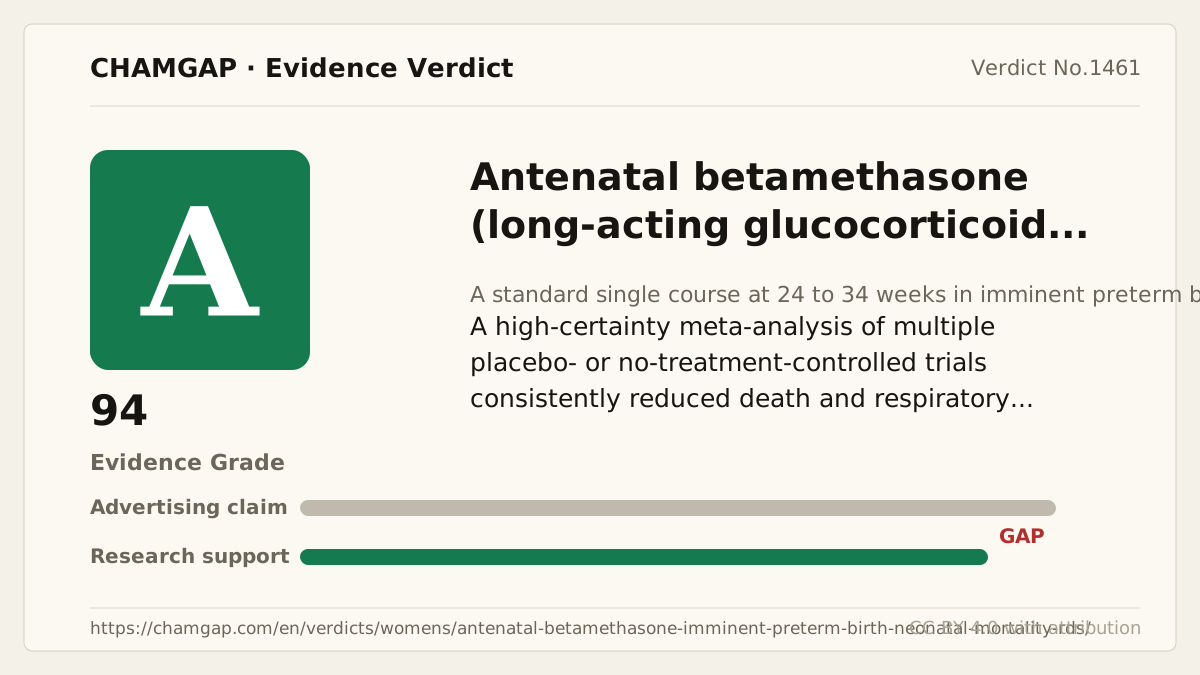
[Chamgap] Antenatal betamethasone x reduced neonatal death and respiratory distress syndrome in imminent preterm birth — Evidence Grade A·94. 3 cited sources checked. Source: https://chamgap.com/en/verdicts/womens/antenatal-betamethasone-imminent-preterm-birth-neonatal-mortality-rds/ · CC BY 4.0CC BY 4.0 — free to use with attribution; do not distort grades, numbers, or verdict meaning.
What this document does and does not do
Chamgap is an information source. It reports what research has and has not confirmed; it does not tell readers what to take or buy. That decision belongs to readers and, when needed, medical or legal professionals. This verdict reflects literature available up to the search date and may change as new research appears. Nothing here is medical advice.