
Single preoperative doxycycline 400 mg plus metronidazole 400 mg,
does it really help with Prevention of pelvic infection within 14 days after miscarriage surgery?
research showsThe grade is D with 34 points. Broad-definition pelvic infection occurred in 68/1676 (4.1%) versus 90/1684 (5.3%): absolute difference -1.2 points, RR 0.77 (95% CI 0.56 to 1.04), P=0.09. The primary endpoint was null, but benefit was not excluded.
ads claimThis was a four-country low- and middle-income setting. South Korean baseline infection rates and prophylaxis standards may differ, limiting direct transfer of absolute effects. `2402` asks whether cefazolin for cesarean delivery should be given before incision or after cord clamping - that is, the timing of administration. This verdict asks whether a single prophylactic antibiotic dose before miscarriage surgery reduces pelvic infection. These are different questions.
Useful facts when choosing a product
- Both antibiotics were given once before surgery.
- Broad and strict infection definitions produced different inferences.
- Gastrointestinal effects, allergy, and antimicrobial-resistance costs remain relevant.
Chamgap Semantic Classification Code
Candidate index · review held
P.single-preoperative-doxycycline-plus-metronidazole.procedural.pelvic-infection-within-after-miscarriage-surgery.prevent.placeboProcedures, devices and tests > Single preoperative doxycycline plus metronidazole > Procedural > pelvic infection within after miscarriage surgery > Occurrence-prevention claim > Placebo
An automated migration candidate, not an issued permanent code; exact claim scope remains under review. This machine-generated migration candidate helps retrieval but is not a permanent assignment. The original verdict ID and URL remain authoritative.
What the research actually shows
AIMS randomized 3,412 patients in Malawi, Pakistan, Tanzania, and Uganda. Axis 6 B0 evidence ① Allocation concealment: "Computerized randomization was performed centrally through a secure Internet facility." ② Blinding: "Patients, clinicians, and research staff were unaware of the trial-group assignments throughout the trial"; intervention and placebo looked and were administered identically. ③ Analysis population and missingness: "All analyses were performed according to the intention-to-treat principle"; primary outcomes were available for 3,360/3,412 (98.5%), with worst-case and multiple-imputation sensitivity analyses. Substantial attrition (>=15%): actual 1.5% (52/3,412) - not applicable. ④ Prespecified primary endpoint: "The primary outcome was pelvic infection within 14 days after miscarriage surgery", matching the broad definition in ISRCTN97143849. No avoidable limitation from the nine-item list applies. Funding came from the MRC, Wellcome Trust, and DFID.
Why this is classified as D (34)
A robust publicly funded, double-blind placebo trial had a null broad primary endpoint and retained a benefit tail, giving D with 34 points.
Counterpoint. The positive strict secondary definition is reported without replacing the failed primary endpoint.
Rejudgment record. New verdict — Broad clinical primary endpoint RR 0.77 (0.56 to 1.04), central allocation, double blinding, ITT, public funding, and low missingness
| Endpoint | P | Symptom or function itself is the target - including patient reports and performance tests |
| Replication | R1 | Single confirmatory trial |
| Independence | I2 | Decisive evidence is publicly or non-profit funded |
| Effect size | E0 | Null |
| Precision | C0 | The confidence interval leaves room for benefit |
Stored derived and displayed grades match; this is not a current recalculation or validity check (D).
Sub-claim grades by effect
This ingredient is marketed for several effects. A single overall grade blends strong and weak claims together, so each effect is graded separately here. The overall grade reflects the strongest disconfirming or core claim.
| Effect (sub-claim) | Grade | Basis |
|---|---|---|
| Prevention under the broad pelvic-infection definition | D | The RR 0.77 interval included 1. |
| Prevention under the strict pelvic-infection definition | C | The secondary endpoint RR was 0.60 (0.37 to 0.96). |
Cross-check — AI research and Codex final gate
Evidence Table
| Study | Design | Sample | Funding | Endpoint | Result | Weight |
|---|---|---|---|---|---|---|
| Lissauer D et al. 2019 AIMS | Multicountry randomized double-blind placebo-controlled trial | 3,412 randomized; 3,360 in primary analysis | MRC, Wellcome Trust, and DFID | Broad clinical pelvic infection within 14 days | 4.1% versus 5.3%; absolute difference -1.2 points; RR 0.77 (95% CI 0.56 to 1.04); P=0.09 | Pivotal null primary trial |
Receipt — 1 References
All 1 cited sources were verified for existence at the original page (as of 2026-08-18).
Final verification and publication gate: Codex · Evidence date: 2026-08-18 · Corrections: none
Cite this verdict
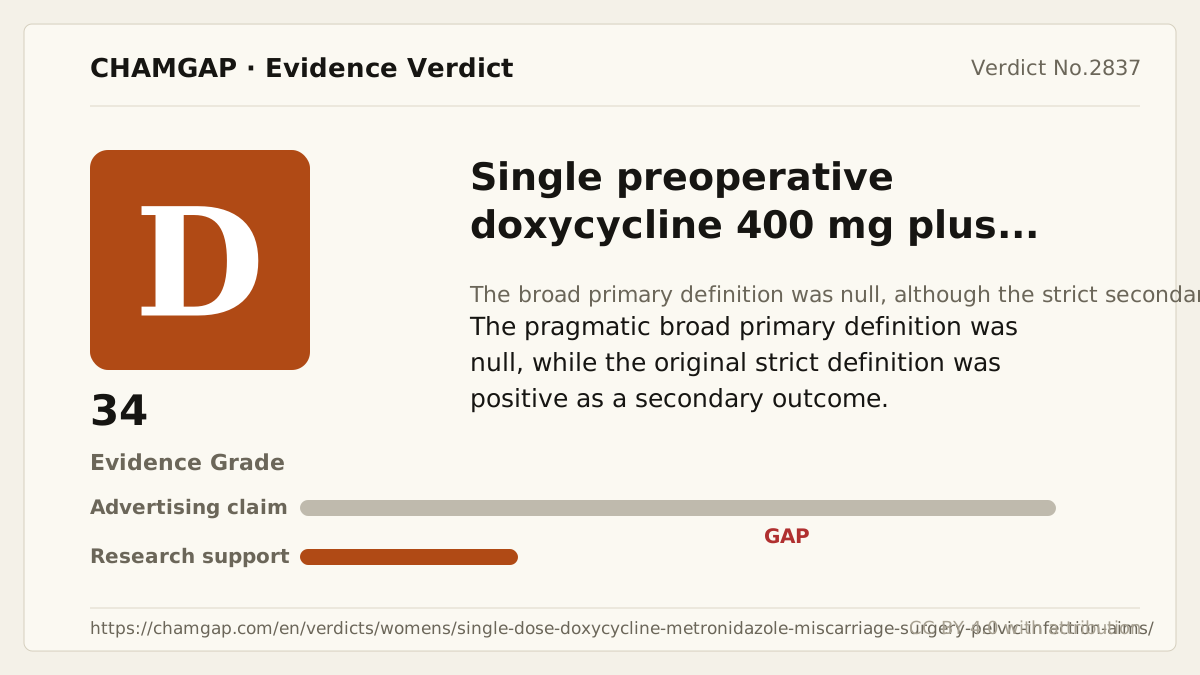
[Chamgap] Single-Dose Preoperative Doxycycline plus Metronidazole Is Ineffective for Preventing Pelvic Infection after Miscarriage Surgery — Evidence Grade D·34. 1 cited sources checked. Source: https://chamgap.com/en/verdicts/womens/single-dose-doxycycline-metronidazole-miscarriage-surgery-pelvic-infection-aims/ · CC BY 4.0CC BY 4.0 — free to use with attribution; do not distort grades, numbers, or verdict meaning.
What this document does and does not do
Chamgap is an information source. It reports what research has and has not confirmed; it does not tell readers what to take or buy. That decision belongs to readers and, when needed, medical or legal professionals. This verdict reflects literature available up to the search date and may change as new research appears. Nothing here is medical advice.