
Seed cycling,
does it really help with Balanced sex hormones, more regular menstrual cycles, and reduced PMS in healthy women?
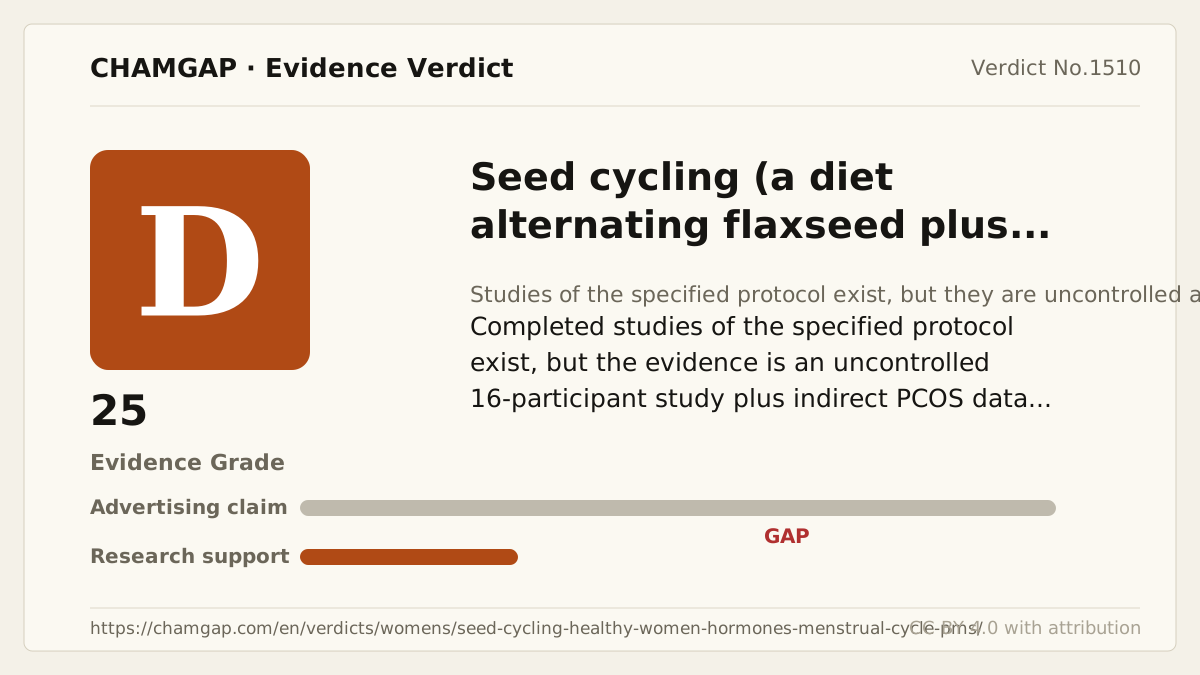
research showsThe claim that seed cycling improves sex-hormone balance, cycle regularity, and premenstrual symptoms in healthy women is rated D. Completed studies applying the specified two-phase protocol do exist, but the most direct one is an uncontrolled single-arm university report of 16 participants in which only symptom scores fell, cycle length was not significant, and sex hormones were not measured. Studies reporting hormonal change enrolled women with PCOS, used metformin as an active comparator, or contain internal inconsistencies in sample size and statistics. A 2025 systematic review also pooled single-seed and PCOS studies and could not isolate efficacy of the protocol in healthy women. Because completed literature exists this is not a null-evidence '?', and uncontrolled, indirect evidence with a null key endpoint gives D with 25 points.
ads claimClaims may connect lignans, fatty acids, zinc, and vitamin E from individual seeds to balanced follicular estrogen and luteal progesterone. Hormone balance lacks a clear clinical target in this context, and no completed healthy-women trial of the specified two-phase protocol was identified.
Useful facts when choosing a product
- The usual seed-cycling protocol uses flaxseed and pumpkin seed in the follicular phase, then sesame and sunflower seed in the luteal phase.
- Seeds are energy-dense foods, so adding them can change total energy intake depending on serving size.
- Sesame and other seeds can cause allergic reactions, and larger amounts of flaxseed can cause bloating or altered bowel habits.
- Irregular or absent menstruation can have causes including pregnancy, thyroid disease, hyperprolactinemia, PCOS, and low energy availability, which are separate from a dietary-effect claim.
Chamgap Semantic Classification Code
Candidate index · review held
D.seed-cycling.dietary.balanced-sex-hormones-more-regular-menstrual-cycles-and-reduced-pms.reduce.activeDietary patterns and eating practices > Seed cycling > Dietary regimen > Balanced sex hormones, more regular menstrual cycles, and reduced PMS > Reduction claim > Active comparator
An automated migration candidate, not an issued permanent code; exact claim scope remains under review. This machine-generated migration candidate helps retrieval but is not a permanent assignment. The original verdict ID and URL remain authoritative.
What the research actually shows
Rasheed et al. reported recruitment of 90 women with PCOS, with analyzed groups of 20 each receiving control, metformin plus a portion-controlled diet, or seed cycling plus a portion-controlled diet; it was not a healthy-women trial. Phipps et al. conducted a crossover study in 18 normally cycling women who added flaxseed powder daily for three cycles. Luteal phase length increased, but estradiol, estrone, and luteal progesterone did not differ significantly, and the intervention was not four-seed rotation. A 2025 systematic review combined PCOS, PMS, and individual-seed studies with substantial indirectness and design heterogeneity. These publications define the evidence gap and were not treated as positive evidence for healthy-women seed cycling.
Why this is classified as D (25)
Completed human studies of the specified two-phase protocol exist, so the null-literature condition for '?' is not met. The direct evidence is an uncontrolled single-arm study of 16 participants with a null cycle-length result, and hormonal evidence is indirect PCOS data, giving D with 25 points.
Counterpoint. The nutritional value of seeds and possible effects of flaxseed alone are separate from the claim that timed rotation adds efficacy.
Rejudgment record. Cross-check applied — At cross-check, completed human studies applying the specified two-phase protocol (a 16-participant single-arm report and controlled PCOS studies) were identified, invalidating the premise of absent literature, so the '?' draft was changed to D. The symptom-score reduction comes from an uncontrolled design that cannot exclude placebo effects, cycle length was null, and hormonal data are indirect PCOS evidence, giving 25 points.
Sub-claim grades by effect
This ingredient is marketed for several effects. A single overall grade blends strong and weak claims together, so each effect is graded separately here. The overall grade reflects the strongest disconfirming or core claim.
| Effect (sub-claim) | Grade | Basis |
|---|---|---|
| Balanced sex hormones | D | Sex hormones were reported only in studies of women with PCOS; measurements in healthy women were not identified. |
| Improved menstrual-cycle regularity | D | In a single-arm study of the specified protocol, the change in cycle length was not significant. |
| Reduced PMS symptoms | D | The symptom-score reduction comes from an uncontrolled 16-participant single-arm report, so placebo effects and regression to the mean cannot be excluded. |
Cross-check — AI research and Codex final gate
Evidence Table
| Study | Design | Sample | Funding | Endpoint | Result | Weight |
|---|---|---|---|---|---|---|
| Rasheed N et al. 2023 | Three-arm combined dietary intervention study in women with PCOS | 90 reportedly recruited; analysis described 20 per group | No conflict reported; funding detail inadequate | FSH, LH, weight, BMI, and ovarian measures | Changes were reported with seed cycling plus a portion-controlled diet, but the population had PCOS and the intervention was combined. | Indirect population and intervention evidence |
| Phipps WR et al. 1993 | Balanced randomized crossover dietary trial | 18 normally cycling women | Academic study; limited detail in the older report | Ovulation, cycle and luteal-phase length, and sex hormones | Daily flaxseed alone lengthened the luteal phase, while several sex hormones did not differ. | Indirect single-ingredient evidence |
| Nagarajan DR et al. 2025 | Systematic review of seed cycling and individual-seed studies | Ten studies and 635 participants | Published in Cureus; authors reported no conflicts | PCOS, PMS, menstrual regularity, hormonal, and metabolic measures | It combined individual-seed and PCOS studies and did not isolate direct efficacy of the specified protocol in healthy women. | Evidence-gap and indirectness assessment |
| LLerena V, Aeri S. 2026 (Loma Linda research report) | Nonrandomized open single-arm intervention study without a control group | 20 enrolled, 16 analyzed | University degree-program research report | Menstrual symptom score (MHSQ) and cycle length | The symptom score fell from 36.30 to 27.12, but cycle length and breast tenderness were not significant and sex hormones were not measured. | The only completed study applying the specified two-phase protocol directly, but uncontrolled and small |
| Kour H et al. 2024 | Randomized two-arm controlled intervention with metformin as active comparator | 290 women with PCOS (145 per group) | Academic research | Hormonal markers including FSH, LH, prolactin, and testosterone | The intervention group reportedly had lower FSH, LH, and prolactin, but participants had PCOS and cycle regularity and premenstrual symptoms were not assessed. | Larger sample but limited to PCOS and surrogate markers |
Receipt — 5 References
All 5 cited sources were verified for existence at the original page (as of 2026-07-23).
Final verification and publication gate: Codex · Evidence date: 2026-07-23 · Corrections: none
Cite this verdict
[Chamgap] Seed cycling x hormones, menstrual regularity, and PMS in healthy women — Evidence Grade D·25. 5 cited sources checked. Source: https://chamgap.com/en/verdicts/womens/seed-cycling-healthy-women-hormones-menstrual-cycle-pms/ · CC BY 4.0CC BY 4.0 — free to use with attribution; do not distort grades, numbers, or verdict meaning.
What this document does and does not do
Chamgap is an information source. It reports what research has and has not confirmed; it does not tell readers what to take or buy. That decision belongs to readers and, when needed, medical or legal professionals. This verdict reflects literature available up to the search date and may change as new research appears. Nothing here is medical advice.