
Screening mammography,
does it really help with Reduced breast cancer mortality through regular screening of women in their 40s?
research showsRegular mammography in women in their 40s is rated B because it can modestly reduce breast cancer mortality. The peer-reviewed long-term UK Age randomized trial analyzed 160,836 traceable participants in its actual primary analysis. Its prespecified primary endpoint, death from breast cancers diagnosed during the intervention period, succeeded during the first 10 years with RR 0.75 (95% CI 0.58 to 0.97). The additional effect after 10 years was not significant, the 2006 analysis of all breast cancer deaths was not significant at RR 0.83, and independent trials are heterogeneous. False-positive workups and overdiagnosis are material harms, so absolute benefit and personal preferences matter.
ads claimPromotion may say that annual screening from age 40 certainly saves a life. The evidence instead shows a modest relative reduction in breast cancer mortality during the first decade, no demonstrated all-cause mortality gain, and accompanying false-positive imaging, unnecessary biopsies, and overdiagnosis. In the UK Age trial, 18.1% of attendees had at least one false positive, with an estimated 28% cumulative risk over ten regular screens. Modeling attributed 80 intervention-phase diagnoses, 8.5% of cancers diagnosed during that phase and an absolute 0.2% over eight screens, to overdiagnosis; however, cumulative incidence equalized after both groups entered national screening at 50, suggesting no additional long-term overdiagnosis from the earlier start and leaving the magnitude uncertain.
Useful facts when choosing a product
- Screening mammography uses low-dose radiography to find lesions before symptoms arise, and an abnormal image requires confirmation with additional imaging or biopsy.
- The UK Age trial offered annual imaging from ages 40 through 48, while current national recommendations differ between annual and biennial schedules.
- False positives can trigger repeat imaging, ultrasound, biopsy, and anxiety, while overdiagnosis can lead to treatment of a cancer that would never have caused harm.
- The radiation dose is low but repeated, so pregnancy possibility, prior imaging, breast symptoms, and individual risk should be discussed with the clinical team.
Chamgap Semantic Classification Code
Candidate index · review held
P.screening-mammography.diagnostic.breast-cancer-mortality-through-regular-screening-of-women-in-their-40s.reduce.UNKProcedures, devices and tests > Screening mammography > Diagnostic or screening > breast cancer mortality through regular screening of women in their 40s > Reduction claim > Unknown
An automated migration candidate, not an issued permanent code; exact claim scope remains under review. This machine-generated migration candidate helps retrieval but is not a permanent assignment. The original verdict ID and URL remain authoritative.
What the research actually shows
The publication form was a peer-reviewed UK Age randomized trial original and a peer-reviewed long-term follow-up original. Investigators randomized 160,921 women, and the actual traceable primary analysis included 160,836: 53,883 intervention and 106,953 control participants. The prespecified primary endpoint of death from cancers diagnosed during intervention succeeded during the first 10 years at RR 0.75 (95% CI 0.58 to 0.97), but no additional effect appeared after 10 years at RR 0.98. Among 43,709 intervention attendees, 7,893 (18.1%) experienced at least one false positive, and the estimated cumulative risk with ten regular attendances was 28.0%. The trial's intervention-phase overdiagnosis estimate was small, but modern synthesis produces a wide range depending on method, and lifetime models project additional overdiagnosed cases per 1,000 women.
Why this is classified as B (70)
A peer-reviewed large randomized trial succeeded on a prespecified breast cancer mortality primary endpoint in an actual primary analysis of 160,836 women. Later attenuation, heterogeneity across overall and independent trial analyses, null all-cause mortality, false positives, and overdiagnosis prevent A and give B with 70 points.
Counterpoint. A new lump, skin retraction, or bloody nipple discharge requires diagnostic assessment rather than waiting for the next screening date. Higher-risk women may need a separate strategy that includes magnetic resonance imaging.
Rejudgment record. New verdict — B recognizes first-decade success of the prespecified breast cancer mortality primary endpoint in 160,836 actual participants in the peer-reviewed UK Age follow-up, while accounting for later attenuation, trial heterogeneity, null all-cause mortality, false positives, and overdiagnosis
Sub-claim grades by effect
This ingredient is marketed for several effects. A single overall grade blends strong and weak claims together, so each effect is graded separately here. The overall grade reflects the strongest disconfirming or core claim.
| Effect (sub-claim) | Grade | Basis |
|---|---|---|
| Reduced breast cancer mortality with regular mammography in the 40s | B | The large UK Age trial's primary endpoint for deaths from intervention-phase cancers succeeded in the first decade, but later attenuated and independent trials are heterogeneous. |
| Additional breast cancer mortality reduction beyond 10 years from screening in the 40s | D | The later interval was analyzed, but RR 0.98 after 10 years showed no additional reduction. |
| Reduced all-cause mortality with regular mammography in the 40s | D | Large screening trials and synthesized evidence have not demonstrated a significant reduction in all-cause mortality. |
Cross-check — AI research and Codex final gate
Evidence Table
| Study | Design | Sample | Funding | Endpoint | Result | Weight |
|---|---|---|---|---|---|---|
| Duffy SW et al. 2020 UK Age trial final results | Peer-reviewed original long-term follow-up of a randomized screening trial | 160,836 in the actual primary analysis; 53,883 intervention and 106,953 control | Public and nonprofit support including NIHR HTA, Cancer Research UK, and the Medical Research Council | Primary endpoint of death from breast cancers diagnosed during the intervention period | The primary endpoint succeeded during the first 10 years, RR 0.75 (95% CI 0.58 to 0.97); after 10 years it attenuated to RR 0.98. | Key large hard-endpoint randomized trial |
| Moss SM et al. 2006 UK Age trial 10-year report | Peer-reviewed original randomized controlled screening trial | 160,921 randomized women | Cancer Research UK, Medical Research Council, and Department of Health | All breast cancer deaths at 10 years | RR was 0.83 (95% CI 0.66 to 1.04), a favorable direction that was not statistically significant. | Effect uncertainty and endpoint-definition sensitivity |
| Johns LE et al. 2010 UK Age false-positive analysis | Peer-reviewed original prospective screening-harm analysis within the randomized intervention arm | 53,884 intervention participants; 43,709 actual attendees | MRC, Cancer Research UK, Department of Health, and US National Cancer Institute | Cumulative false-positive recall risk | At least one false positive affected 18.1% of attendees; estimated cumulative risk over ten regular attendances was 28.0%. | Key harm magnitude |
Receipt — 4 References
All 4 cited sources were verified for existence at the original page (as of 2026-07-24).
Final verification and publication gate: Codex · Evidence date: 2026-07-24 · Corrections: none
Cite this verdict
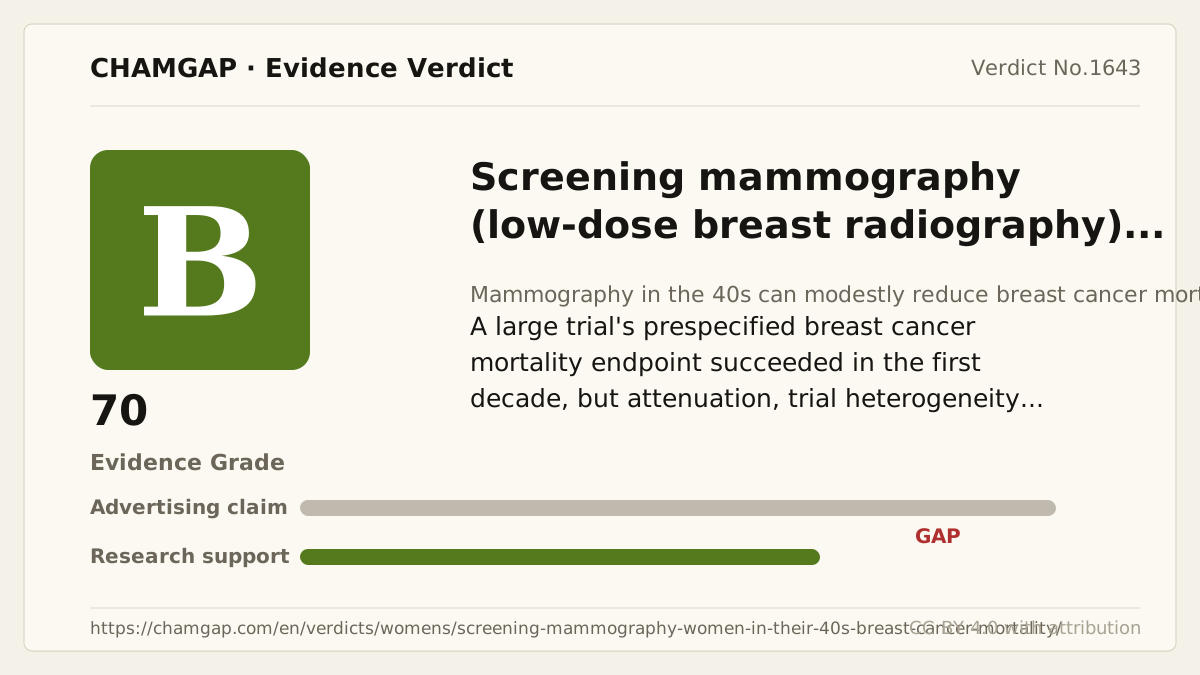
[Chamgap] Screening mammography x reduced breast cancer mortality in women in their 40s — Evidence Grade B·70. 4 cited sources checked. Source: https://chamgap.com/en/verdicts/womens/screening-mammography-women-in-their-40s-breast-cancer-mortality/ · CC BY 4.0CC BY 4.0 — free to use with attribution; do not distort grades, numbers, or verdict meaning.
What this document does and does not do
Chamgap is an information source. It reports what research has and has not confirmed; it does not tell readers what to take or buy. That decision belongs to readers and, when needed, medical or legal professionals. This verdict reflects literature available up to the search date and may change as new research appears. Nothing here is medical advice.