
Routine episiotomy,
does it really help with Prevention of severe perineal or vaginal trauma?
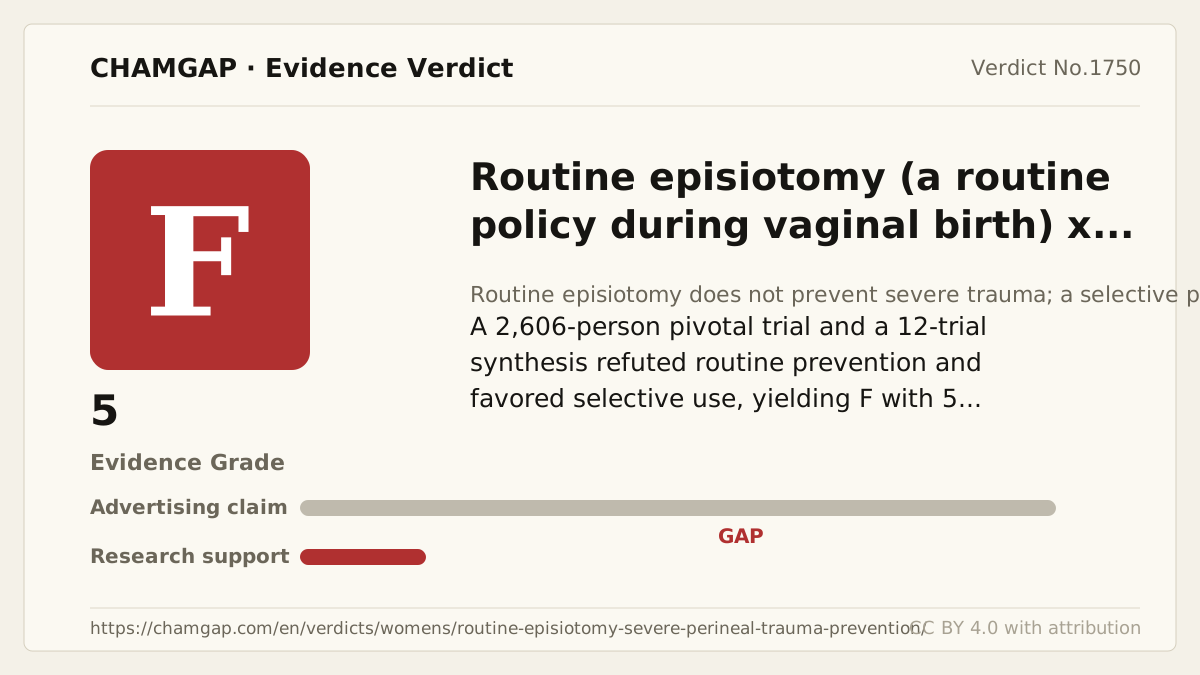
research showsRoutine episiotomy during vaginal birth is rated F. Cochrane included 12 trials and 6,177 participants; the severe-trauma analysis included eight trials and 5,375 participants. Selective versus routine use gave RR 0.70 (95% CI 0.52 to 0.94), with low certainty. The inverted routine-versus-selective estimate of approximately RR 1.43 (1.06 to 1.92) is mathematically valid, but it is not an independent analysis; it is an approximate reversal of the reference groups for the same outcome. Repeated refutation yields F with 5 points.
ads claimThe mechanical intuition that a planned cut prevents a larger irregular tear is expanded to every birth, but randomized trials reject the preventive benefit of routine policy.
Useful facts when choosing a product
- A routine policy applies episiotomy to most vaginal births, whereas a selective policy reserves it for a specific clinical need.
- The pivotal Argentine trial compared mediolateral episiotomy policies, so incision direction and procedural context matter.
- Selective use in an individual emergency or instrumental birth is decided by the obstetric team based on maternal and fetal circumstances.
Chamgap Semantic Classification Code
Candidate index · review held
P.routine-episiotomy.vaginal.severe-perineal-or-vaginal-trauma.prevent.reference-exposureProcedures, devices and tests > Routine episiotomy > Vaginal > severe perineal or vaginal trauma > Occurrence-prevention claim > Reference exposure
An automated migration candidate, not an issued permanent code; exact claim scope remains under review. This machine-generated migration candidate helps retrieval but is not a permanent assignment. The original verdict ID and URL remain authoritative.
What the research actually shows
The Argentine Episiotomy Trial randomized and analyzed 2,606 participants and found no preventive success for routine use. The 2017 Jiang Cochrane review included 12 trials with 6,177 participants; the severe-trauma analysis included eight trials and 5,375 participants. Selective versus routine use gave RR 0.70 (95% CI 0.52 to 0.94), with low certainty. Inverting it gives routine versus selective RR of approximately 1.43 (1.06 to 1.92), which is mathematically valid but is not an independent analysis; it reverses the reference groups for the same outcome.
Why this is classified as F (5)
Failure of the primary severe-trauma endpoint in all 2,606 randomized participants and the opposite-direction result across 12 trials in the same indication yield F with 5 points.
Counterpoint. The verdict does not prohibit selectively indicated episiotomy; the evidence supports restricted rather than routine use.
Rejudgment record. Cross-check applied — Applied repeated-refutation F because the primary severe-perineal-trauma outcome failed in the 2,606-person pivotal trial and the 12-trial synthesis repeatedly showed an opposite-direction advantage for selective policy in the same indication
Sub-claim grades by effect
This ingredient is marketed for several effects. A single overall grade blends strong and weak claims together, so each effect is graded separately here. The overall grade reflects the strongest disconfirming or core claim.
| Effect (sub-claim) | Grade | Basis |
|---|---|---|
| Prevention of severe perineal trauma | F | The 2,606-person pivotal trial failed, with 1.5% under routine policy versus 1.2% under selective policy. |
| Reduction in the need for suturing | F | Suturing was less frequent under selective rather than routine policy. |
| Reduction in postpartum perineal pain | F | Routine policy did not reduce pain and was unfavorable to selective policy in the pivotal trial. |
Cross-check — AI research and Codex final gate
Evidence Table
| Study | Design | Sample | Funding | Endpoint | Result | Weight |
|---|---|---|---|---|---|---|
| Argentine Episiotomy Trial Collaborative Group 1993 | Multicenter randomized selective-policy versus routine-policy trial | 2,606 randomized; all 2,606 analyzed | Noncommercial public research linked to the Latin American Centre for Perinatology and PAHO/WHO; no manufacturer leadership | Primary endpoint of severe perineal trauma | Routine policy failed: 1.2% with selective use versus 1.5% with routine use; pain, suturing, and wound complications also favored selective use. | Large direct pivotal clinical-harm trial |
| Jiang H et al. 2017 | Cochrane systematic review and meta-analysis of randomized trials | Twelve trials with 6,177 participants; severe-trauma main analysis, eight trials and 5,375 participants | Academic Cochrane synthesis; included trials were predominantly noncommercial public or academic research | Severe perineal or vaginal trauma | Selective versus routine RR 0.70 (95% CI 0.52 to 0.94), low certainty; inverted routine versus selective RR approximately 1.43 (1.06 to 1.92) is an approximate reversal of the same outcome, not an independent analysis. | Same-indication synthesis of repeated refutation |
Receipt — 2 References
All 2 cited sources were verified for existence at the original page (as of 2026-07-24).
Final verification and publication gate: Codex · Evidence date: 2026-07-24 · Corrections: none
Cite this verdict
[Chamgap] Routine episiotomy x prevention of severe perineal trauma — Evidence Grade F·5. 2 cited sources checked. Source: https://chamgap.com/en/verdicts/womens/routine-episiotomy-severe-perineal-trauma-prevention/ · CC BY 4.0CC BY 4.0 — free to use with attribution; do not distort grades, numbers, or verdict meaning.
What this document does and does not do
Chamgap is an information source. It reports what research has and has not confirmed; it does not tell readers what to take or buy. That decision belongs to readers and, when needed, medical or legal professionals. This verdict reflects literature available up to the search date and may change as new research appears. Nothing here is medical advice.