
Routine enema during labour,
does it really help with Prevention of puerperal and neonatal infection?
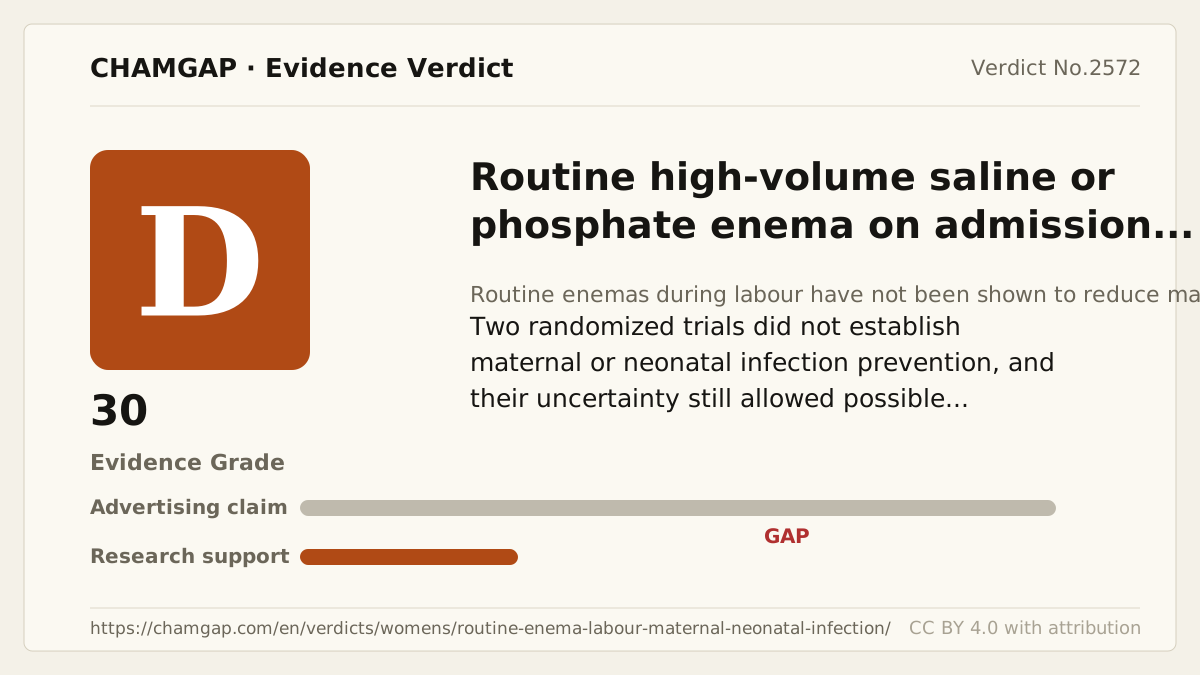
research showsThe grade is D. In a 443-person trial, puerperal infection occurred in 41/190 (22%) with enema versus 26/182 (14%) without, while neonatal infection occurred in 38/191 (20%) versus 40/179 (22%). Neither result established prevention. A 1,100-person trial analyzed 1,027 after excluding cesarean deliveries and observed zero neonatal infections in both groups, leaving poor precision. Human trials exist, so this is D with 30 points rather than an ungraded claim.
ads claimThe intuition that bowel emptying reduces delivery-room soiling is not evidence that clinical maternal or neonatal infection falls. The trials did not show such prevention.
Useful facts when choosing a product
- Cuervo tested a 1,000 mL saline enema; Kovavisarach tested a 118 mL sodium-phosphate enema against no enema.
- Coffee-enema verdict 2389 is ? and addresses liver detoxification, a different indication.
- The unavoidable inability to hide enema use from participants was not counted as a design defect.
Chamgap Semantic Classification Code
Candidate index · review held
UNK.routine-high-volume-saline-or-phosphate-enema-on-admission-in-labour.rectal.puerperal-and-neonatal-infection.prevent.UNKUnknown > Routine high-volume saline or phosphate enema on admission in labour > Rectal > puerperal and neonatal infection > Occurrence-prevention claim > Unknown
An automated migration candidate, not an issued permanent code; exact claim scope remains under review. This machine-generated migration candidate helps retrieval but is not a permanent assignment. The original verdict ID and URL remain authoritative.
What the research actually shows
Cuervo LG, Bernal Mdel P, Mendoza et al. randomized 443 and excluded 12 post-randomization ineligible participants. Loss to puerperal-infection follow-up was 35/217 (16%) with enema and 24/214 (11%) without; neonatal losses were 18% and 11%. Sequentially numbered opaque envelopes were used, although participant and clinician masking was impossible. Kovavisarach E and Sringamvong W randomized 1,100, did not explain the randomization method, and removed 73 cesarean deliveries from analysis. Funding and prospective registration for the second trial could not be confirmed, so it was not counted as independently funded replication.
Why this is classified as D (30)
Two trials measured clinical infection but did not establish prevention; independent funding for the second was unconfirmed and intervals did not exclude worthwhile benefit. One hard-outcome strength gives D with 30 points.
Counterpoint. Effects on labour duration or fecal soiling require separate assessment.
Rejudgment record. Cross-check applied — We cross-checked randomized and analyzed counts, losses, infection events, confidence intervals, allocation methods, and funding in both reports and the systematic review.
| Endpoint | H | Hard endpoint - actual events such as death |
| Replication | R1 | Single confirmatory trial |
| Independence | I1 | Mixed funding sources |
| Effect size | E0 | Null |
| Precision | C0 | The confidence interval leaves room for benefit |
Stored derived and displayed grades match; this is not a current recalculation or validity check (D).
Sub-claim grades by effect
This ingredient is marketed for several effects. A single overall grade blends strong and weak claims together, so each effect is graded separately here. The overall grade reflects the strongest disconfirming or core claim.
| Effect (sub-claim) | Grade | Basis |
|---|---|---|
| Prevention of puerperal infection | D | Rates were 22% with enema versus 14% without, so prevention was not established. |
| Prevention of neonatal infection | D | The 443-person trial was null and the larger trial had zero events in both groups. |
Cross-check — AI research and Codex final gate
Evidence Table
| Study | Design | Sample | Funding | Endpoint | Result | Weight |
|---|---|---|---|---|---|---|
| Cuervo LG, Bernal Mdel P, Mendoza et al., 2006 | Randomized no-enema controlled trial | 443 assigned; 372 assessed for puerperal infection and 370 for neonatal infection | Investigator and International Clinical Epidemiology Network US$5,000 thesis seed grant | Puerperal and neonatal infection | Puerperal 41/190 vs 26/182, no-enema versus enema RR 0.66 (0.43-1.03); neonatal 38/191 vs 40/179, RR 1.12 (0.76-1.66) | Primary clinical-infection evidence |
| Kovavisarach E, Sringamvong W, 2005 | Randomized no-enema controlled trial | 1,100 assigned, 539 versus 561; 1,027 analyzed after cesarean exclusions | Not confirmed | Neonatal infection within four days and perineal infection | Zero neonatal infections in both groups; no significant difference in perineal infection | Larger supporting trial with almost no infection events |
Receipt — 2 References
Of 2 cited sources, 1 had limited original-page access (blocked or summary-only) and were verified via index/summary, marked partial; the rest were verified at the original page. As of 2026-08-14.
Final verification and publication gate: Codex · Evidence date: 2026-08-14 · Corrections: none
Cite this verdict
[Chamgap] Routine enema during labour x maternal and neonatal infection prevention — Evidence Grade D·30. 2 cited sources checked. Source: https://chamgap.com/en/verdicts/womens/routine-enema-labour-maternal-neonatal-infection/ · CC BY 4.0CC BY 4.0 — free to use with attribution; do not distort grades, numbers, or verdict meaning.
What this document does and does not do
Chamgap is an information source. It reports what research has and has not confirmed; it does not tell readers what to take or buy. That decision belongs to readers and, when needed, medical or legal professionals. This verdict reflects literature available up to the search date and may change as new research appears. Nothing here is medical advice.