
PGT-A,
does it really help with Increased cumulative live birth in good-prognosis IVF patients with at least three good-quality blastocysts?
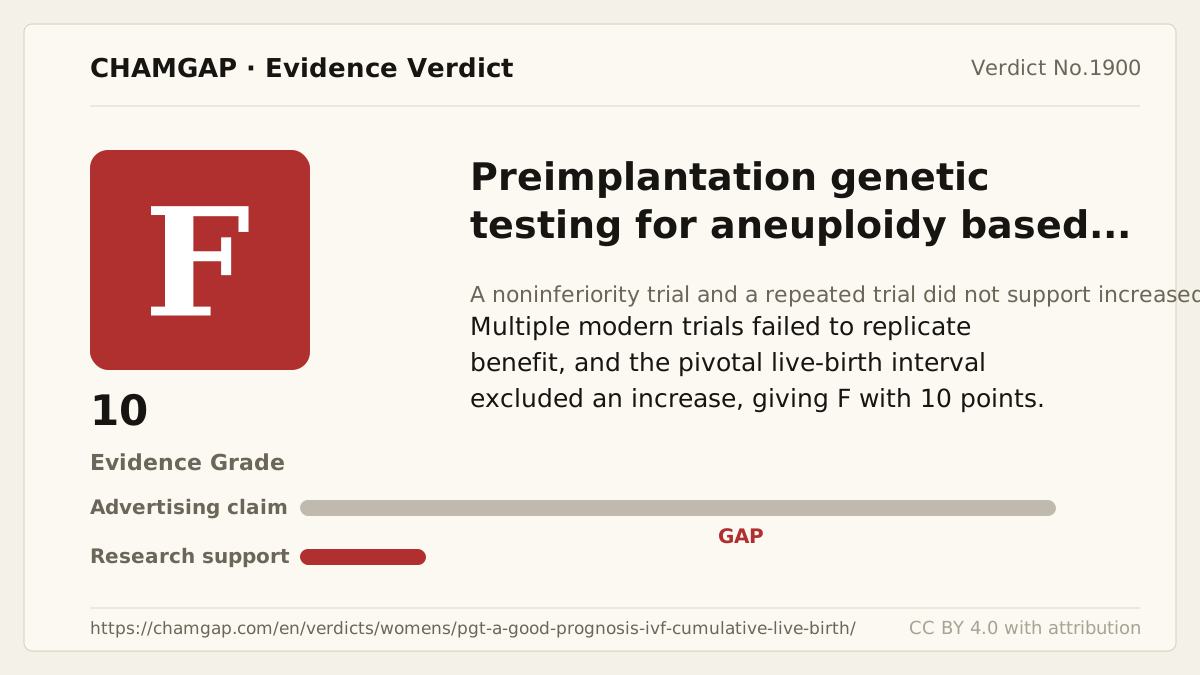
research showsThe grade is F. Yan analyzed all 1,212 randomized women, 606 per group, and found cumulative live birth in 468/606 (77.2%) with PGT-A versus 496/606 (81.8%) with conventional IVF, difference -4.6 points (95% CI -9.2 to -0.0). The prespecified hypothesis was that conventional IVF was no more than 7 points worse than PGT-A, and P<0.001 tested that noninferiority. Even under this design, the interval excludes a positive live-birth benefit from PGT-A, giving F with 10 points.
ads claimSelecting an embryo that appears chromosomally normal can change the order or choice of transfer, but it does not establish a higher probability that each woman ultimately has a baby. Marketing must separate success per transfer, miscarriage, time to pregnancy, and cumulative live birth.
Useful facts when choosing a product
- PGT-A biopsies trophectoderm cells from a blastocyst, classifies chromosome-copy abnormalities, and uses the result to guide transfer order.
- Yan randomized and analyzed all 1,212 women in a noninferiority design, and cumulative live birth did not support benefit from PGT-A.
- Biopsy, freezing, testing cost, mosaic results, possible misclassification, and exclusion from transfer based on results require individualized counseling.
Chamgap Semantic Classification Code
Candidate index · review held
P.preimplantation-genetic-testing.diagnostic.cumulative-live-birth-in-good-prognosis-ivf-patients-with-at-least-three-good-quality-blastocysts.increase.UNKProcedures, devices and tests > Preimplantation genetic testing > Diagnostic or screening > cumulative live birth in good-prognosis IVF patients with at least three good-quality blastocysts > Increase claim > Unknown
An automated migration candidate, not an issued permanent code; exact claim scope remains under review. This machine-generated migration candidate helps retrieval but is not a permanent assignment. The original verdict ID and URL remain authoritative.
What the research actually shows
Yan randomized and analyzed 1,212 good-prognosis women aged 20 to 37 who had at least three available good-quality blastocysts, 606 per group. It was a noninferiority trial of conventional IVF, not a PGT-A superiority trial. STAR randomized 661 women, 330 versus 331, but only 274 versus 313 underwent transfer. Per-transfer ongoing pregnancy, 137/274 (50.0%) versus 143/313 (45.7%), selected only participants who reached transfer after randomization, so the key result is the all-woman randomized analysis, 138/330 (41.8%) versus 144/331 (43.5%). Yan used Chinese public funding, whereas STAR was sponsored by Illumina.
Why this is classified as F (10)
Multiple modern randomized trials in the same good-prognosis IVF context failed to replicate improvement in cumulative or overall pregnancy outcomes, and the pivotal 1,212-participant confidence interval excluded increased live birth, giving F with 10 points.
Counterpoint. F is not a substance-wide grade denying every purpose of PGT-A in every patient. It applies narrowly to increasing cumulative live birth per woman among good-prognosis patients with at least three good-quality blastocysts.
Rejudgment record. Cross-check applied — Multiple modern randomized trials in good-prognosis IVF failed to replicate improved overall pregnancy outcomes, and the 1,212-participant pivotal cumulative-live-birth interval excluded an increase
| Endpoint | H | Hard endpoint - actual events such as death |
| Replication | RX | Repeatedly refuted in the same indication |
| Independence | I1 | Mixed funding sources |
| Effect size | E0 | Null |
| Precision | C1 | The confidence interval excludes meaningful benefit |
Stored derived and displayed grades match; this is not a current recalculation or validity check (F).
Sub-claim grades by effect
This ingredient is marketed for several effects. A single overall grade blends strong and weak claims together, so each effect is graded separately here. The overall grade reflects the strongest disconfirming or core claim.
| Effect (sub-claim) | Grade | Basis |
|---|---|---|
| Increased cumulative live birth per woman | F | The 1,212-participant trial found 77.2% versus 81.8%, with the interval excluding an increase. |
| Increased ongoing pregnancy in the full intention-to-treat population | F | STAR found no benefit, 41.8% versus 43.5%. |
| Increased ongoing pregnancy per embryo transfer | D | STAR found 50.0% versus 45.7%, but the difference was not significant and the analysis included only participants who underwent transfer. |
Cross-check — AI research and Codex final gate
Evidence Table
| Study | Design | Sample | Funding | Endpoint | Result | Weight |
|---|---|---|---|---|---|---|
| Yan J et al. 2021 CESE-PGS | Multicenter randomized noninferiority clinical trial | 1,212 randomized, 606 per arm, with all 1,212 in the primary intention-to-treat analysis | Public funding including the National Key Research and Development Program of China and National Natural Science Foundation of China | Cumulative live birth after up to three transfers within one year | Rates were 468/606 (77.2%) versus 496/606 (81.8%), difference -4.6 points, 95% CI -9.2 to -0.0; conventional IVF noninferiority P<0.001. | Pivotal publicly funded hard-outcome evidence |
| Munné S et al. 2019 STAR | Multicenter randomized single frozen embryo transfer clinical trial | 661 randomized, 330 versus 331; 274 versus 313 underwent transfer; all 661 in intention-to-treat analysis | Manufacturer sponsorship and enrollment support from Illumina | Ongoing pregnancy at 20 weeks | Per-transfer rates were 137/274 (50.0%) versus 143/313 (45.7%); all-randomized rates were 138/330 (41.8%) versus 144/331 (43.5%). The per-transfer analysis included only participants who reached transfer after randomization. | Repeatedly null evidence in the same indication |
Receipt — 2 References
All 2 cited sources were verified for existence at the original page (as of 2026-07-24).
Final verification and publication gate: Codex · Evidence date: 2026-07-24 · Corrections: none
Cite this verdict
[Chamgap] PGT-A x increased cumulative live birth in good-prognosis IVF patients — Evidence Grade F·10. 2 cited sources checked. Source: https://chamgap.com/en/verdicts/womens/pgt-a-good-prognosis-ivf-cumulative-live-birth/ · CC BY 4.0CC BY 4.0 — free to use with attribution; do not distort grades, numbers, or verdict meaning.
What this document does and does not do
Chamgap is an information source. It reports what research has and has not confirmed; it does not tell readers what to take or buy. That decision belongs to readers and, when needed, medical or legal professionals. This verdict reflects literature available up to the search date and may change as new research appears. Nothing here is medical advice.