
Periodontal treatment during pregnancy,
does it really help with Prevention of birth before 37 weeks in pregnant patients with periodontitis?
research showsThe grade is D. Several large randomized trials improved periodontal status but did not reduce preterm birth. Yet the pooled estimate from 11 trials, RR 0.87 (95% CI 0.70 to 1.10), still allowed as much as a 30% relative reduction, so clinically important benefit was not excluded and F was not justified. The score is 35.
ads claimA reduction in gum inflammation must not be translated into fewer preterm births. Periodontal care can be worthwhile for oral disease while lacking proven obstetric prevention.
Useful facts when choosing a product
- OPT used scaling and root planing before 21 weeks plus monthly polishing and improved clinical periodontal measures.
- MOTOR compared second-trimester therapy with treatment delayed until after delivery.
- Pocket-depth and bleeding improvements are measured oral outcomes, not evidence of prevented preterm birth.
Chamgap Semantic Classification Code
Candidate index · review held
P.second-trimester-nonsurgical-periodontal-treatment-with-scaling.oral.birth-before-with-periodontitis.prevent.placeboProcedures, devices and tests > Second-trimester nonsurgical periodontal treatment with scaling > Oral > birth before with periodontitis > Occurrence-prevention claim > Placebo
An automated migration candidate, not an issued permanent code; exact claim scope remains under review. This machine-generated migration candidate helps retrieval but is not a permanent assignment. The original verdict ID and URL remain authoritative.
What the research actually shows
OPT randomized 823 participants and analyzed delivery outcomes in 407 versus 405; birth before 37 weeks occurred in 49/407 (12.0%) versus 52/405 (12.8%), HR 0.93 (95% CI 0.63 to 1.37). MOTOR randomized 1,806 and evaluated 1,760, finding 13.1% versus 11.5% before 37 weeks (P=.316). PIPS randomized 757, 378 versus 379; among 359 versus 361 live births, spontaneous birth before 35 weeks occurred in 5.3% versus 4.4%, RR 1.19 (95% CI 0.62 to 2.28). Its indicated-preterm-birth signal was RR 3.01 (95% CI 0.95 to 4.24), not statistically conclusive. A separate antimicrobial-plus-treatment versus placebo-plus-treatment comparison in 243 participants showed a harm signal for birth before 37 weeks, RR 3.08 (95% CI 1.15 to 8.20). OPT and MOTOR had US public funding; PIPS reported state and NIH-related support. Obstetric outcome assessment was separated from periodontal treatment.
Why this is classified as D (34)
Independent large trials repeatedly failed in the same indication, but the pooled lower confidence limit of 0.70 and absence of a prespecified clinical threshold prevented a precise refutation. This gives D with 34 points.
Counterpoint. Improved periodontal health and failure to prevent preterm birth can both be true. Observational association between periodontitis and preterm birth cannot substitute for treatment effects.
Rejudgment record. Cross-check applied — Repeated null results in independent large randomized trials with pooled confidence intervals that did not exclude clinically important benefit
| Endpoint | H | Hard endpoint - actual events such as death |
| Replication | RX | Repeatedly refuted in the same indication |
| Independence | I2 | Decisive evidence is publicly or non-profit funded |
| Effect size | E0 | Null |
| Precision | C0 | The confidence interval leaves room for benefit |
Stored derived and displayed grades match; this is not a current recalculation or validity check (D).
Sub-claim grades by effect
This ingredient is marketed for several effects. A single overall grade blends strong and weak claims together, so each effect is graded separately here. The overall grade reflects the strongest disconfirming or core claim.
| Effect (sub-claim) | Grade | Basis |
|---|---|---|
| Prevention of birth before 37 weeks | D | Multiple large trials were null, but the pooled interval still allowed substantial benefit. |
| Improvement in periodontal inflammation and probing measures | B | Major trials showed improvement in local periodontal measures after treatment. |
Cross-check — AI research and Codex final gate
Evidence Table
| Study | Design | Sample | Funding | Endpoint | Result | Weight |
|---|---|---|---|---|---|---|
| Michalowicz et al. 2006 OPT | Multicenter randomized assessor-masked delayed-treatment trial | 823 randomized; delivery outcomes in 407 versus 405 | US NIH/NIDCR public funding | Birth before 37 weeks | 49/407 (12.0%) versus 52/405 (12.8%); HR 0.93 (95% CI 0.63 to 1.37) | Large publicly funded null trial |
| Offenbacher et al. 2009 MOTOR | Multicenter randomized delayed-treatment trial | 1,806 randomized; 1,760 evaluated | Public NIDCR and NCRR funding | Birth before 37 weeks | 13.1% versus 11.5%; P=.316 | Largest independent null trial |
| Macones et al. 2010 PIPS | Multicenter randomized superficial-cleaning-controlled trial | 757 randomized, 378 versus 379; 359 versus 361 live births | Pennsylvania state, NCRR, and NCMHD support | Spontaneous preterm birth before 35 weeks | 5.3% versus 4.4%; RR 1.19 (95% CI 0.62 to 2.28); indicated preterm birth RR 3.01 (0.95 to 4.24) | Repeated null result from a separate team with an inconclusive harm signal |
Receipt — 4 References
All 4 cited sources were verified for existence at the original page (as of 2026-08-04).
Final verification and publication gate: Codex · Evidence date: 2026-08-04 · Corrections: none
Cite this verdict
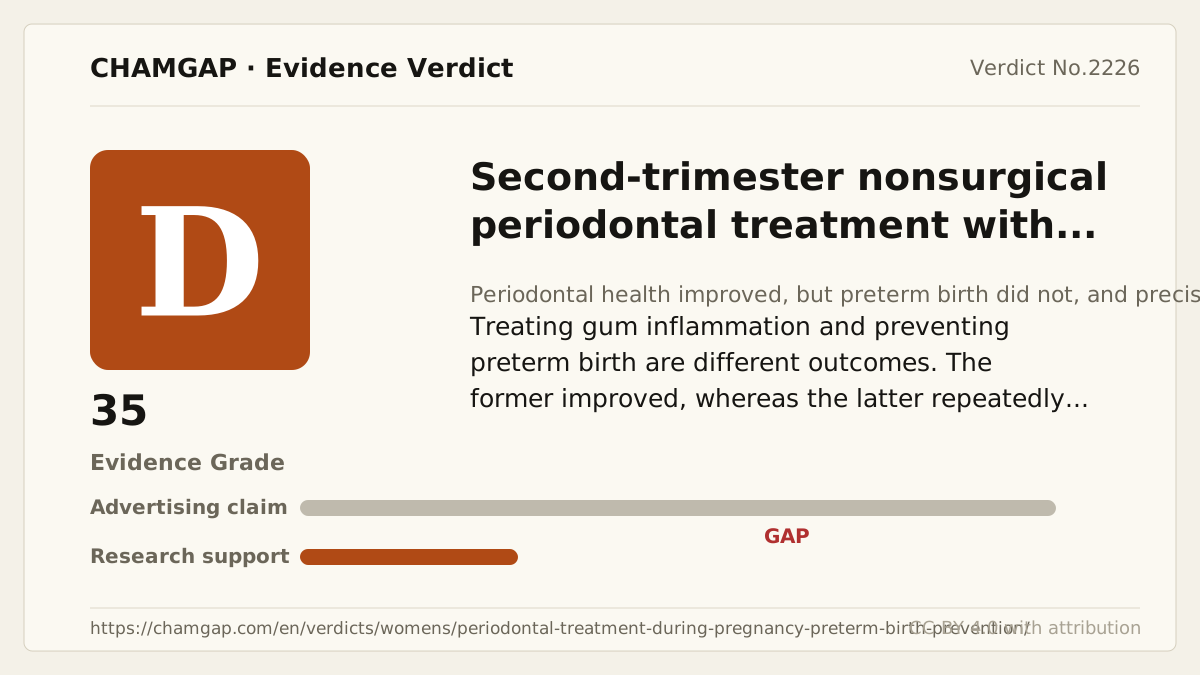
[Chamgap] Periodontal treatment during pregnancy x prevention of preterm birth — Evidence Grade D·34. 4 cited sources checked. Source: https://chamgap.com/en/verdicts/womens/periodontal-treatment-during-pregnancy-preterm-birth-prevention/ · CC BY 4.0CC BY 4.0 — free to use with attribution; do not distort grades, numbers, or verdict meaning.
What this document does and does not do
Chamgap is an information source. It reports what research has and has not confirmed; it does not tell readers what to take or buy. That decision belongs to readers and, when needed, medical or legal professionals. This verdict reflects literature available up to the search date and may change as new research appears. Nothing here is medical advice.