
Pelvic floor muscle training,
does it really help with Reduced leakage and symptoms of female stress urinary incontinence?
research showsPelvic floor muscle training is rated B for reducing leakage and symptoms in women with stress urinary incontinence. The single-blind Bø trial randomized 122 women but analyzed only 107 six-month completers rather than an intention-to-treat population; standardized pad-test leakage changed by −30.2 g with exercise versus −7.4 g with no treatment, P≤.02 against each comparator. The full Cochrane review included 31 trials and 1,817 women, but the stress-incontinence cure RR of 8.38 (95% CI 3.68 to 19.07) came from only 4 trials and 165 women. Direct outcomes were positive, but completer analysis and the small cure evidence support B with 72 points.
ads claimPromotion may claim that brief unsupervised squeezing cures every type of incontinence or pelvic-organ prolapse. Evidence is strongest for correctly taught, repeated training in women with stress urinary incontinence.
Useful facts when choosing a product
- Repeatedly stopping urine midstream is not recommended as a routine training method.
- Learning to contract and fully relax the pelvic floor rather than the abdomen or buttocks is important.
- Training usually requires repetition for at least several months; persistent symptoms may benefit from pelvic-floor physiotherapy.
- Blood in urine, pain, recurrent infection, sudden incontinence, or neurologic symptoms require assessment rather than exercise alone.
Chamgap Semantic Classification Code
Candidate index · review held
X.pelvic-floor-muscle-training.behavioral.leakage-and-symptoms-of-female-stress-urinary-incontinence.reduce.MULTIBehaviors, exposures and policies > Pelvic floor muscle training > Behavioral delivery > leakage and symptoms of female stress urinary incontinence > Reduction claim > Multiple: primary unresolved
An automated migration candidate, not an issued permanent code; exact claim scope remains under review. This machine-generated migration candidate helps retrieval but is not a permanent assignment. The original verdict ID and URL remain authoritative.
What the research actually shows
Bø and colleagues randomized 122 women with genuine stress incontinence to pelvic floor exercise, electrical stimulation, vaginal cones, or no treatment, and analyzed the 107 who completed six-month assessment rather than an intention-to-treat population. The objective standardized pad-test outcome improved most with exercise. The Dumoulin Cochrane review included 31 trials and 1,817 women across 14 countries, while cure RR 8.38 was based on only 4 stress-incontinence trials and 165 women.
Why this is classified as B (72)
The pad-test outcome succeeded after 122 women were randomized, but only 107 six-month completers were analyzed rather than an intention-to-treat population. The full Cochrane review included 31 trials and 1,817 women, while cure RR 8.38 came from only 4 trials and 165 women. These limitations support B with 72 points.
Counterpoint. Stress, urgency, and mixed incontinence can require different evaluation and training priorities.
Rejudgment record. Cross-check applied — Distinguished 122 randomized women from the non-intention-to-treat analysis of 107 six-month completers and recognized that, within the full 31-trial, 1,817-woman review, cure RR 8.38 came from only 4 trials and 165 women; completer analysis and the small cure evidence were explicit downgrades
Sub-claim grades by effect
This ingredient is marketed for several effects. A single overall grade blends strong and weak claims together, so each effect is graded separately here. The overall grade reflects the strongest disconfirming or core claim.
| Effect (sub-claim) | Grade | Basis |
|---|---|---|
| Reduced urine leakage in stress urinary incontinence | B | The pad-test primary endpoint succeeded in the actual analysis of 107 women. |
| Increased likelihood of cure in stress urinary incontinence | B | RR was 8.38 across 4 trials and 165 women, but the cure evidence was small. |
| Improved urinary symptoms and quality of life in women | B | A 31-trial synthesis supports symptom and quality-of-life improvement, with heterogeneity and limited long-term data. |
Cross-check — AI research and Codex final gate
Evidence Table
| Study | Design | Sample | Funding | Endpoint | Result | Weight |
|---|---|---|---|---|---|---|
| Bø K et al. 1999 | Four-group single-blind randomized controlled trial | 122 randomized; 107 six-month completers analyzed, not intention to treat | Norwegian academic and public research | Primary: change in urine leakage on a standardized pad test | Primary endpoint succeeded: −30.2 g with exercise versus −7.4 g with no treatment; exercise versus each comparator P≤.02. | Key direct leakage randomized trial |
| Dumoulin C et al. 2018 | Cochrane systematic review of pelvic floor muscle training versus no treatment or inactive control | 31 randomized trials and 1,817 women | Cochrane academic synthesis | Cure, cure or improvement, leakage frequency, and quality of life | Cure of stress urinary incontinence across 4 trials and 165 women had RR 8.38 (95% CI 3.68 to 19.07). | Independent multi-trial direct clinical evidence |
Receipt — 2 References
All 2 cited sources were verified for existence at the original page (as of 2026-07-24).
Final verification and publication gate: Codex · Evidence date: 2026-07-24 · Corrections: none
Cite this verdict
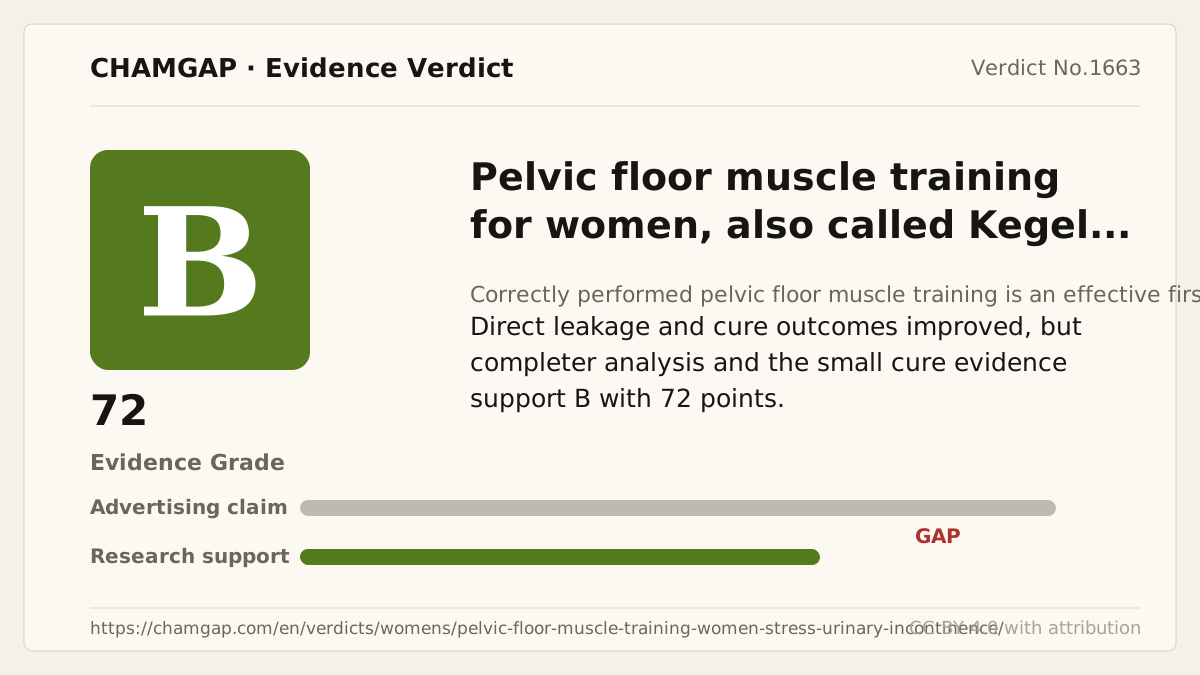
[Chamgap] Pelvic floor muscle training x reduced female stress urinary leakage — Evidence Grade B·72. 2 cited sources checked. Source: https://chamgap.com/en/verdicts/womens/pelvic-floor-muscle-training-women-stress-urinary-incontinence/ · CC BY 4.0CC BY 4.0 — free to use with attribution; do not distort grades, numbers, or verdict meaning.
What this document does and does not do
Chamgap is an information source. It reports what research has and has not confirmed; it does not tell readers what to take or buy. That decision belongs to readers and, when needed, medical or legal professionals. This verdict reflects literature available up to the search date and may change as new research appears. Nothing here is medical advice.