
Paroxetine,
does it really help with Reduced moderate-to-severe menopausal hot flashes and night sweats?
research showsLow-dose paroxetine 7.5 mg is rated B because two phase 3 placebo-controlled trials reduced the frequency and severity of moderate-to-severe menopausal vasomotor symptoms. Across the 12- and 24-week trials, 1,184 women were randomized, the key week-4 and week-12 endpoints were significant, and nighttime awakenings attributed to vasomotor symptoms also declined more than with placebo. However, the placebo response was large, the average incremental benefit was modest, the effect was smaller than that of hormone therapy, and pivotal evidence was manufacturer-funded, so A is not justified. Nausea, sexual effects, discontinuation symptoms, and the tamoxifen interaction are separate safety issues.
ads claimMarketing can expand nonhormonal FDA-approved treatment into an effect equal to hormone therapy or an option without adverse effects. The average incremental benefit is modest, and standard SSRI adverse effects and interactions still apply.
Useful facts when choosing a product
- For menopausal vasomotor symptoms, paroxetine is generally prescribed at 7.5 mg once nightly, a lower dose than is commonly used for depression.
- Its benefit is reduced frequency and severity of hot flashes and night sweats and fewer related nighttime awakenings; its average effect can be smaller than that of hormone therapy.
- Nausea, dizziness, headache, fatigue, sleep changes, and sexual adverse effects can occur, and abrupt withdrawal can cause discontinuation symptoms.
- Paroxetine strongly inhibits CYP2D6 and can reduce formation of tamoxifen's active metabolite. People taking tamoxifen for breast-cancer treatment or prevention must review whether to avoid the combination with their clinician.
Chamgap Semantic Classification Code
Candidate index · review held
M.paroxetine.UNK.moderate-to-severe-menopausal-hot-flashes-and-night-sweats.reduce.placeboMedicinal interventions > Paroxetine > Unknown > moderate-to-severe menopausal hot flashes and night sweats > Reduction claim > Placebo
An automated migration candidate, not an issued permanent code; exact claim scope remains under review. This machine-generated migration candidate helps retrieval but is not a permanent assignment. The original verdict ID and URL remain authoritative.
What the research actually shows
The two phase 3 trials by Simon and colleagues randomized 1,184 postmenopausal women with moderate-to-severe vasomotor symptoms 1:1 to paroxetine 7.5 mg or placebo. Mean weekly symptom frequency and severity favored paroxetine at weeks 4 and 12, and the 24-week trial supported persistence of benefit. Pinkerton and colleagues' pooled prespecified analysis found that awakenings attributed to vasomotor symptoms fell by 39% with paroxetine and 28% with placebo at week 4 and that sleep duration increased more, while sleep latency did not differ. An independent 2016 meta-analysis of six trials and 1,571 participants estimated 8.86 fewer hot flashes per week at week 4 and 7.36 fewer at week 12, but heterogeneity was high and certainty was moderate.
Why this is classified as B (64)
Two multicenter phase 3 placebo-controlled trials and an independent six-trial meta-analysis support direct reductions in hot flashes and night sweats. However, the incremental reduction versus placebo was only about 7 to 9 episodes per week, the week-12 severity endpoint was not significant, and the pivotal 7.5-mg trials were manufacturer-centered, placing the rating at the low end of B with 64 points. The tamoxifen interaction and SSRI adverse effects remain safety issues separate from efficacy.
Counterpoint. This can be a nonhormonal option for people who cannot or do not want to use hormone therapy. Tamoxifen use, bipolar disorder, pregnancy potential, other serotonergic drugs, and prior SSRI response should be reviewed before prescribing.
Rejudgment record. New verdict — Accepted reductions in direct vasomotor-symptom frequency and severity from two multicenter phase 3 placebo-controlled trials and an independent meta-analysis, while assigning B for modest effect size, large placebo response, heterogeneity, and manufacturer-centered pivotal evidence
Sub-claim grades by effect
This ingredient is marketed for several effects. A single overall grade blends strong and weak claims together, so each effect is graded separately here. The overall grade reflects the strongest disconfirming or core claim.
| Effect (sub-claim) | Grade | Basis |
|---|---|---|
| Reduced frequency of menopausal hot flashes and night sweats | B | Two phase 3 trials and a meta-analysis are positive, but the incremental benefit over placebo is modest. |
| Reduced severity of menopausal hot flashes and night sweats | B | The direct patient-reported endpoint was significant, but the average effect is smaller than with hormone therapy. |
| Reduced nighttime awakenings related to vasomotor symptoms | B | A prespecified pooled analysis was positive, but the finding cannot be generalized to treatment of insomnia from all causes. |
Cross-check — AI research and Codex final gate
Evidence Table
| Study | Design | Sample | Funding | Endpoint | Result | Weight |
|---|---|---|---|---|---|---|
| Simon JA et al. 2013 | Two multicenter randomized double-blind placebo-controlled phase 3 trials | 1,184 postmenopausal women; 591 assigned paroxetine and 593 placebo | Funded by Noven Pharmaceuticals with employee authors | Vasomotor-symptom frequency and severity at weeks 4 and 12 and persistence at week 24 | Paroxetine 7.5 mg favored placebo on the key frequency and severity endpoints, with support for persistence at week 24. | Core direct evidence for the low-dose formulation |
| Pinkerton JV et al. 2015 | Prespecified pooled sleep analysis of two phase 3 randomized trials | 591 paroxetine and 593 placebo recipients | Funded by Noven Pharmaceuticals with employee authors | Vasomotor-related nighttime awakenings, sleep duration, and sleep latency | Nighttime awakenings fell 39% versus 28% at week 4 and sleep duration increased more, while sleep latency did not differ. | Direct supportive evidence for nighttime symptoms |
| Wei D et al. 2016 | Systematic review and meta-analysis of randomized trials | Six randomized trials and 1,571 participants | Chinese academic evidence-based-medicine research | Hot-flash frequency and adverse events at weeks 4 and 12 | Hot flashes declined by 8.86 more per week at week 4 and 7.36 more at week 12 than placebo, with high heterogeneity. | Independent synthesis |
Receipt — 3 References
All 3 cited sources were verified for existence at the original page (as of 2026-07-20).
Final verification and publication gate: Codex · Evidence date: 2026-07-20 · Corrections: none
Cite this verdict
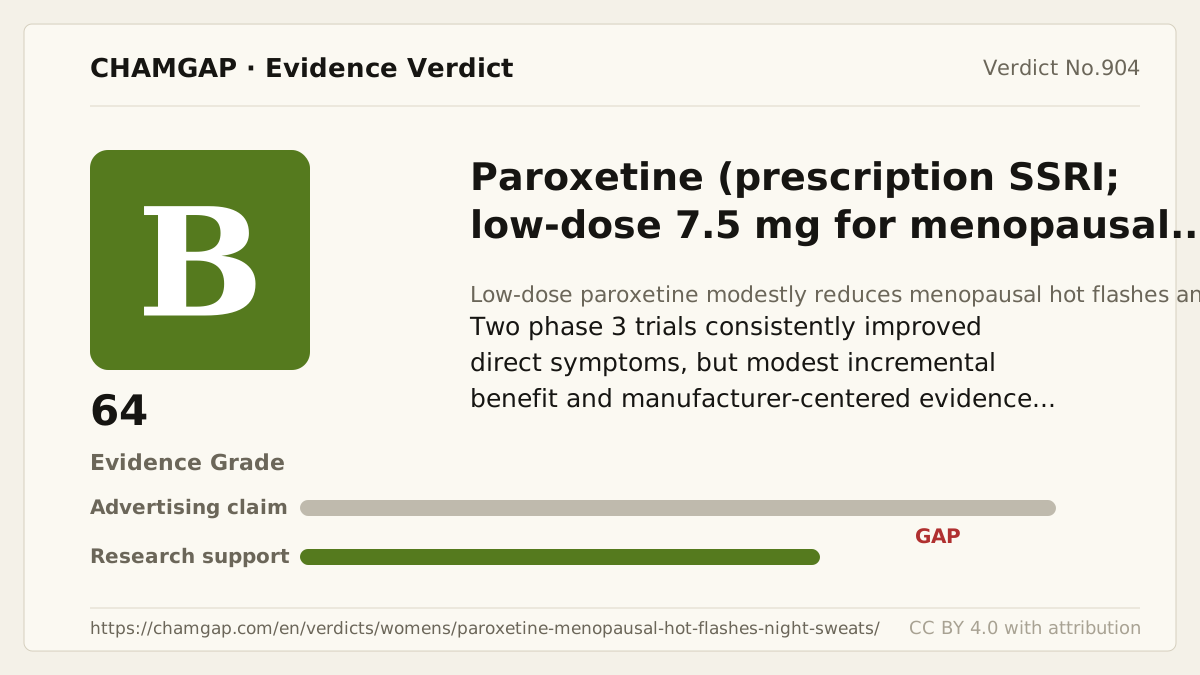
[Chamgap] Paroxetine x reduced menopausal hot flashes and night sweats — Evidence Grade B·64. 3 cited sources checked. Source: https://chamgap.com/en/verdicts/womens/paroxetine-menopausal-hot-flashes-night-sweats/ · CC BY 4.0CC BY 4.0 — free to use with attribution; do not distort grades, numbers, or verdict meaning.
What this document does and does not do
Chamgap is an information source. It reports what research has and has not confirmed; it does not tell readers what to take or buy. That decision belongs to readers and, when needed, medical or legal professionals. This verdict reflects literature available up to the search date and may change as new research appears. Nothing here is medical advice.