
Oxytocin,
does it really help with Reduced postpartum hemorrhage and transfusion risk with prophylaxis immediately after birth?
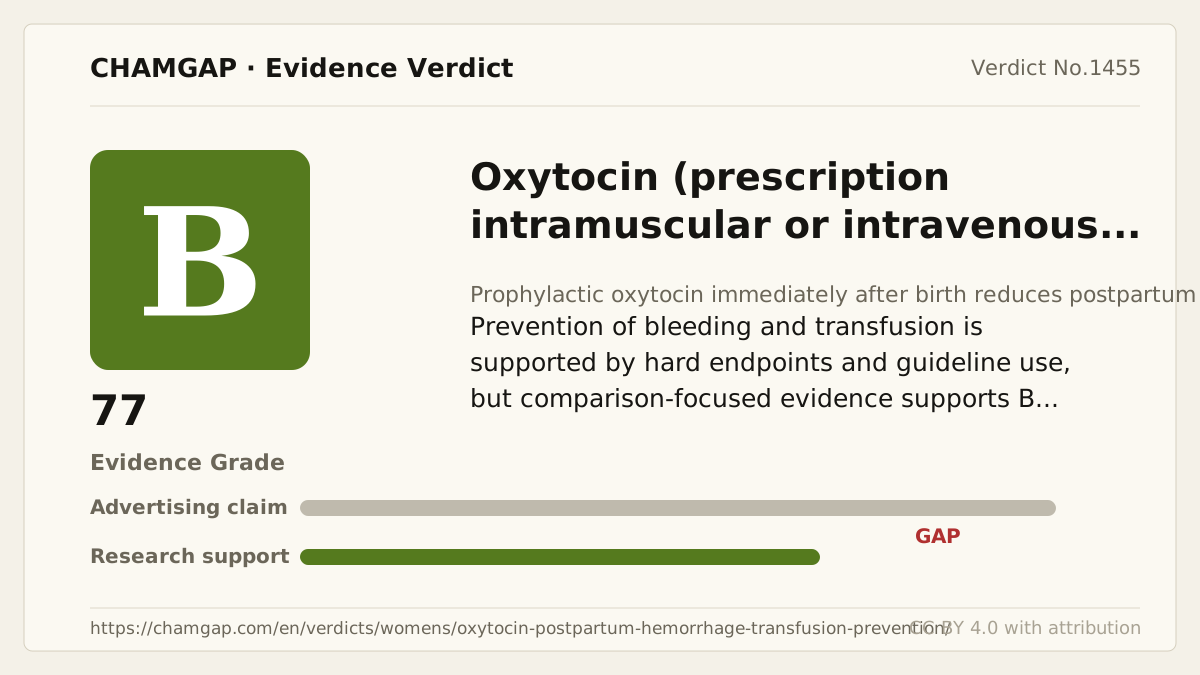
research showsOxytocin is rated B because prophylaxis immediately after birth is a standard first-line uterotonic that reduces postpartum hemorrhage. A 2019 Cochrane review found less blood loss of at least 500 mL and less need for additional uterotonics than placebo or no treatment. A 2020 Cochrane review of seven randomized trials and 7,817 women found that intravenous administration reduced postpartum hemorrhage (risk ratio 0.78) and transfusion (risk ratio 0.44) compared with intramuscular injection. The outcomes are hard endpoints, but modern evidence is dominated by route comparisons and older placebo trials, supporting B with 77 points.
ads claimA single oxytocin dose can be portrayed as preventing every postpartum hemorrhage. Retained placenta, genital tract trauma, and coagulopathy remain possible, and established bleeding requires rapid cause-directed therapy, additional uterotonics, fluids, blood, and procedures.
Useful facts when choosing a product
- The World Health Organization recommends oxytocin 10 IU intramuscularly or intravenously as the preferred uterotonic for postpartum hemorrhage prevention at all births.
- When intravenous access is already present after vaginal birth, appropriately administered intravenous oxytocin can reduce hemorrhage and transfusion more than intramuscular injection.
- A rapid intravenous bolus can cause hypotension, tachycardia, and arrhythmia, so dilution, rate, and monitoring should follow the institutional protocol.
- Uterine hyperstimulation, nausea, hypotension, and rare water intoxication or hyponatremia can occur; antidiuretic effects matter with prolonged high-dose exposure.
Chamgap Semantic Classification Code
Candidate index · review held
M.oxytocin.MULTI.postpartum-hemorrhage-and-transfusion-risk-with-prophylaxis-immediately-after-birth.reduce.MULTIMedicinal interventions > Oxytocin > Multiple: primary unresolved > postpartum hemorrhage and transfusion risk with prophylaxis immediately after birth > Reduction claim > Multiple: primary unresolved
An automated migration candidate, not an issued permanent code; exact claim scope remains under review. This machine-generated migration candidate helps retrieval but is not a permanent assignment. The original verdict ID and URL remain authoritative.
What the research actually shows
The 2019 Cochrane review by Salati and colleagues synthesized vaginal-birth prophylaxis trials and found that oxytocin reduced postpartum hemorrhage of at least 500 mL and use of therapeutic uterotonics compared with placebo or no treatment. The 2020 review by Oladapo and colleagues included seven randomized trials and 7,817 women comparing intravenous and intramuscular oxytocin. Intravenous dosing reduced hemorrhage of at least 500 mL, risk ratio 0.78 (95% CI 0.66 to 0.92; 7,731 women), and transfusion, risk ratio 0.44 (95% CI 0.26 to 0.77; 6,684 women). The overall severe-hemorrhage confidence interval crossed no effect, although low-bias sensitivity analysis favored intravenous dosing. This prevention claim is distinct from carbetocin noninferiority and tranexamic-acid treatment after hemorrhage begins.
Why this is classified as B (77)
Reduced postpartum hemorrhage versus placebo or no treatment and reduced bleeding and transfusion in a 7,817-woman route-comparison synthesis are direct hard endpoints. Because modern evidence is primarily intravenous versus intramuscular and placebo trials are older, the verdict is B with 77 points.
Counterpoint. Intramuscular injection is also effective, and intravenous administration is not always feasible. Timely dosing, correct administration, and a complete hemorrhage-response system matter more than route alone.
Rejudgment record. New verdict — Credited prevention of postpartum hemorrhage versus placebo or no treatment and reduced hemorrhage and transfusion in randomized intravenous-versus-intramuscular synthesis, while route-comparison dominance and older placebo trials limit the verdict to B
Sub-claim grades by effect
This ingredient is marketed for several effects. A single overall grade blends strong and weak claims together, so each effect is graded separately here. The overall grade reflects the strongest disconfirming or core claim.
| Effect (sub-claim) | Grade | Basis |
|---|---|---|
| Prevention of postpartum hemorrhage immediately after birth | B | Reduced blood loss of at least 500 mL versus placebo or no treatment was demonstrated. |
| Reduced need for transfusion with intravenous prophylaxis | B | The transfusion risk ratio was 0.44 versus intramuscular dosing with high-certainty evidence. |
| Reduced severe postpartum hemorrhage with intravenous prophylaxis | B | The overall confidence interval crossed no effect, but low-bias sensitivity analysis supported a reduction. |
Cross-check — AI research and Codex final gate
Evidence Table
| Study | Design | Sample | Funding | Endpoint | Result | Weight |
|---|---|---|---|---|---|---|
| Salati JA et al. Cochrane, 2019 | Systematic review and meta-analysis of randomized and quasi-randomized trials | Nine trials comparing oxytocin with placebo or no uterotonic | Cochrane academic review | Postpartum hemorrhage of at least 500 mL and additional uterotonic use | Prophylactic oxytocin reduced postpartum hemorrhage and the need for additional uterotonics versus placebo or no treatment. | Key synthesis versus placebo or no treatment |
| Oladapo OT et al. Cochrane, 2020 | Systematic review and meta-analysis of intravenous-versus-intramuscular randomized trials | Seven trials and 7,817 women | World Health Organization-linked and Cochrane academic review | Blood loss of at least 500 mL or 1,000 mL, transfusion, and serious maternal morbidity | Intravenous dosing reduced hemorrhage of at least 500 mL with risk ratio 0.78 and transfusion with risk ratio 0.44 versus intramuscular dosing. | Large route-comparison synthesis of hard endpoints |
Receipt — 2 References
All 2 cited sources were verified for existence at the original page (as of 2026-07-23).
Final verification and publication gate: Codex · Evidence date: 2026-07-23 · Corrections: none
Cite this verdict
[Chamgap] Oxytocin x reduced postpartum hemorrhage and transfusion risk with prophylaxis immediately after birth — Evidence Grade B·77. 2 cited sources checked. Source: https://chamgap.com/en/verdicts/womens/oxytocin-postpartum-hemorrhage-transfusion-prevention/ · CC BY 4.0CC BY 4.0 — free to use with attribution; do not distort grades, numbers, or verdict meaning.
What this document does and does not do
Chamgap is an information source. It reports what research has and has not confirmed; it does not tell readers what to take or buy. That decision belongs to readers and, when needed, medical or legal professionals. This verdict reflects literature available up to the search date and may change as new research appears. Nothing here is medical advice.