
Edible castor oil,
does it really help with Promotion of spontaneous labor onset within 24 hours and vaginal delivery after oral ingestion at term or post-term?
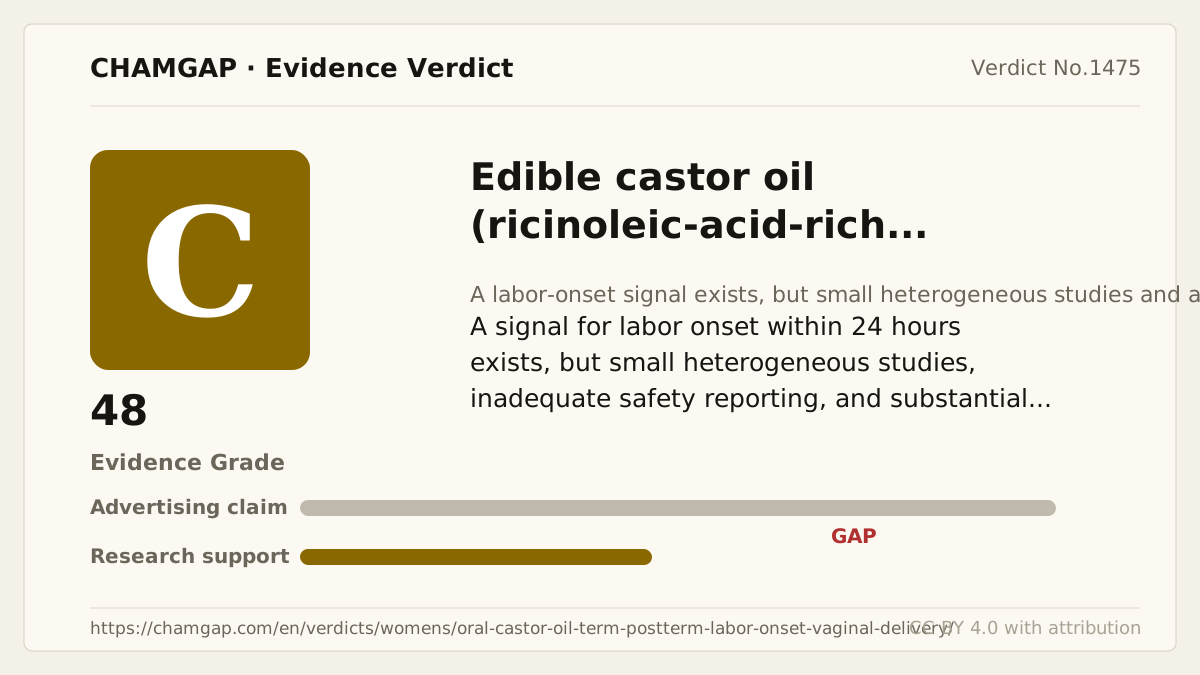
research showsOral edible castor oil is rated C because it may increase labor onset within 24 hours at term or post-term. A 2022 meta-analysis of 12 randomized and observational studies involving 1,653 women reported labor-onset RR 3.27 and vaginal delivery rates of 81% versus 69%. In contrast, a Cochrane review included only three trials and 233 women, judged the methods poor, and urged caution; in one trial every woman taking castor oil experienced nausea. Small heterogeneous designs, inadequate safety reporting, nausea, vomiting, diarrhea, dehydration, and the danger of unsupervised self-use give C with 48 points.
ads claimOnline testimonials can portray a natural edible oil as safe and certain to start labor within 24 hours. Food status does not establish obstetric safety for high-dose oral use late in pregnancy, and both treatment failure and gastrointestinal adverse effects are possible.
Useful facts when choosing a product
- Castor oil is a potent stimulant laxative and can cause nausea, vomiting, abdominal cramping, diarrhea, and dehydration.
- Self-use without confirming gestational age, fetal status, prior cesarean or uterine surgery, fetal presentation, and contraindications to induction is inappropriate.
- Uterine hyperstimulation, fetal-heart-rate abnormalities, and meconium staining are concerns, while existing trials are too small to exclude rare serious harms.
- Labor induction should be discussed with obstetric clinicians who can monitor mother and fetus and respond to an emergency delivery.
Chamgap Semantic Classification Code
Candidate index · review held
M.edible-castor-oil.MULTI.promotion-of-spontaneous-labor-onset-within-and-vaginal-delivery-after-oral-ingestion-at-term-or-post-term.assess.UNKMedicinal interventions > Edible castor oil > Multiple: primary unresolved > Promotion of spontaneous labor onset within and vaginal delivery after oral ingestion at term or post-term > Association or change assessment > Unknown
An automated migration candidate, not an issued permanent code; exact claim scope remains under review. This machine-generated migration candidate helps retrieval but is not a permanent assignment. The original verdict ID and URL remain authoritative.
What the research actually shows
The 2013 Cochrane review included three trials and 233 women evaluating single-dose castor oil. The confidence interval around cesarean RR 2.04 was wide, and no differences appeared in meconium-stained fluid or low Apgar scores, but the sample was too small to assess harms adequately. The 2022 Amerizadeh meta-analysis pooled 12 randomized and observational studies with 1,653 women and reported labor-induction RR 3.27 and vaginal delivery rates of 81% versus 69%. A separate 2022 Moradi review also found a positive signal, but included studies were small and heterogeneous in region and design, limiting certainty.
Why this is classified as C (48)
Positive meta-analysis found labor-onset RR 3.27 and more vaginal deliveries, but mixed randomized and observational designs, small heterogeneous studies, and inadequate power for safety are major limitations. Gastrointestinal adverse effects and self-use risk yield C with 48 points.
Counterpoint. There may be a role within a standardized hospital protocol for selected low-risk term pregnancies. Because labor may not start and fetal status can deteriorate, evidence does not support trying it without clinical assessment and monitoring.
Rejudgment record. Cross-check applied — Accepted the positive labor-onset and vaginal-delivery signal in recent meta-analysis while accounting for mixed randomized and observational designs, small heterogeneous regional protocols, Cochrane's poor-quality assessment, inadequate power for harms, and inappropriate unsupervised use. At cross-check the score was lowered to 48 to reflect that in older evidence every participant given castor oil reported nausea, alongside mixed designs and heterogeneity (grade C retained).
Sub-claim grades by effect
This ingredient is marketed for several effects. A single overall grade blends strong and weak claims together, so each effect is graded separately here. The overall grade reflects the strongest disconfirming or core claim.
| Effect (sub-claim) | Grade | Basis |
|---|---|---|
| Spontaneous labor onset within 24 hours after oral ingestion | C | A positive signal exists, but certainty is low because small heterogeneous randomized and observational studies are mixed. |
| Increase in vaginal delivery | C | Meta-analysis reported 81% versus 69%, but study quality, confounding, and protocol differences prevent a firm conclusion. |
| Reduction in need for standard pharmacologic induction | C | Some studies suggest a signal, but inconsistent prespecification and reporting do not establish a replacement effect. |
Cross-check — AI research and Codex final gate
Evidence Table
| Study | Design | Sample | Funding | Endpoint | Result | Weight |
|---|---|---|---|---|---|---|
| Kelly AJ et al. Cochrane review. 2013 | Systematic review | 3 trials and 233 women | Cochrane Pregnancy and Childbirth Group | Cesarean delivery, meconium staining, maternal and neonatal outcomes, and nausea | Differences in cesarean delivery and meconium staining were uncertain, samples were small, and every exposed woman in one trial reported nausea. | Key conservative synthesis |
| Amerizadeh A et al. 2022 | Systematic review and meta-analysis of randomized and observational studies | 12 studies and 1,653 women | Academic research | Labor onset and vaginal delivery | Labor-induction RR was 3.27 (95% CI 1.96 to 5.46), with vaginal delivery in 81% versus 69%. | Positive but heterogeneous synthesis |
| Moradi M et al. 2022 | Systematic review and meta-analysis | 8 included studies | Academic research | Cervical ripening and labor onset | Reported a signal for increased cervical ripening and labor onset with castor oil. | Supportive positive evidence with study-quality limitations |
Receipt — 3 References
All 3 cited sources were verified for existence at the original page (as of 2026-07-23).
Final verification and publication gate: Codex · Evidence date: 2026-07-23 · Corrections: none
Cite this verdict
[Chamgap] Edible castor oil x Promotion of spontaneous labor onset within 24 hours and vaginal delivery after oral ingestion at term or post-term — Evidence Grade C·48. 3 cited sources checked. Source: https://chamgap.com/en/verdicts/womens/oral-castor-oil-term-postterm-labor-onset-vaginal-delivery/ · CC BY 4.0CC BY 4.0 — free to use with attribution; do not distort grades, numbers, or verdict meaning.
What this document does and does not do
Chamgap is an information source. It reports what research has and has not confirmed; it does not tell readers what to take or buy. That decision belongs to readers and, when needed, medical or legal professionals. This verdict reflects literature available up to the search date and may change as new research appears. Nothing here is medical advice.