
Non-rigid pregnancy pelvic belt,
does it really help with Relief of pregnancy-related pelvic girdle pain and disability at 20-32 weeks' gestation?
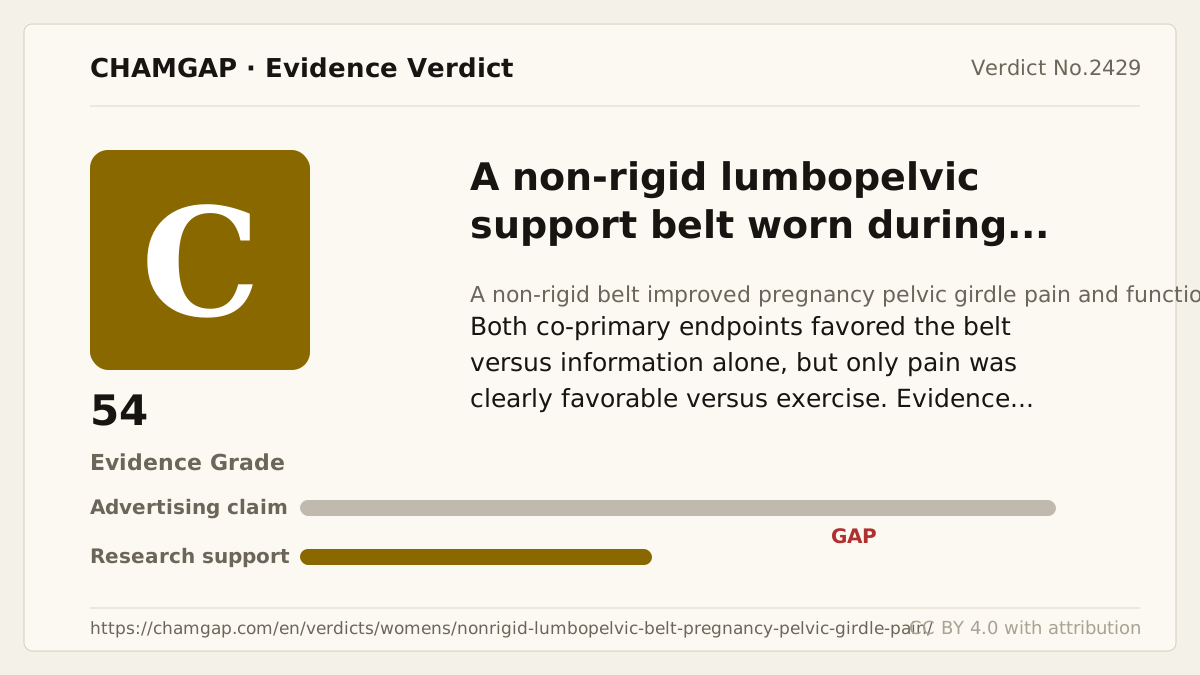
research showsThe grade is C. Kordi randomized 105 women at 20-32 weeks with pelvic girdle pain to information plus belt, information plus home exercise, or information alone. Six-week endpoint values for pain VAS were 11.0+/-15.94, 31.1+/-17.59, and 45.2+/-14.57; ODI values were 20.1+/-7.61, 21.5+/-7.71, and 25.7+/-9.67. Both outcomes favored the belt versus information alone, whereas only pain was clearly favorable versus exercise.
ads claimKorean retail listings often blur abdominal maternity bands and pelvic belts, although abdominal support and compression around the pelvic ring are different applications. Antenatal education should identify the pain pattern and fit the height and tension before using a belt as an activity aid.
Useful facts when choosing a product
- The trial enrolled healthy singleton pregnancies at 20-32 weeks, under age 40, with provocation-test-confirmed pelvic girdle pain.
- Comparators were information alone and information plus home pelvic-stabilizing exercise; this verdict's main contrast is information alone.
- The non-rigid lumbopelvic belt was prescribed during waking hours, but brand and measured daily wearing time were not verified.
Chamgap Semantic Classification Code
Candidate index · review held
UNK.non-rigid-lumbopelvic-support-belt-worn-during-waking-hours-and-removed.intranasal.pregnancy-related-pelvic-girdle-pain-and-disability-at-gestation.relieve.UNKUnknown > non-rigid lumbopelvic support belt worn during waking hours and removed > Intranasal > pregnancy-related pelvic girdle pain and disability at ' gestation > Symptom-relief claim > Unknown
An automated migration candidate, not an issued permanent code; exact claim scope remains under review. This machine-generated migration candidate helps retrieval but is not a permanent assignment. The original verdict ID and URL remain authoritative.
What the research actually shows
Participants had pregnancy-related pelvic girdle pain confirmed by a pain diagram and provocation testing rather than undifferentiated low back pain; mean gestation in the belt arm was 26.5+/-3.7 weeks. Brand, detailed construction, and exact height on the pelvis could not be verified in accessible source text. Women were told to wear the non-rigid belt throughout the six weeks except while sleeping. Ninety-six of 105 were analyzed—34 belt, 31 exercise, 31 information—for 8.6% attrition. Measured daily wearing-time adherence could not be verified. Funding came from Tehran University of Medical Sciences.
Why this is classified as C (54)
Both primary variables improved versus information alone in a publicly funded randomized trial, but the total sample of 105 and six-week duration are two avoidable limitations, giving C with 54 points. Its sample and analysis were stronger than the 32-person crossover study with an inappropriate within-person analysis in verdict 2430, but scores within the same band follow the number of strength axes, so the two verdicts receive the same score.
Counterpoint. Functional disability did not improve versus exercise, and persistence through delivery or postpartum was not established. The larger sample and stronger analysis than verdict 2430 are described rather than converted into a score difference for an identical axis profile.
Rejudgment record. Cross-check applied — Positive co-primary pain and function outcomes versus information alone in one 105-participant six-week trial
| Endpoint | P | Symptom or function itself is the target - including patient reports and performance tests |
| Replication | R1 | Single confirmatory trial |
| Independence | I2 | Decisive evidence is publicly or non-profit funded |
| Effect size | E+ | Meets the clinically important threshold |
Stored derived and displayed grades match; this is not a current recalculation or validity check (C).
Sub-claim grades by effect
This ingredient is marketed for several effects. A single overall grade blends strong and weak claims together, so each effect is graded separately here. The overall grade reflects the strongest disconfirming or core claim.
| Effect (sub-claim) | Grade | Basis |
|---|---|---|
| Six-week pelvic girdle pain relief versus information alone | C | VAS favored the belt, 11.0 versus 45.2. |
| Six-week disability improvement versus information alone | C | ODI favored the belt, 20.1 versus 25.7. |
| Improved disability versus home exercise | D | Six-week endpoint values were 20.1 versus 21.5 without a clear functional advantage; change-score variance and the original confidence interval could not be verified. |
Cross-check — AI research and Codex final gate
Evidence Table
| Study | Design | Sample | Funding | Endpoint | Result | Weight |
|---|---|---|---|---|---|---|
| Kordi R et al. 2013 | Three-arm randomized parallel trial | 105 randomized, 35/35/35; 96 analyzed, 34/31/31 | Tehran University of Medical Sciences | Co-primary variables: pain VAS and ODI function at three and six weeks | Week 6 belt/exercise/information: VAS 11.0+/-15.94/31.1+/-17.59/45.2+/-14.57; ODI 20.1+/-7.61/21.5+/-7.71/25.7+/-9.67 | Pivotal direct RCT |
Receipt — 3 References
All 3 cited sources were verified for existence at the original page (as of 2026-08-07).
Final verification and publication gate: Codex · Evidence date: 2026-08-07 · Corrections: none
Cite this verdict
[Chamgap] Non-rigid pregnancy pelvic belt x relief of pregnancy-related pelvic girdle pain — Evidence Grade C·54. 3 cited sources checked. Source: https://chamgap.com/en/verdicts/womens/nonrigid-lumbopelvic-belt-pregnancy-pelvic-girdle-pain/ · CC BY 4.0CC BY 4.0 — free to use with attribution; do not distort grades, numbers, or verdict meaning.
What this document does and does not do
Chamgap is an information source. It reports what research has and has not confirmed; it does not tell readers what to take or buy. That decision belongs to readers and, when needed, medical or legal professionals. This verdict reflects literature available up to the search date and may change as new research appears. Nothing here is medical advice.