
Metronidazole,
does it really help with Reduced discharge and odor and clinical cure of symptomatic bacterial vaginosis?
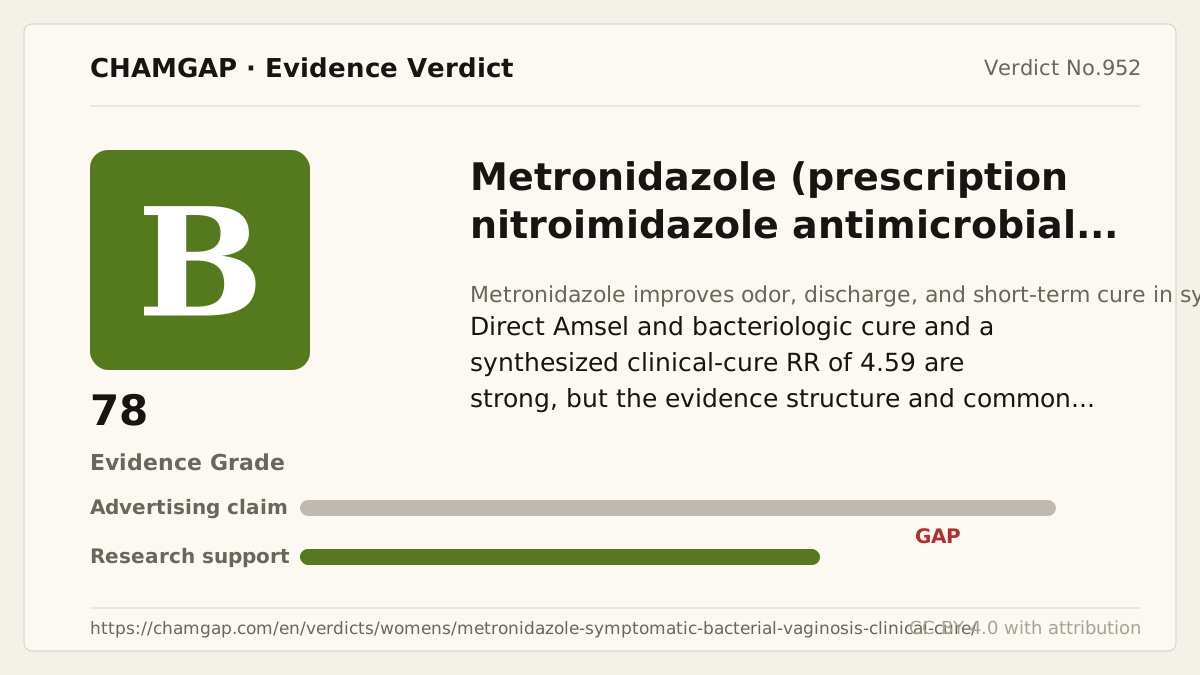
research showsMetronidazole receives an upper B for reducing discharge and odor and producing short-term clinical cure in symptomatic bacterial vaginosis. In a placebo-controlled 0.75% vaginal-gel trial, cure at 9 to 21 days was 87% versus 17%. A 651-participant phase 3 trial also improved direct clinical and bacteriologic cure defined with Amsel components and Nugent scoring. Synthesized evidence found clinical cure superior to placebo with RR 4.59, and oral-regimen cure ranged from 76% to 100% versus 5% to 11% with placebo. Direct cure outcomes are strong, but much evidence consists of older small placebo trials and active comparisons, while longer-term recurrence is common. The grade is B with 78 points rather than A.
ads claimPromotion can turn one antimicrobial course into complete normalization or a recurrence-free solution. Short-term clinical cure and improvement in odor and discharge are supported; permanent microbiome normalization and long-term recurrence prevention are separate claims.
Useful facts when choosing a product
- Prescription oral tablets and vaginal gels use different doses and durations for symptomatic bacterial vaginosis, so the diagnosed and prescribed regimen should be completed as directed.
- Bacterial vaginosis is commonly assessed with Amsel criteria, which include homogeneous discharge, elevated vaginal pH, amine odor, and clue cells, or with a Nugent Gram-stain score.
- Oral metronidazole can cause nausea, abdominal discomfort, headache, and a metallic taste; vaginal gel may produce fewer systemic effects but can cause local irritation or vaginal candidiasis.
- Product labeling advises avoiding alcohol during treatment and for a formulation-specific period afterward because of a potential disulfiram-like reaction and gastrointestinal effects; the applicable label should be followed.
Chamgap Semantic Classification Code
Candidate index · review held
M.metronidazole.UNK.discharge-and-odor-and-clinical-cure-of-symptomatic-bacterial-vaginosis.reduce.MULTIMedicinal interventions > Metronidazole > Unknown > discharge and odor and clinical cure of symptomatic bacterial vaginosis > Reduction claim > Multiple: primary unresolved
An automated migration candidate, not an issued permanent code; exact claim scope remains under review. This machine-generated migration candidate helps retrieval but is not a permanent assignment. The original verdict ID and URL remain authoritative.
What the research actually shows
Hillier 1993 randomized 53 women with bacterial vaginosis to 0.75% metronidazole vaginal gel or placebo and reported cure at 9 to 21 days in 87% versus 17%; 15% of initial responders recurred within one month. Schwebke 2015 randomized 651 women to single-dose 1.3% gel or vehicle and reported day-21 clinical cure, defined by normal discharge, a negative whiff test, and less than 20% clue cells, in 37.2% versus 26.6%. Synthesized evidence found a clinical-cure RR of 4.59 versus placebo, and oral metronidazole cure ranged from 76% to 100% versus 5% to 11% with placebo. Amsel clinical criteria and Nugent Gram-stain scores directly define diagnosis and cure but do not perfectly substitute for every patient-perceived change in odor and discharge.
Why this is classified as B (78)
B. A placebo-controlled gel trial found 87% versus 17% cure, a 651-participant phase 3 trial improved direct Amsel and bacteriologic cure, and synthesized evidence found clinical-cure RR 4.59 and oral-regimen cure of 76% to 100% versus 5% to 11% with placebo. Limited breadth of large independent placebo evidence, variation by formulation and follow-up, and common recurrence yield B with 78 points. Nausea, metallic taste, and label-directed alcohol avoidance remain separate safety issues.
Counterpoint. For symptomatic bacterial vaginosis confirmed by Amsel or Nugent criteria, metronidazole is a reasonable first-line option. Persistent or rapidly recurrent odor and discharge should prompt reassessment for another infection, candidiasis, trichomoniasis, or recurrent bacterial vaginosis rather than repeated unsupervised dosing.
Rejudgment record. Cross-check revision — Accepted direct clinical and bacteriologic cure using Amsel components and Nugent scoring, synthesized clinical-cure RR 4.59, and oral-regimen cure of 76% to 100% versus 5% to 11% with placebo, while applying upper B for limited large independent placebo evidence, formulation and time-point heterogeneity, manufacturer involvement, and frequent recurrence
Sub-claim grades by effect
This ingredient is marketed for several effects. A single overall grade blends strong and weak claims together, so each effect is graded separately here. The overall grade reflects the strongest disconfirming or core claim.
| Effect (sub-claim) | Grade | Basis |
|---|---|---|
| Reduction of abnormal discharge and amine odor in symptomatic bacterial vaginosis | B | Normal discharge and a negative whiff test were directly measured components of clinical cure. |
| Short-term clinical and bacteriologic cure of symptomatic bacterial vaginosis | B | Placebo- and active-controlled trials confirmed cure using Amsel clinical criteria and Nugent scoring. |
| Long-term prevention of bacterial-vaginosis recurrence after treatment | C | Recurrence is common after initial cure, and long-term prevention from a single treatment course is limited. |
Cross-check — AI research and Codex final gate
Evidence Table
| Study | Design | Sample | Funding | Endpoint | Result | Weight |
|---|---|---|---|---|---|---|
| Hillier SL et al. 1993 | Randomized double-blind placebo-controlled crossover trial | 53 women with bacterial vaginosis | Funding not stated in the PubMed abstract | Clinical cure at 9 to 21 days and recurrence at one month | Cure was 87% with 0.75% gel versus 17% with placebo, and 15% of initial responders recurred within one month. | Direct placebo-controlled efficacy evidence, but small |
| Schwebke JR et al. 2015 | Multicenter randomized double-blind vehicle-controlled phase 3 trial | 651 randomized; 487 in the primary analysis | Watson/Actavis product-development trial with company involvement among the authors | Day-21 clinical, Nugent bacteriologic, and combined therapeutic cure | Single-dose 1.3% gel produced clinical cure in 37.2% versus 26.6% and therapeutic cure in 16.8% versus 7.2%. | Large direct product trial with manufacturer concentration |
| Paavonen J et al. 2000 | Randomized double-dummy active-controlled trial | 399 enrolled; 233 evaluable for efficacy | Funding not stated in the PubMed abstract; product-comparison trial | Clinical cure based on amine odor and clue cells | Oral metronidazole 500 mg twice daily for seven days cured 66.7% and was equivalent to vaginal clindamycin. | Direct comparative evidence for the standard oral regimen |
Receipt — 3 References
All 3 cited sources were verified for existence at the original page (as of 2026-07-21).
Final verification and publication gate: Codex · Evidence date: 2026-07-21 · Corrections: none
Cite this verdict
[Chamgap] Metronidazole x reduced discharge and odor and clinical cure of symptomatic bacterial vaginosis — Evidence Grade B·78. 3 cited sources checked. Source: https://chamgap.com/en/verdicts/womens/metronidazole-symptomatic-bacterial-vaginosis-clinical-cure/ · CC BY 4.0CC BY 4.0 — free to use with attribution; do not distort grades, numbers, or verdict meaning.
What this document does and does not do
Chamgap is an information source. It reports what research has and has not confirmed; it does not tell readers what to take or buy. That decision belongs to readers and, when needed, medical or legal professionals. This verdict reflects literature available up to the search date and may change as new research appears. Nothing here is medical advice.