
Methenamine hippurate,
does it really help with Noninferior prevention of recurrent urinary tract infection in women versus antibiotic prophylaxis?
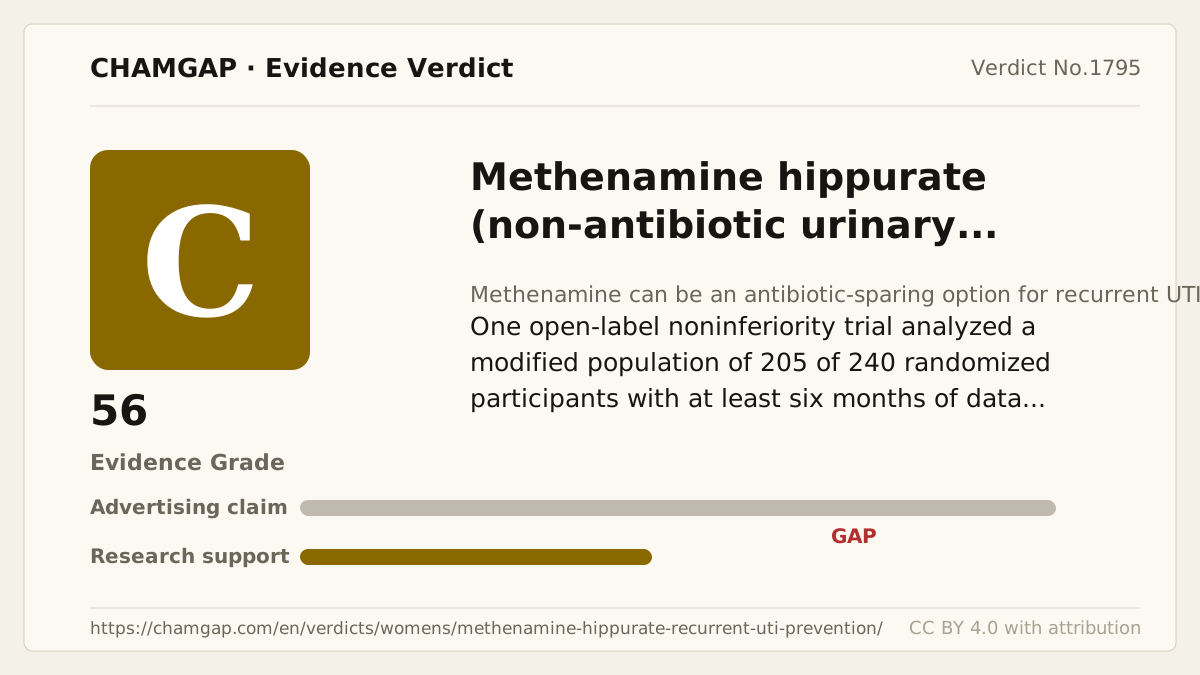
research showsMethenamine hippurate is rated C because a direct trial found it noninferior to long-term low-dose antibiotics for recurrent urinary tract infection prevention in women. ALTAR randomized 240 participants, but only 205, or 85%, with at least six months of observations entered the modified intention-to-treat primary analysis. Symptomatic antibiotic-treated UTI occurred at 1.38 versus 0.89 episodes per person-year, difference 0.49 (90% CI 0.15 to 0.84), within the prespecified noninferiority margin of 1.0. This was an open-label pragmatic trial, although central microbiology laboratory staff were masked.
ads claimMarketing can turn this into identical efficacy to antibiotics or a treatment for every urinary infection. Evidence concerns 12-month prevention in women with recurrent UTI, not treatment of an acute infection.
Useful facts when choosing a product
- ALTAR used methenamine hippurate 1 g twice daily for 12 months and compared it with daily low-dose antibiotics.
- It is a urinary antiseptic acting in acidic urine, not an antibiotic treatment for acute pyelonephritis. Kidney and liver function and interacting drugs require clinical review.
Chamgap Semantic Classification Code
Candidate index · review held
M.methenamine-hippurate.UNK.prevention-of-recurrent-urinary-tract-infection.noninferior.activeMedicinal interventions > Methenamine hippurate > Unknown > prevention of recurrent urinary tract infection > Noninferiority claim > Active comparator
An automated migration candidate, not an issued permanent code; exact claim scope remains under review. This machine-generated migration candidate helps retrieval but is not a permanent assignment. The original verdict ID and URL remain authoritative.
What the research actually shows
ALTAR pragmatically and openly randomized 240 women to methenamine or low-dose antibiotics, while central microbiology laboratory staff were masked. The 205 participants in the primary analysis were not the full intention-to-treat population; they formed a modified population with at least six months of observations, 85% of those randomized. During 12 months, symptomatic antibiotic-treated UTI occurred at 1.38 versus 0.89 episodes per person-year, absolute difference 0.49 (90% CI 0.15 to 0.84), below the prespecified 1.0 margin, so the primary noninferiority endpoint succeeded. A 2021 systematic review considered the earlier small randomized evidence inconclusive. Verdict 1793 is B with 70 points for nitrofurantoin acute treatment, a different purpose. Cranberry in the same prevention indication is verdict 058, which is B with 74 points, but it is a different intervention.
Why this is classified as C (56)
The direct infection endpoint met noninferiority, but one open-label confirmatory trial, a 205/240 modified intention-to-treat analysis, and uncertain earlier evidence impose the R1 ceiling of C with 56 points.
Counterpoint. It can be useful when reducing antibiotic exposure matters, but recurrence pattern, cultures, kidney function, and patient preference can favor antibiotic prophylaxis or another strategy.
Rejudgment record. Cross-check applied — Accepted successful noninferiority on direct infection events while applying the R1 ceiling for one open-label confirmatory trial with modified analysis exclusions
| Endpoint | H | Hard endpoint - actual events such as death |
| Replication | R1 | Single confirmatory trial |
| Independence | I2 | Decisive evidence is publicly or non-profit funded |
| Effect size | E+ | Meets the clinically important threshold |
Stored derived and displayed grades match; this is not a current recalculation or validity check (C).
Sub-claim grades by effect
This ingredient is marketed for several effects. A single overall grade blends strong and weak claims together, so each effect is graded separately here. The overall grade reflects the strongest disconfirming or core claim.
| Effect (sub-claim) | Grade | Basis |
|---|---|---|
| Prevention of symptomatic UTI recurrence over 12 months | C | It succeeded in the modified analysis of one open-label noninferiority trial. |
| Reduction of antibiotic-treated UTI episodes | C | The point estimate was higher than antibiotics but remained within the prespecified margin. |
| Suppression of recurrence after prophylaxis | C | Six-month follow-up existed, but independent long-term replication is lacking. |
Cross-check — AI research and Codex final gate
Evidence Table
| Study | Design | Sample | Funding | Endpoint | Result | Weight |
|---|---|---|---|---|---|---|
| Harding C et al. 2022 ALTAR | Multicenter open-label pragmatic randomized active-control noninferiority trial with masked central microbiology staff | 240 randomized; 205 (85%) with at least six months of data in the modified intention-to-treat primary analysis | Public funding from the United Kingdom NIHR Health Technology Assessment Programme | Twelve-month incidence of symptomatic antibiotic-treated UTI; noninferiority margin 1.0 episode per person-year | Rates were 1.38 versus 0.89 per person-year, difference 0.49 (90% CI 0.15 to 0.84), meeting the primary noninferiority endpoint. | Pivotal single modern confirmatory trial |
| Bakhit M et al. 2021 | Systematic review and meta-analysis of randomized trials in community adult women | Six randomized trials, mostly old and small | Academic research at Bond University, Australia; not manufacturer-led | Symptomatic UTI recurrence and bacteriuria | Earlier evidence suggested possible preventive efficacy but remained inconclusive overall. | Assessment of limitations before ALTAR |
Receipt — 2 References
All 2 cited sources were verified for existence at the original page (as of 2026-07-24).
Final verification and publication gate: Codex · Evidence date: 2026-07-24 · Corrections: none
Cite this verdict
[Chamgap] Methenamine hippurate x prevention of recurrent urinary tract infection — Evidence Grade C·56. 2 cited sources checked. Source: https://chamgap.com/en/verdicts/womens/methenamine-hippurate-recurrent-uti-prevention/ · CC BY 4.0CC BY 4.0 — free to use with attribution; do not distort grades, numbers, or verdict meaning.
What this document does and does not do
Chamgap is an information source. It reports what research has and has not confirmed; it does not tell readers what to take or buy. That decision belongs to readers and, when needed, medical or legal professionals. This verdict reflects literature available up to the search date and may change as new research appears. Nothing here is medical advice.