
Magnesium sulfate,
does it really help with Reduced childhood cerebral palsy and the composite of death or cerebral palsy when given before imminent birth before 32 weeks for fetal neuroprotection?
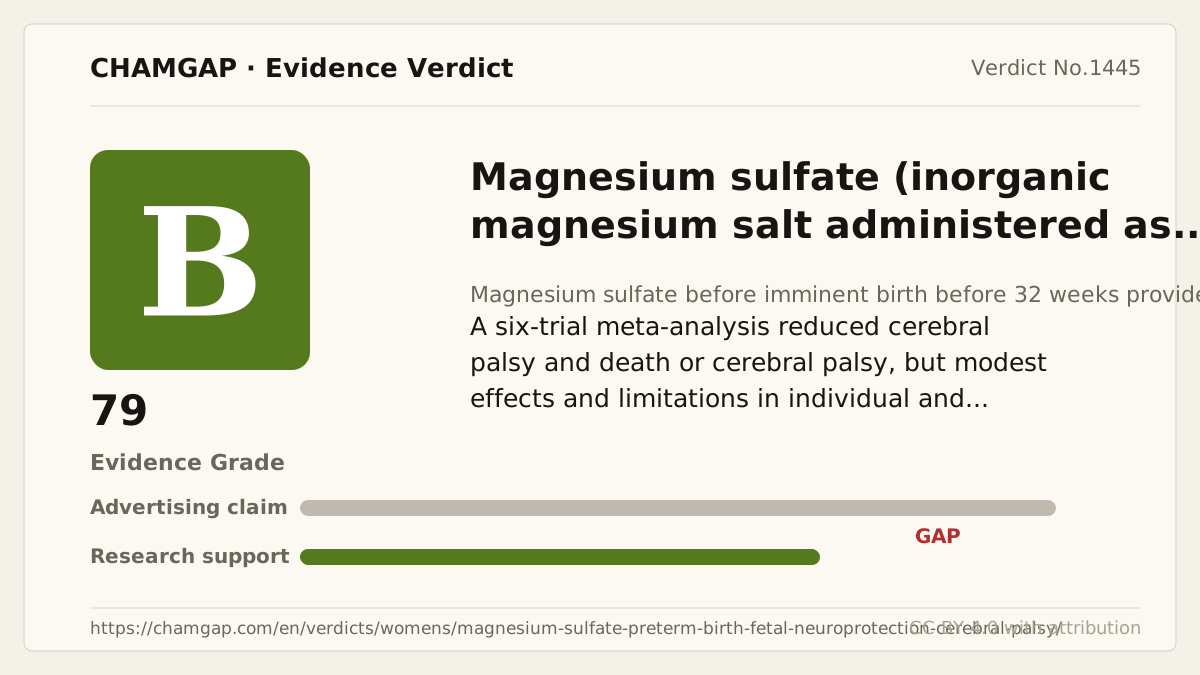
research showsIntravenous magnesium sulfate before imminent birth before 32 weeks is rated B because it reduces childhood cerebral palsy and the composite of death or cerebral palsy. The 2024 Cochrane update reported an RR of 0.71 for cerebral palsy and 0.87 for death or cerebral palsy across six randomized trials through two years' corrected age. Death alone was not reduced, several individual large trials were negative for their own primary outcomes, and school-age effects remain uncertain, supporting B.
ads claimMagnesium sulfate should not be presented as a general preterm-birth prevention drug or a universal prenatal nutrient. This is a hospital-based intravenous neuroprotective intervention for imminent very early birth with maternal monitoring.
Useful facts when choosing a product
- For fetal neuroprotection, magnesium sulfate is administered in hospital as an intravenous loading dose and maintenance infusion before imminent early preterm birth.
- ACOG patient information describes possible use below 32 weeks when delivery is expected within 24 hours; exact gestational windows and regimens vary by local protocol.
- Maternal flushing, nausea, headache, hypotension, and weakness can occur, and adverse effects severe enough to stop treatment are increased.
- Respiratory rate, patellar reflexes, and urine output require monitoring; renal failure increases accumulation and respiratory-depression risk.
Chamgap Semantic Classification Code
Candidate index · review held
M.magnesium-sulfate.intravenous.childhood-cerebral-palsy-and-the-composite-of-death-or-cerebral-palsy-when-given-before-imminent-birth-before-for-fetal-neuroprotection.reduce.placeboMedicinal interventions > Magnesium sulfate > Intravenous > childhood cerebral palsy and the composite of death or cerebral palsy when given before imminent birth before for fetal neuroprotection > Reduction claim > Placebo
An automated migration candidate, not an issued permanent code; exact claim scope remains under review. This machine-generated migration candidate helps retrieval but is not a permanent assignment. The original verdict ID and URL remain authoritative.
What the research actually shows
The 2024 Cochrane review included six placebo-controlled randomized trials enrolling 5,917 pregnant participants at less than 34 weeks and 6,759 fetuses alive at randomization. Cerebral palsy and death or cerebral palsy through age two fell, while death alone was essentially unchanged at RR 0.96. In the largest BEAM trial of 2,241 women, the primary composite of moderate or severe cerebral palsy or death was not significantly reduced, although moderate or severe cerebral palsy among survivors fell from 3.5% to 1.9%. ACOG's statement, reaffirmed in 2023, recognizes neuroprotective use before anticipated early preterm birth.
Why this is classified as B (79)
The 2024 Cochrane synthesis of six randomized trials found high-certainty reductions in cerebral palsy and death or cerebral palsy. However, the absolute effect is modest, death alone was unchanged, individual primary outcomes were inconsistent, and school-age results remain uncertain, giving B with 79 points.
Counterpoint. Benefit is most relevant when very early birth is genuinely imminent, requiring an obstetric protocol tailored to gestational age, expected delivery timing, and kidney function.
Rejudgment record. New verdict — Six randomized trials in the 2024 Cochrane review reduced cerebral palsy and death or cerebral palsy, while unchanged death alone, some negative individual primary outcomes, uncertain school-age results, and protocol heterogeneity were retained
Sub-claim grades by effect
This ingredient is marketed for several effects. A single overall grade blends strong and weak claims together, so each effect is graded separately here. The overall grade reflects the strongest disconfirming or core claim.
| Effect (sub-claim) | Grade | Basis |
|---|---|---|
| Reduced cerebral palsy through age two | B | The RR was 0.71 across six trials and 6,107 children, but school-age effects remain uncertain. |
| Reduced composite of death or cerebral palsy | B | The RR was 0.87 across six trials and 6,481 children, while death alone was not reduced. |
| Reduced severe intraventricular hemorrhage | B | This supporting outcome had an RR of 0.76 across five trials and 5,885 infants with moderate certainty. |
Cross-check — AI research and Codex final gate
Evidence Table
| Study | Design | Sample | Funding | Endpoint | Result | Weight |
|---|---|---|---|---|---|---|
| Shepherd et al. Cochrane update 2024 | Systematic review and meta-analysis of randomized placebo-controlled trials | Six randomized trials, 5,917 pregnant participants, and 6,759 fetuses alive at randomization | Academic Cochrane review; several authors were investigators in included trials | Cerebral palsy, death, and death or cerebral palsy through two years' corrected age | Cerebral palsy RR was 0.71 (95% CI 0.57 to 0.89; 6,107 children), death or cerebral palsy RR was 0.87 (95% CI 0.77 to 0.98; 6,481 children), and death alone RR was 0.96. | Key synthesis of multiple randomized trials |
| Rouse et al. BEAM trial 2008 | Multicenter randomized double-blind placebo-controlled trial | 2,241 women at imminent risk of delivery before 32 weeks | United States NICHD and NINDS public funding | Composite of stillbirth or death before age one and moderate or severe cerebral palsy | The primary composite was not significant, but moderate or severe cerebral palsy among survivors was 1.9% versus 3.5% (RR 0.55, 95% CI 0.32 to 0.95). | Largest individual trial with a negative primary composite |
Receipt — 3 References
All 3 cited sources were verified for existence at the original page (as of 2026-07-23).
Final verification and publication gate: Codex · Evidence date: 2026-07-23 · Corrections: none
Cite this verdict
[Chamgap] Magnesium sulfate x fetal neuroprotection before birth before 32 weeks — Evidence Grade B·79. 3 cited sources checked. Source: https://chamgap.com/en/verdicts/womens/magnesium-sulfate-preterm-birth-fetal-neuroprotection-cerebral-palsy/ · CC BY 4.0CC BY 4.0 — free to use with attribution; do not distort grades, numbers, or verdict meaning.
What this document does and does not do
Chamgap is an information source. It reports what research has and has not confirmed; it does not tell readers what to take or buy. That decision belongs to readers and, when needed, medical or legal professionals. This verdict reflects literature available up to the search date and may change as new research appears. Nothing here is medical advice.