
Lying down in second-stage labor,
does it really help with Increased spontaneous vaginal birth versus an upright policy?
research showsThe grade is B. BUMPES randomized 3,236 women and included 3,093 in the primary analysis. Spontaneous vaginal birth occurred in 632/1,537 (41.1%) lying down versus 548/1,556 (35.2%) upright. The adjusted risk ratio for upright versus lying was 0.86 (95% CI 0.78 to 0.94), and the NNT for lying was 17 (11 to 40). Independent confirmation is absent, giving B with 76 points.
ads claimLying down was a policy of keeping the pelvis horizontal and included lateral positions; it was not rigid supine immobilization. Maternal preference and clinical signals can require position changes.
Useful facts when choosing a product
- The lying policy kept the pelvis as horizontal as possible; upright included sitting, kneeling, or standing.
- The BMJ paper and HTA monograph are two reports of one BUMPES trial.
- ISRCTN35706297 listed spontaneous vaginal birth as the primary outcome.
Chamgap Semantic Classification Code
Candidate index · review held
X.lying-down-policy-keeping-the-pelvis.vaginal.spontaneous-vaginal-birth.increase.UNKBehaviors, exposures and policies > lying-down policy keeping the pelvis > Vaginal > spontaneous vaginal birth > Increase claim > Unknown
An automated migration candidate, not an issued permanent code; exact claim scope remains under review. This machine-generated migration candidate helps retrieval but is not a permanent assignment. The original verdict ID and URL remain authoritative.
What the research actually shows
BUMPES used secure web randomization across 41 UK labor wards, randomizing 3,236 women and analyzing 3,093 (95.6%) as allocated. Spontaneous vaginal birth occurred in 632/1,537 lying versus 548/1,556 upright, adjusted RR 0.86 (0.78 to 0.94) for upright versus lying. ISRCTN35706297 prospectively listed spontaneous vaginal birth as primary, matching the paper. NIHR HTA programme project 08/22/02 funded the trial. The BMJ article and HTA monograph report the same randomization and were counted once.
Why this is classified as B (76)
A large publicly funded randomized trial showed a meaningful hard-event difference, but post-randomization exclusions and no independent replication give B with 76 points.
Counterpoint. This applies to second-stage positioning in nulliparous women with low-dose epidural, not multiparous labor, no epidural, breech, or multiple pregnancy.
Rejudgment record. Cross-check applied — The BUMPES BMJ paper, HTA monograph, and ISRCTN35706297 were checked for duplicate reporting, allocation, analyzed counts, primary outcome, and funding
| Endpoint | H | Hard endpoint - actual events such as death |
| Replication | R1 | Single confirmatory trial |
| Independence | I2 | Decisive evidence is publicly or non-profit funded |
| Effect size | E+ | Meets the clinically important threshold |
Stored derived and displayed grades match; this is not a current recalculation or validity check (B).
Sub-claim grades by effect
This ingredient is marketed for several effects. A single overall grade blends strong and weak claims together, so each effect is graded separately here. The overall grade reflects the strongest disconfirming or core claim.
| Effect (sub-claim) | Grade | Basis |
|---|---|---|
| Increased spontaneous vaginal birth | B | Rates were 41.1% versus 35.2%, an absolute difference of 5.9 points. |
| Improved all maternal and neonatal outcomes | D | Most secondary maternal and neonatal outcomes did not differ clearly. |
Cross-check — AI research and Codex final gate
Evidence Table
| Study | Design | Sample | Funding | Endpoint | Result | Weight |
|---|---|---|---|---|---|---|
| Epidural and Position Trial Collaborative Group. 2017 BUMPES | Pragmatic randomized trial across 41 labor wards | 3,236 randomized; 3,093 in primary analysis, 1,556 versus 1,537 | NIHR Health Technology Assessment programme, project 08/22/02 | Primary spontaneous vaginal birth outcome | Lying 632/1,537 (41.1%) versus upright 548/1,556 (35.2%); adjusted RR upright versus lying 0.86 (0.78 to 0.94) | Only large publicly funded confirmatory trial |
| Bick D et al. 2017 BUMPES HTA monograph | Detailed HTA report of the same BUMPES trial | Same 3,236 randomized and 3,093 analyzed | NIHR Health Technology Assessment programme | Same primary spontaneous vaginal birth outcome | Same result as the main paper and not a separate trial | Same-trial report used for methods verification |
Receipt — 2 References
All 2 cited sources were verified for existence at the original page (as of 2026-08-15).
Final verification and publication gate: Codex · Evidence date: 2026-08-15 · Corrections: none
Cite this verdict
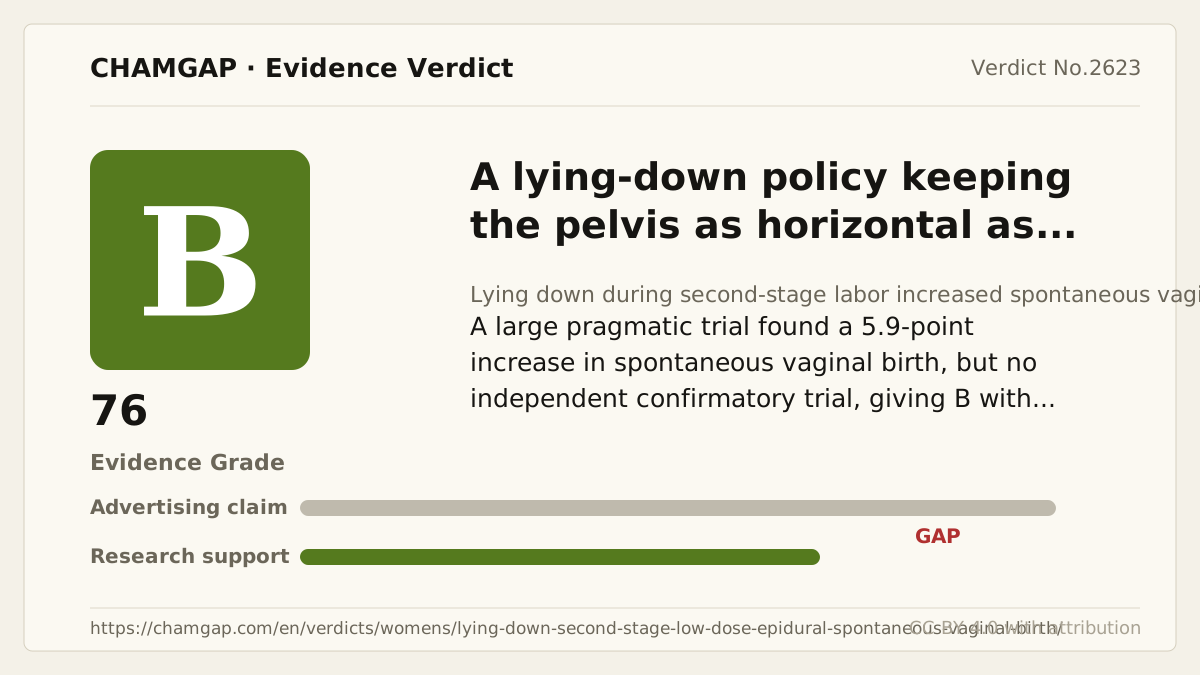
[Chamgap] Lying down in second-stage labor x increased spontaneous vaginal birth — Evidence Grade B·76. 2 cited sources checked. Source: https://chamgap.com/en/verdicts/womens/lying-down-second-stage-low-dose-epidural-spontaneous-vaginal-birth/ · CC BY 4.0CC BY 4.0 — free to use with attribution; do not distort grades, numbers, or verdict meaning.
What this document does and does not do
Chamgap is an information source. It reports what research has and has not confirmed; it does not tell readers what to take or buy. That decision belongs to readers and, when needed, medical or legal professionals. This verdict reflects literature available up to the search date and may change as new research appears. Nothing here is medical advice.