
Low-dose aspirin,
does it really help with Increased live birth in women with unexplained recurrent miscarriage without antiphospholipid syndrome?
research showsLow-dose aspirin is rated F because it does not increase live birth in women with unexplained recurrent miscarriage who do not have antiphospholipid syndrome. After high-risk-of-bias studies were excluded, the 2014 Cochrane review found an aspirin-versus-placebo live-birth RR of 0.94 (95% CI 0.80 to 1.11; 256 women). In the 364-person ALIFE trial, live birth was 50.8% with aspirin alone and 57.0% with placebo; a 400-person trial in 2018 reported 83.0% versus 85.5%, RR 0.97. A 2025 meta-analysis of three aspirin-only trials with 656 participants was also null without heterogeneity, I²=0%, RR 0.97 (95% CI 0.90 to 1.04). RCOG Green-top Guideline No. 17 from 2023 recommends against aspirin and/or heparin for unexplained recurrent miscarriage, while separately recommending aspirin plus heparin for antiphospholipid syndrome. Repeated refutation plus a guideline recommendation against use gives F with 15 points. Bleeding, gastrointestinal irritation, and pregnancy-specific indication and timing remain separate from efficacy.
ads claimStatements that thinning the blood improves implantation or that baby aspirin is harmless enough to try apply antithrombotic reasoning from antiphospholipid syndrome to all recurrent miscarriage. Direct placebo-controlled evidence in unexplained recurrent miscarriage found no live-birth benefit.
Useful facts when choosing a product
- Low-dose aspirin irreversibly inhibits platelet cyclooxygenase-1; even a 75-to-100-mg product is a medicine requiring an indication and bleeding-risk assessment, not a dietary supplement.
- Antiphospholipid syndrome, high preeclampsia risk, and secondary cardiovascular prevention have different evidence and timing, so this null unexplained-miscarriage verdict cannot be transferred to those indications.
- Bruising, nosebleeds, vaginal bleeding, gastrointestinal irritation, and gastrointestinal bleeding can occur, and other nonsteroidal anti-inflammatory drugs, anticoagulants, or antiplatelet drugs can raise bleeding risk.
- People planning pregnancy or already pregnant should not self-start aspirin; an obstetric clinician should assess causes of recurrent loss, preeclampsia risk, other indications, and timing of discontinuation.
Chamgap Semantic Classification Code
Candidate index · review held
M.aspirin.UNK.live-birth-with-unexplained-recurrent-miscarriage-without-antiphospholipid-syndrome.increase.placeboMedicinal interventions > aspirin > Unknown > live birth with unexplained recurrent miscarriage without antiphospholipid syndrome > Increase claim > Placebo
An automated migration candidate, not an issued permanent code; exact claim scope remains under review. This machine-generated migration candidate helps retrieval but is not a permanent assignment. The original verdict ID and URL remain authoritative.
What the research actually shows
ALIFE randomized 364 women with unexplained recurrent miscarriage to aspirin 80 mg, aspirin plus nadroparin, or placebo. Live birth was 50.8% with aspirin alone and 57.0% with placebo. Cochrane synthesized nine trials, but after high-risk-of-bias positive studies were excluded, aspirin, low-molecular-weight heparin, and combinations did not improve live birth. Blomqvist and colleagues randomized 400 women with at least three consecutive unexplained first-trimester losses to acetylsalicylic acid 75 mg or placebo after fetal cardiac activity was detected and reported RR 0.97. Onori and colleagues in 2025 pooled three aspirin-only trials of 50 to 80 mg involving 656 women and confirmed RR 0.97. This axis is separate from aspirin verdicts for cardiovascular prevention, dementia, or healthy longevity.
Why this is classified as F (15)
Live birth was repeatedly null in the better-quality Cochrane comparison, RR 0.94, in ALIFE, in the 400-person trial, RR 0.97, and in the 2025 meta-analysis of three trials and 656 women, RR 0.97 with I²=0%. RCOG in 2023 recommends against aspirin and/or heparin for unexplained recurrent miscarriage while recommending the combination for antiphospholipid syndrome. Repeated refutation plus guidance against use gives F with 15 points. Bleeding and pregnancy-specific prescribing remain separate safety issues.
Counterpoint. Reassessment requires a sufficiently powered independent placebo-controlled trial excluding antiphospholipid syndrome and other established causes, with dose, start time, and number of prior losses prespecified. Current evidence does not support empirical self-treatment solely to increase live birth in unexplained recurrent miscarriage.
Rejudgment record. Cross-verification incorporated — Applied F after repeated null live-birth results in the 2014 better-quality Cochrane comparison at RR 0.94, ALIFE, the 400-person 2018 trial at RR 0.97, and the 2025 meta-analysis of three trials and 656 women at RR 0.97 with I²=0%, together with the 2023 RCOG recommendation against aspirin and/or heparin for unexplained recurrent miscarriage and its separate recommendation for combined therapy in antiphospholipid syndrome
Sub-claim grades by effect
This ingredient is marketed for several effects. A single overall grade blends strong and weak claims together, so each effect is graded separately here. The overall grade reflects the strongest disconfirming or core claim.
| Effect (sub-claim) | Grade | Basis |
|---|---|---|
| Increased live-birth rate in women with unexplained recurrent miscarriage | F | The better-quality Cochrane comparison at RR 0.94 and the 2025 three-trial meta-analysis at RR 0.97 with I²=0% repeatedly found a null result, and RCOG recommends against use. |
| Reduced pregnancy loss in unexplained recurrent miscarriage | F | ALIFE and the 400-person placebo-controlled trial found no improvement, and RCOG recommends against aspirin and/or heparin for unexplained recurrent miscarriage. |
| Increased live birth from preconception-initiated low-dose aspirin | F | Overall randomized results are repeatedly null, and selected recent single-loss or inflammatory post hoc signals cannot be generalized to unexplained recurrent miscarriage. |
Cross-check — AI research and Codex final gate
Evidence Table
| Study | Design | Sample | Funding | Endpoint | Result | Weight |
|---|---|---|---|---|---|---|
| de Jong PG et al. 2014 Cochrane review | Cochrane systematic review of randomized and quasi-randomized trials | Nine trials with 1,228 women; 256 in the better-quality aspirin-versus-placebo analysis | Cochrane Pregnancy and Childbirth review; some authors were ALIFE investigators and that trial was assessed by other reviewers | Live birth and pregnancy or obstetric complications | After high-risk-of-bias studies were excluded, aspirin versus placebo was null for live birth, RR 0.94 (95% CI 0.80 to 1.11). | Key higher-quality synthesis |
| Kaandorp SP et al. 2010 ALIFE | Multicenter randomized placebo-controlled trial | 364 women with unexplained recurrent miscarriage | Supported by the Netherlands Organization for Health Research and Development and GlaxoSmithKline; Meda Pharma packaged and donated aspirin and placebo | Live birth, miscarriage, obstetric complications, and adverse events | Live birth was 50.8% with aspirin alone and 57.0% with placebo, with no improvement. | Null randomized trial on the direct clinical endpoint |
| Blomqvist L et al. 2018 | Randomized double-blind placebo-controlled trial | 400 women with at least three consecutive unexplained first-trimester losses | Funding source not reported in the PubMed abstract | Live birth | Live birth was 83.0% with acetylsalicylic acid 75 mg versus 85.5% with placebo, RR 0.97 (95% CI 0.89 to 1.06). | Direct null replication trial |
| Onori M et al. 2025 | Systematic review and meta-analysis of aspirin-only randomized trials | Three randomized trials with 656 women with unexplained recurrent pregnancy loss | Supported by the Italian Ministry of Health; no conflicts of interest reported | Live-birth rate | Acetylsalicylic acid 50 to 80 mg did not increase live birth versus placebo, with no between-study heterogeneity, RR 0.97 (95% CI 0.90 to 1.04; I²=0%). | Latest direct synthesis with a null result |
| Regan L et al. RCOG Green-top Guideline No. 17, 2023 | Evidence-based clinical practice guideline | Reviewed randomized evidence and meta-analyses in unexplained recurrent miscarriage | Royal College of Obstetricians and Gynaecologists guideline | Recommendations for investigation and treatment of recurrent miscarriage | Recommended that aspirin and/or heparin not be given for unexplained recurrent miscarriage, while recommending aspirin plus heparin for antiphospholipid syndrome. | Explicit guideline recommendation against use |
Receipt — 6 References
All 6 cited sources were verified for existence at the original page (as of 2026-07-21).
Final verification and publication gate: Codex · Evidence date: 2026-07-21 · Corrections: none
Cite this verdict
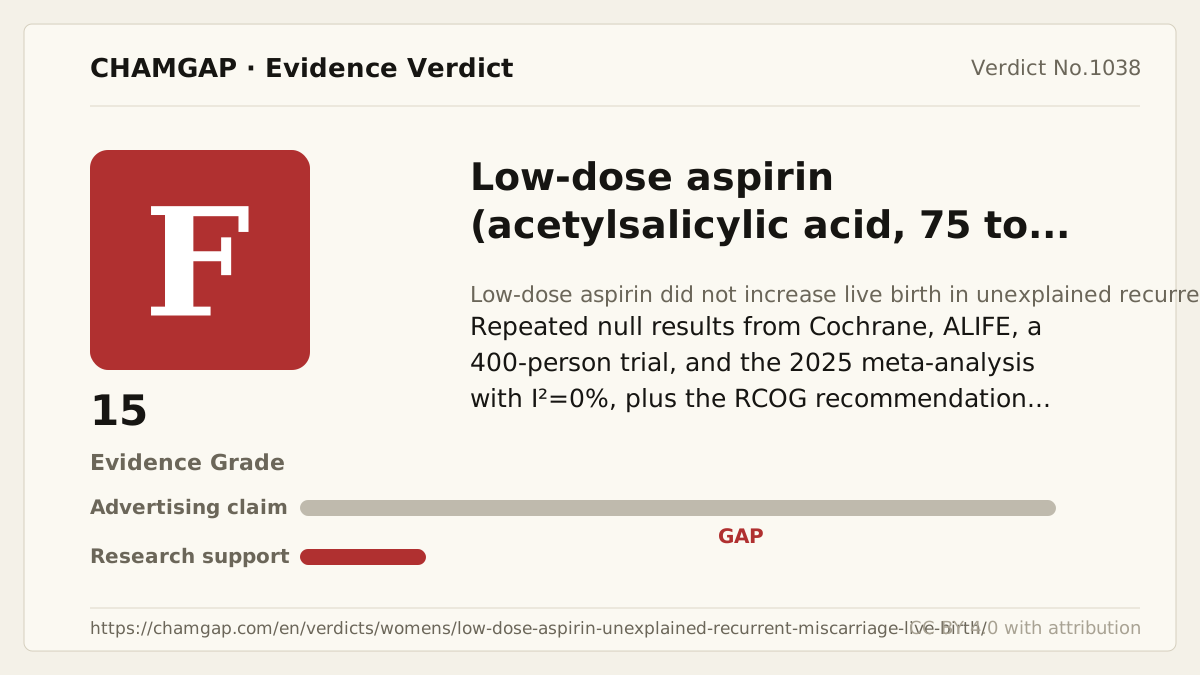
[Chamgap] Low-dose aspirin x increased live birth in unexplained recurrent miscarriage without antiphospholipid syndrome — Evidence Grade F·15. 6 cited sources checked. Source: https://chamgap.com/en/verdicts/womens/low-dose-aspirin-unexplained-recurrent-miscarriage-live-birth/ · CC BY 4.0CC BY 4.0 — free to use with attribution; do not distort grades, numbers, or verdict meaning.
What this document does and does not do
Chamgap is an information source. It reports what research has and has not confirmed; it does not tell readers what to take or buy. That decision belongs to readers and, when needed, medical or legal professionals. This verdict reflects literature available up to the search date and may change as new research appears. Nothing here is medical advice.