
Low-dose aspirin,
does it really help with Prevention of preterm preeclampsia when a high-risk pregnant patient takes it after 12 weeks of gestation under clinician direction?
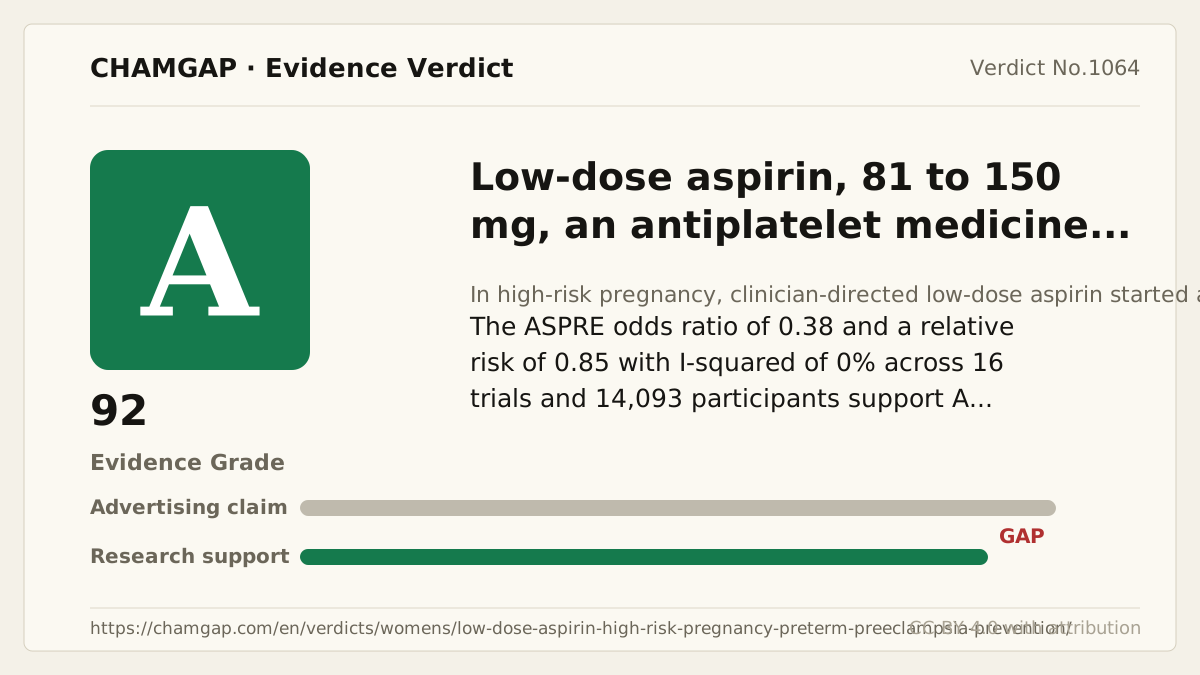
research showsLow-dose aspirin is rated A because it reduces preterm preeclampsia when a high-risk pregnant patient starts it after 12 weeks under clinician direction. In the double-blind ASPRE trial of 1,776 participants, 150 mg begun at 11 to 14 weeks reduced preeclampsia before 37 weeks from 4.3% to 1.6%, with an odds ratio of 0.38 (95% CI 0.20 to 0.74). In the United States Preventive Services Task Force review, the preeclampsia analysis of 16 randomized trials and 14,093 participants found a relative risk of 0.85 with I-squared of 0%, and the full review of 23 trials and 26,952 participants also found reductions in preterm birth and perinatal mortality. This claim-specific evidence is separate from F verdicts for aspirin in cardiovascular prevention, dementia, recurrent miscarriage, or healthy longevity. Direct clinical endpoints and consistency support A, while the selected high-risk singleton population, 150-mg dose, start at 11 to 14 weeks, and possible small-study effects in the meta-analysis give A with 92 points. Bleeding, allergy, and individual contraindications remain separate safety considerations.
ads claimOver-the-counter availability can be misread as permission for every pregnant patient to self-treat. The evidence applies to patients assessed as having elevated preeclampsia risk who use an appropriate dose and timing under clinical direction; it does not show universal benefit in low-risk pregnancy or prevention of every cause of miscarriage.
Useful facts when choosing a product
- Preventive doses for high-risk pregnancy range from 81 to 150 mg daily across guidelines and countries, generally starting after 12 weeks and preferably before 16 weeks when feasible.
- ASPRE used 150 mg from 11 to 14 weeks until 36 weeks, but an obstetric clinician should determine actual starting and stopping points from risk factors and the delivery plan.
- High-risk factors include previous preeclampsia, multifetal gestation, chronic hypertension, pregestational diabetes, kidney disease, and autoimmune disease, while combinations of moderate-risk factors may also qualify.
- Low-dose exposure is generally considered safe in pregnancy, but bleeding, gastrointestinal irritation, aspirin or nonsteroidal anti-inflammatory drug hypersensitivity, and concomitant anticoagulants require review, so self-initiation is inappropriate.
Chamgap Semantic Classification Code
Candidate index · review held
M.aspirin.UNK.preterm-preeclampsia-when-a-high-risk-pregnant-patient-takes-it-after-of-gestation-under-clinician-direction.prevent.placeboMedicinal interventions > aspirin > Unknown > preterm preeclampsia when a high-risk pregnant patient takes it after of gestation under clinician direction > Occurrence-prevention claim > Placebo
An automated migration candidate, not an issued permanent code; exact claim scope remains under review. This machine-generated migration candidate helps retrieval but is not a permanent assignment. The original verdict ID and URL remain authoritative.
What the research actually shows
Rolnik and colleagues randomized 1,776 singleton pregnancies at high risk for preterm preeclampsia to aspirin 150 mg or placebo from 11 to 14 weeks until 36 weeks. Absolute risk of preeclampsia before 37 weeks fell from 4.3% to 1.6%, without significant between-group differences in neonatal adverse outcomes or other adverse events. The evidence review by Henderson and colleagues included 23 randomized trials and 26,952 participants using 50 to 150 mg; among increased-risk pregnancies, preeclampsia had a relative risk of 0.85 across 16 trials and 14,093 participants, preterm birth 0.80, and perinatal mortality 0.79. The United States Preventive Services Task Force recommends 81 mg after 12 weeks for high-risk pregnancies, but the underlying trials, rather than the recommendation wording itself, determine the evidence grade.
Why this is classified as A (92)
ASPRE reduced the direct clinical endpoint of preterm preeclampsia from 4.3% to 1.6%, with an odds ratio of 0.38, while the independent preeclampsia analysis of 16 trials and 14,093 participants found a relative risk of 0.85 with I-squared of 0% and the full 23-trial review supported related clinical outcomes. A is retained, but the selected high-risk singleton population, 150-mg dose, start at 11 to 14 weeks, and possible small-study effects give A with 92 points. Bleeding and contraindications are separate from the efficacy score.
Counterpoint. Benefit depends on accurate risk assessment, timing, and dose. Pregnant patients should confirm the indication, allergy and bleeding risks, concomitant medicines, and stopping plan with an obstetric clinician rather than starting an over-the-counter product independently.
Rejudgment record. Cross-verification incorporated — Retained A because the large double-blind ASPRE trial reduced the direct clinical endpoint of preterm preeclampsia with an odds ratio of 0.38 and the United States Preventive Services Task Force preeclampsia analysis found a relative risk of 0.85 with I-squared of 0% across 16 randomized trials and 14,093 participants; the selected high-risk singleton population, 150-mg dose, start at 11 to 14 weeks, and possible small-study effects were reflected in the score of 92
Sub-claim grades by effect
This ingredient is marketed for several effects. A single overall grade blends strong and weak claims together, so each effect is graded separately here. The overall grade reflects the strongest disconfirming or core claim.
| Effect (sub-claim) | Grade | Basis |
|---|---|---|
| Prevention of preterm preeclampsia in high-risk pregnancy | A | ASPRE found an odds ratio of 0.38 for the direct clinical endpoint and a multi-trial synthesis supports benefit; clinician direction and appropriate timing are required. |
| Prevention of preeclampsia overall in high-risk pregnancy | A | An independent synthesis of 16 trials and 14,093 participants found a consistent reduction, with RR 0.85. |
| Prevention of term preeclampsia | C | The large ASPRE effect was concentrated in preterm preeclampsia, while benefit for term disease is much less clear. |
Cross-check — AI research and Codex final gate
Evidence Table
| Study | Design | Sample | Funding | Endpoint | Result | Weight |
|---|---|---|---|---|---|---|
| ASPRE, Rolnik et al. 2017 | Multicenter randomized double-blind placebo-controlled trial | 1,776 high-risk singleton pregnancies; 1,620 analyzed | European Union Seventh Framework Program and the Fetal Medicine Foundation | Preeclampsia resulting in delivery before 37 weeks | Preeclampsia occurred in 13 of 798 patients, 1.6%, with aspirin versus 35 of 822, 4.3%, with placebo; OR 0.38 (95% CI 0.20 to 0.74; P=0.004). | Key large direct clinical-endpoint evidence |
| Henderson et al. 2021 evidence review for the USPSTF | Systematic review and random-effects meta-analysis of randomized trials | 23 randomized trials and 26,952 participants; 16 trials and 14,093 participants for preeclampsia | Public evidence review commissioned through the United States Agency for Healthcare Research and Quality | Preeclampsia, preterm birth, perinatal mortality, fetal growth restriction, and bleeding harms | Relative risks were 0.85 for preeclampsia, 0.80 for preterm birth, and 0.79 for perinatal mortality; postpartum hemorrhage was not significantly increased, RR 1.03. | Independent multi-trial consistency evidence |
| USPSTF recommendation statement 2021 | Preventive recommendation based on systematic evidence assessment | Full randomized evidence base in high-risk pregnancy | Independent United States federal preventive-services task force | Prevention of preeclampsia and related maternal and perinatal morbidity and mortality | Recommended prescribing low-dose aspirin 81 mg per day after 12 weeks of gestation for high-risk pregnant patients, with a B recommendation. | Confirms population, dose, and timing; not an efficacy-grade bonus |
Receipt — 3 References
All 3 cited sources were verified for existence at the original page (as of 2026-07-21).
Final verification and publication gate: Codex · Evidence date: 2026-07-21 · Corrections: none
Cite this verdict
[Chamgap] Low-dose aspirin x prevention of preterm preeclampsia in high-risk pregnancy — Evidence Grade A·92. 3 cited sources checked. Source: https://chamgap.com/en/verdicts/womens/low-dose-aspirin-high-risk-pregnancy-preterm-preeclampsia-prevention/ · CC BY 4.0CC BY 4.0 — free to use with attribution; do not distort grades, numbers, or verdict meaning.
What this document does and does not do
Chamgap is an information source. It reports what research has and has not confirmed; it does not tell readers what to take or buy. That decision belongs to readers and, when needed, medical or legal professionals. This verdict reflects literature available up to the search date and may change as new research appears. Nothing here is medical advice.