
Early low-dose aspirin in nulliparous singleton pregnancy,
does it really help with Prevention of delivery before 37 weeks in nulliparous singleton pregnancies in low-resource countries?
research showsThe grade is B with 76 points. ASPIRIN randomized 11,976 women and included 11,544 with pregnancy outcomes at or after 20 weeks, 5,780 aspirin and 5,764 placebo, in its prespecified primary analysis. Preterm birth occurred in 668/5,780 (11.6%) versus 754/5,764 (13.1%), RR 0.89 (95% CI 0.81 to 0.98), P=0.012. This large publicly funded double-masked trial reduced an actual birth event, but there is only one independent confirmation of the narrow question.
ads claimIdentical ingredients do not make identical questions. Verdict 1064 is A with 92 points for preterm preeclampsia in high-risk pregnancies, whereas this verdict tests delivery before 37 weeks in low-resource nulliparous women. Other interventions for preterm-birth prevention include verdict 533, B with 74 points for DHA or omega-3, and verdict 1374, C with 59 points for vaginal progesterone.
Useful facts when choosing a product
- The trial used aspirin 81 mg daily from 6 weeks 0 days to 13 weeks 6 days until about 36 weeks or delivery.
- The primary analysis included 11,544 of 11,976 randomized women under a prespecified modified approach.
- Verdict 1064 is A with 92 points but addresses preterm preeclampsia in high-risk pregnancy, a different population and primary endpoint.
Chamgap Semantic Classification Code
Candidate index · review held
UNK.aspirin-started-at-to-of-pregnancy.UNK.delivery-before-in-nulliparous-singleton-pregnancies-in-low-resource-countries.prevent.placeboUnknown > aspirin started at to of pregnancy > Unknown > delivery before in nulliparous singleton pregnancies in low-resource countries > Occurrence-prevention claim > Placebo
An automated migration candidate, not an issued permanent code; exact claim scope remains under review. This machine-generated migration candidate helps retrieval but is not a permanent assignment. The original verdict ID and URL remain authoritative.
What the research actually shows
The 2020 double-masked placebo trial by Hoffman MK, Goudar SS, Kodkany BS, Metgud M, Somannavar M, Okitawutshu J, Lokangaka A, Tshefu A, Bose CL, Mwapule A, Mwenechanya M, Chomba E, Carlo WA, Chicuy J, Figueroa L, Garces A, Krebs NF, Jessani S, Zehra F, Saleem S, Goldenberg RL, Kurhe K, Das P, Patel A, Hibberd PL, Achieng E, Nyongesa P, Esamai F, Liechty EA, Goco N, Hemingway-Foday J, Moore J, Nolen TL, McClure EM, Koso-Thomas M, Miodovnik M, Silver R, Derman RJ, and the ASPIRIN Study Group randomized 11,976 women, 5,990 versus 5,986, at seven sites in six countries. In the prespecified modified analysis of 11,544, 5,780 versus 5,764, preterm birth was 11.6% versus 13.1%, RR 0.89 (0.81 to 0.98), risk difference -0.02 (-0.03 to -0.01), P=0.012. NCT02409680 confirms central sequence generation, identical placebo, and the planned modified analysis; CTRI/2016/05/006970 is the same trial's Indian registration. NICHD funding was confirmed.
Why this is classified as B (76)
A large publicly funded double-masked placebo trial improved the actual preterm-birth primary endpoint. Single confirmation and exclusion of 432 randomized women under the planned modified analysis give B with 76 points.
Counterpoint. Aspirin in pregnancy is not a self-started supplement. Obstetric review should cover bleeding risk, hypersensitivity, peptic ulcer disease, and concomitant anticoagulant or antiplatelet therapy.
Rejudgment record. Cross-check applied — Cross-checked the Lancet report, PMC full text, and NCT02409680 for central allocation, masking, randomized and modified-analysis counts, preterm-birth results, registered primary endpoint, and NICHD funding
| Endpoint | H | Hard endpoint - actual events such as death |
| Replication | R1 | Single confirmatory trial |
| Independence | I2 | Decisive evidence is publicly or non-profit funded |
| Effect size | E+ | Meets the clinically important threshold |
Stored derived and displayed grades match; this is not a current recalculation or validity check (B).
Sub-claim grades by effect
This ingredient is marketed for several effects. A single overall grade blends strong and weak claims together, so each effect is graded separately here. The overall grade reflects the strongest disconfirming or core claim.
| Effect (sub-claim) | Grade | Basis |
|---|---|---|
| Prevention of delivery before 37 weeks | B | 11.6% versus 13.1%, RR 0.89 (0.81 to 0.98). |
| Prevention of delivery before 34 weeks | B | The prespecified secondary endpoint had RR 0.75 (0.61 to 0.93); the headline grade follows the primary endpoint. |
Cross-check — AI research and Codex final gate
Evidence Table
| Study | Design | Sample | Funding | Endpoint | Result | Weight |
|---|---|---|---|---|---|---|
| Hoffman MK, Goudar SS, Kodkany BS, Metgud M, Somannavar M, Okitawutshu J, Lokangaka A, Tshefu A, Bose CL, Mwapule A, Mwenechanya M, Chomba E, Carlo WA, Chicuy J, Figueroa L, Garces A, Krebs NF, Jessani S, Zehra F, Saleem S, Goldenberg RL, Kurhe K, Das P, Patel A, Hibberd PL, Achieng E, Nyongesa P, Esamai F, Liechty EA, Goco N, Hemingway-Foday J, Moore J, Nolen TL, McClure EM, Koso-Thomas M, Miodovnik M, Silver R, Derman RJ, ASPIRIN Study Group. 2020 | Multicountry centrally randomized double-masked placebo trial | 11,976 randomized (5,990/5,986), prespecified modified analysis 11,544 (5,780/5,764) | Eunice Kennedy Shriver National Institute of Child Health and Human Development | Delivery before 37 weeks | 11.6% versus 13.1%, RR 0.89 (0.81 to 0.98), risk difference -0.02 (-0.03 to -0.01), P=0.012 | Pivotal single large hard-outcome trial |
Receipt — 1 References
All 1 cited sources were verified for existence at the original page (as of 2026-08-15).
Final verification and publication gate: Codex · Evidence date: 2026-08-15 · Corrections: none
Cite this verdict
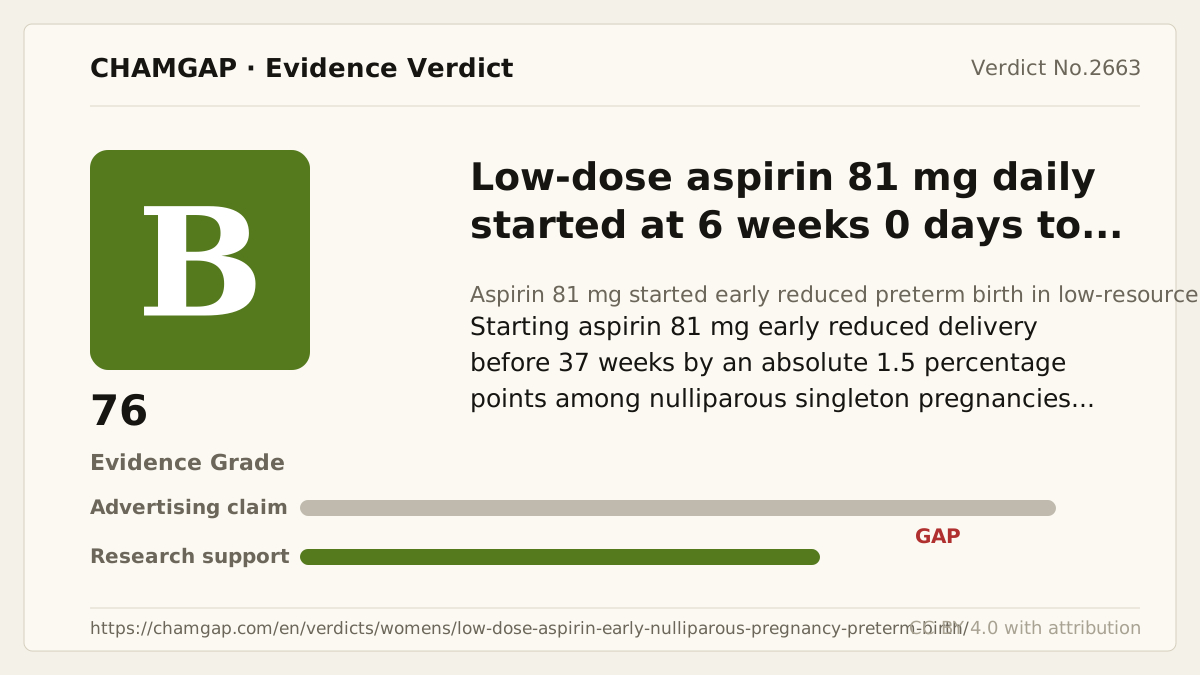
[Chamgap] Early low-dose aspirin in nulliparous singleton pregnancy x prevention of preterm birth — Evidence Grade B·76. 1 cited sources checked. Source: https://chamgap.com/en/verdicts/womens/low-dose-aspirin-early-nulliparous-pregnancy-preterm-birth/ · CC BY 4.0CC BY 4.0 — free to use with attribution; do not distort grades, numbers, or verdict meaning.
What this document does and does not do
Chamgap is an information source. It reports what research has and has not confirmed; it does not tell readers what to take or buy. That decision belongs to readers and, when needed, medical or legal professionals. This verdict reflects literature available up to the search date and may change as new research appears. Nothing here is medical advice.