
Intensive antenatal pelvic floor muscle training,
does it really help with Primary prevention of urinary incontinence in late pregnancy and three months postpartum?
research showsThe grade is C with 54 points. A single-region trial randomized 301 healthy nulliparous women, 148 training and 153 control. After weekly 60-minute classes plus daily home training, urinary incontinence at least weekly occurred in 48/148 (32%) versus 74/153 (48%) at 36 weeks and 29/148 (20%) versus 49/153 (32%) three months postpartum. Actual leakage symptoms decreased, but participants knew their treatment while self-reporting the primary endpoint, and handling of outcomes for 12 withdrawals was insufficiently described.
ads claimThis verdict concerns primary prevention during pregnancy. Verdict 1663 is B with 72 points for treatment of existing stress urinary incontinence in women, while verdict 1934 is D with 28 points for recovery after prostatectomy in men. Prevention and treatment, and pregnant women and postoperative men, are different questions despite the shared exercise name.
Useful facts when choosing a product
- The program combined twelve weekly 60-minute physiotherapist group classes with daily home training.
- The 2003 Obstetrics & Gynecology and 2004 BMJ papers are primary and secondary reports from the same 301-participant trial.
Chamgap Semantic Classification Code
Candidate index · review held
X.intensive-physiotherapist-supervised-pelvic-floor-muscle-training-from-of-pregnancy.behavioral.primary-prevention-of-urinary-incontinence-in-late-pregnancy-and-postpartum.prevent.UNKBehaviors, exposures and policies > Intensive physiotherapist-supervised pelvic floor muscle training from of pregnancy > Behavioral delivery > Primary prevention of urinary incontinence in late pregnancy and postpartum > Occurrence-prevention claim > Unknown
An automated migration candidate, not an issued permanent code; exact claim scope remains under review. This machine-generated migration candidate helps retrieval but is not a permanent assignment. The original verdict ID and URL remain authoritative.
What the research actually shows
The 2003 single-blind trial by Mørkved S, Bø K, Schei B, and Salvesen KA randomized 301 healthy nulliparous women, 148 training and 153 control. Groups of 10 to 15 attended weekly 60-minute physiotherapist classes plus daily home training between 20 and 36 weeks. Incontinence at least weekly was 32% versus 48% at 36 weeks, reported P=0.007, and 20% versus 32% at three months postpartum, P=0.018. The 2004 BMJ paper by Salvesen KA and Mørkved S, PMID 15253920, reports labor outcomes from the same trial and is not replication. The trial predates mandatory registration, so no registration number exists. Funding from the Norwegian Fund for Postgraduate Training in Physiotherapy and the Norwegian Women’s Public Health Association was confirmed.
Why this is classified as C (54)
The patient-experienced primary endpoint improved at 36 weeks and three months postpartum, with nonprofit funding confirmed. One trial plus unmasked, attention-unmatched self-report and unverified handling of 12 withdrawals give C with 54 points.
Counterpoint. Anyone unable to identify a correct contraction, or experiencing pain or excessive straining, should stop and seek antenatal pelvic-floor physiotherapy or obstetric guidance.
Rejudgment record. Cross-check applied — Cross-checked the 2003 report, Cochrane study table, and 2004 same-trial secondary report for randomization count, primary self-reported endpoint, event counts at both timepoints, withdrawals, assessor masking, funding, and corrected PMID
| Endpoint | P | Symptom or function itself is the target - including patient reports and performance tests |
| Replication | R1 | Single confirmatory trial |
| Independence | I2 | Decisive evidence is publicly or non-profit funded |
| Effect size | E+ | Meets the clinically important threshold |
Stored derived and displayed grades match; this is not a current recalculation or validity check (C).
Sub-claim grades by effect
This ingredient is marketed for several effects. A single overall grade blends strong and weak claims together, so each effect is graded separately here. The overall grade reflects the strongest disconfirming or core claim.
| Effect (sub-claim) | Grade | Basis |
|---|---|---|
| Prevention of urinary incontinence at 36 weeks | C | 32% versus 48%, absolute difference -16 percentage points. |
| Prevention of urinary incontinence three months postpartum | C | 20% versus 32%, absolute difference -12 percentage points. |
Cross-check — AI research and Codex final gate
Evidence Table
| Study | Design | Sample | Funding | Endpoint | Result | Weight |
|---|---|---|---|---|---|---|
| Mørkved S, Bø K, Schei B, Salvesen KA. 2003 | Single-region assessor-blinded randomized trial; participants unmasked with usual-information control | 301 randomized (148/153); 12 withdrew after first assessment (5/7) | Norwegian Fund for Postgraduate Training in Physiotherapy and Norwegian Women’s Public Health Association | Self-reported urinary incontinence at least weekly | At 36 weeks, 48/148 (32%) versus 74/153 (48%), P=0.007; at three months postpartum, 29/148 (20%) versus 49/153 (32%), P=0.018 | Single symptom-outcome trial limited by unmasked self-report and unclear missing-data handling |
Receipt — 2 References
All 2 cited sources were verified for existence at the original page (as of 2026-08-15).
Final verification and publication gate: Codex · Evidence date: 2026-08-15 · Corrections: none
Cite this verdict
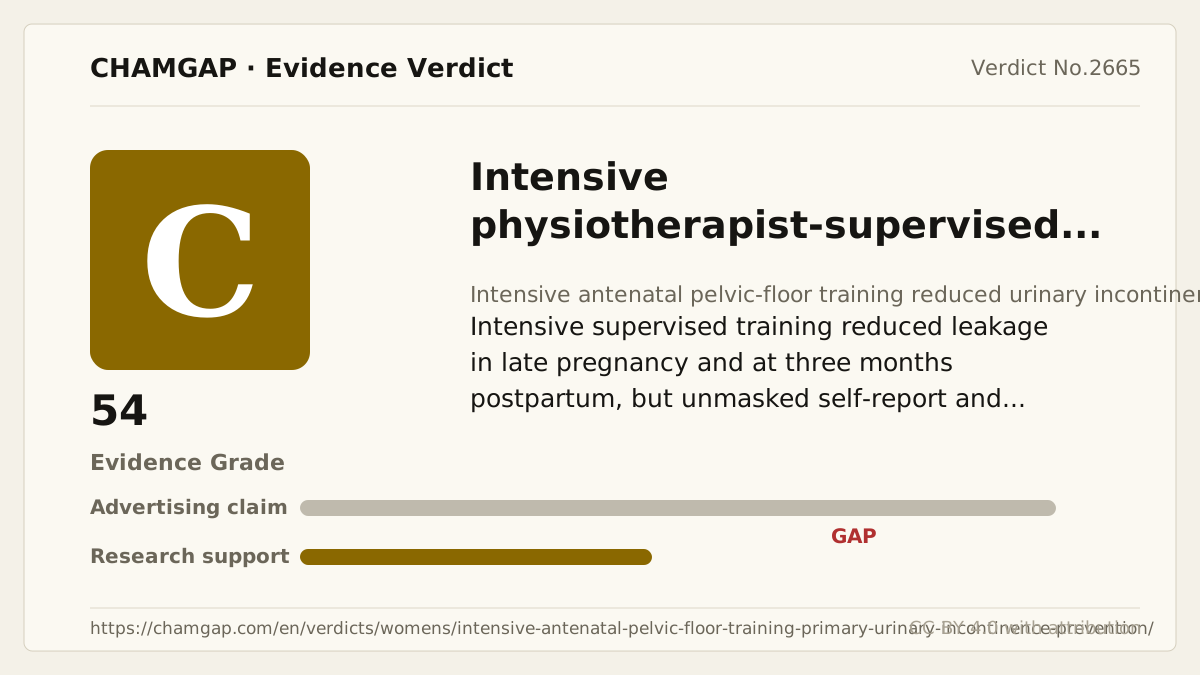
[Chamgap] Intensive antenatal pelvic floor muscle training x primary prevention of urinary incontinence — Evidence Grade C·54. 2 cited sources checked. Source: https://chamgap.com/en/verdicts/womens/intensive-antenatal-pelvic-floor-training-primary-urinary-incontinence-prevention/ · CC BY 4.0CC BY 4.0 — free to use with attribution; do not distort grades, numbers, or verdict meaning.
What this document does and does not do
Chamgap is an information source. It reports what research has and has not confirmed; it does not tell readers what to take or buy. That decision belongs to readers and, when needed, medical or legal professionals. This verdict reflects literature available up to the search date and may change as new research appears. Nothing here is medical advice.