
High-risk HPV screening,
does it really help with Prevention of invasive cervical cancer compared with cytology?
research showsHigh-risk HPV-based screening is rated A because it prevents invasive cervical cancer better than cytology. A pooled analysis followed all 176,464 randomized women in four European trials for a median of 6.5 years and found an invasive-cancer rate ratio of 0.60 (95% CI 0.40 to 0.89); the primary outcome of interest succeeded. There was no heterogeneity across trials, P=.52, and a separate cluster-randomized trial of 131,746 women in India reduced advanced cancer and cervical-cancer death. These are direct clinical outcomes rather than precancer surrogates, supporting A with 90 points.
ads claimPromotion can portray an HPV-positive result as a cancer diagnosis or imply that every age group needs annual testing. Evidence applies to organized screening at recommended ages and intervals with appropriate triage and treatment.
Useful facts when choosing a product
- A positive HPV result means that a high-risk viral type was detected; it is not a diagnosis of cervical cancer.
- Screening age, interval, and triage with genotyping, cytology, or colposcopy should follow local guidelines.
- Screening is intended for people without symptoms; abnormal or postcoital bleeding requires clinical assessment regardless of schedule.
- HPV vaccination does not eliminate the need for cervical screening recommended by current guidance.
Chamgap Semantic Classification Code
Candidate index · review held
P.high-risk-human-papillomavirus-testing.diagnostic.invasive-cervical-cancer.prevent.usual-careProcedures, devices and tests > High-risk human papillomavirus testing > Diagnostic or screening > invasive cervical cancer > Occurrence-prevention claim > Usual care
An automated migration candidate, not an issued permanent code; exact claim scope remains under review. This machine-generated migration candidate helps retrieval but is not a permanent assignment. The original verdict ID and URL remain authoritative.
What the research actually shows
Ronco and colleagues linked all 176,464 randomized participants in Swedescreen, POBASCAM, ARTISTIC, and NTCC to cancer and pathology registries for a median of 6.5 years. The prespecified key outcome of invasive cervical cancer was reduced by 40% and succeeded. Sankaranarayanan and colleagues randomized 52 village clusters containing 131,746 women to HPV testing, cytology, visual inspection, or usual care; only HPV testing significantly reduced advanced cancer and cervical-cancer mortality.
Why this is classified as A (90)
The primary invasive-cancer outcome succeeded with RR 0.60 in 176,464 randomized women, and an independent 131,746-woman cluster trial reduced advanced cancer and death. Large, independent, consistent evidence on direct hard outcomes supports A with 90 points.
Counterpoint. Starting and stopping ages and the interval should reflect prior results, immune status, presence of a cervix, and local guidance.
Rejudgment record. Cross-check applied — Confirmed success of the primary invasive-cervical-cancer outcome in all 176,464 randomized women and reduction of advanced cancer and mortality in a separate cluster-randomized trial
Sub-claim grades by effect
This ingredient is marketed for several effects. A single overall grade blends strong and weak claims together, so each effect is graded separately here. The overall grade reflects the strongest disconfirming or core claim.
| Effect (sub-claim) | Grade | Basis |
|---|---|---|
| Prevention of invasive cervical cancer versus cytology | A | The primary outcome of interest succeeded with RR 0.60 in a pooled randomized analysis of 176,464 women. |
| Reduction in advanced cervical cancer | A | An independent cluster trial of 131,746 women found HR 0.47. |
| Reduction in cervical-cancer mortality | A | The direct mortality outcome was significant at HR 0.52 in the Indian cluster trial. |
Cross-check — AI research and Codex final gate
Evidence Table
| Study | Design | Sample | Funding | Endpoint | Result | Weight |
|---|---|---|---|---|---|---|
| Ronco G et al. 2014 | Registry-linked pooled follow-up of four European randomized controlled trials | 176,464 randomized; 176,464 in the actual pooled primary analysis; 1,214,415 person-years | Predominantly European public and cancer-research funding | Primary outcome of interest: incidence of invasive cervical cancer | Primary outcome succeeded: 107 invasive cancers, HPV versus cytology rate ratio 0.60 (95% CI 0.40 to 0.89), heterogeneity P=.52. | Key large independent hard-outcome evidence |
| Sankaranarayanan R et al. 2009 | Cluster-randomized controlled trial across 52 village clusters in India | 131,746 randomized and analyzed; 34,126 in the HPV group | Bill & Melinda Gates Foundation and IARC | Advanced cervical cancer and cervical-cancer mortality | HPV screening yielded HR 0.47 (95% CI 0.32 to 0.69) for advanced cancer and HR 0.52 (95% CI 0.33 to 0.83) for death. | Independent replication on direct clinical outcomes |
Receipt — 2 References
All 2 cited sources were verified for existence at the original page (as of 2026-07-24).
Final verification and publication gate: Codex · Evidence date: 2026-07-24 · Corrections: none
Cite this verdict
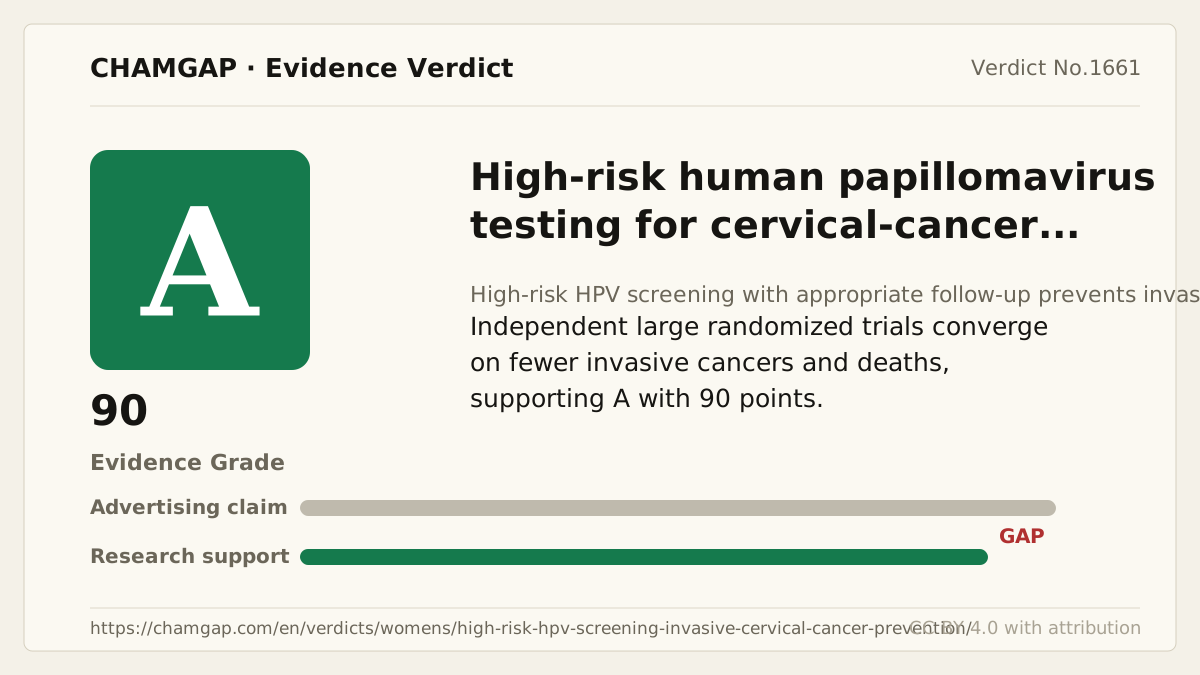
[Chamgap] High-risk HPV screening x prevention of invasive cervical cancer — Evidence Grade A·90. 2 cited sources checked. Source: https://chamgap.com/en/verdicts/womens/high-risk-hpv-screening-invasive-cervical-cancer-prevention/ · CC BY 4.0CC BY 4.0 — free to use with attribution; do not distort grades, numbers, or verdict meaning.
What this document does and does not do
Chamgap is an information source. It reports what research has and has not confirmed; it does not tell readers what to take or buy. That decision belongs to readers and, when needed, medical or legal professionals. This verdict reflects literature available up to the search date and may change as new research appears. Nothing here is medical advice.