
Foot reflexology,
does it really help with Improved anxiety and depressive symptoms during menopause?
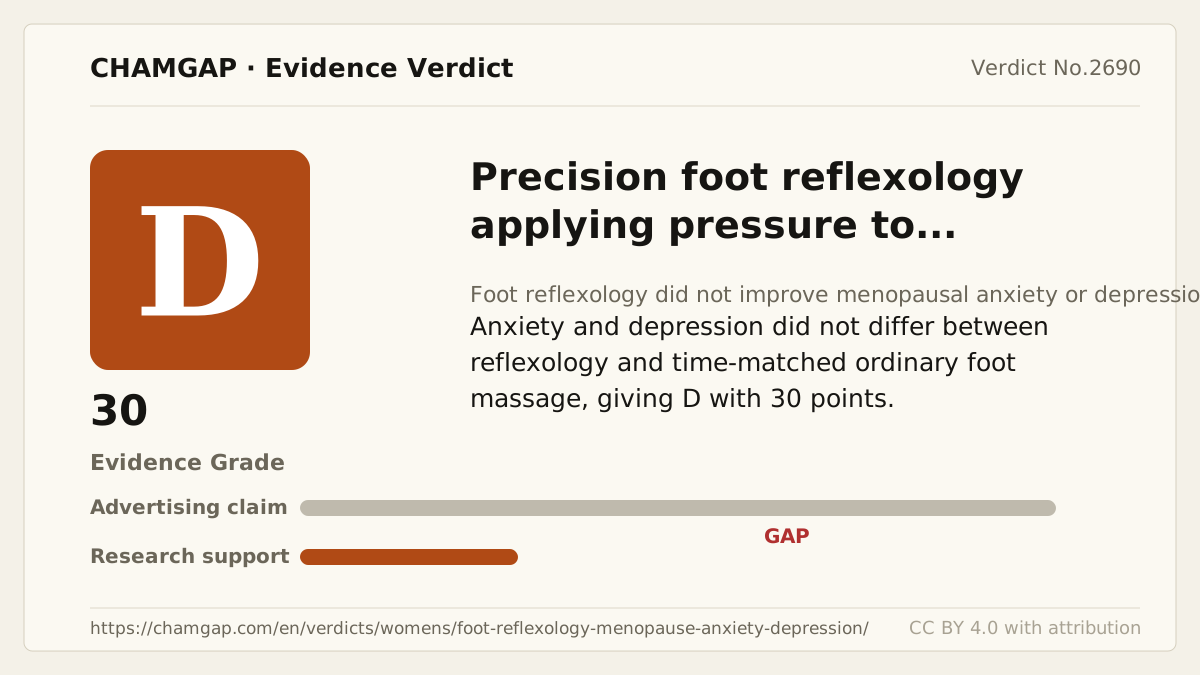
research showsThe grade is D with 30 points. In the 19-week primary analysis of an 80-person randomized trial, the adjusted between-group difference was -0.082 for anxiety (95% CI -0.18 to 0.026), P=.135, and -0.001 for depression (-0.10 to 0.09), P=.979. Neither primary outcome showed benefit beyond nonspecific foot massage.
ads claimBoth specific reflexology and ordinary foot massage may feel relaxing, but this trial did not support an additional benefit from designated foot reflex points for menopausal anxiety or depression.
Useful facts when choosing a product
- Treatment lasted 45 minutes for nine sessions: weekly for six weeks, then monthly through week 19.
- Controls received the same therapists, time, and schedule using nonspecific gliding, kneading, and toe rotation.
- This 2002 trial predates routine trial registration, so no trial registration number exists.
Chamgap Semantic Classification Code
Candidate index · review held
K.precision-foot-reflexology-applying-pressure-to-organ-correspondence-points.UNK.anxiety-and-depressive-symptoms-during-menopause.improve.UNKFolk and alternative interventions > Precision foot reflexology applying pressure to organ-correspondence points > Unknown > anxiety and depressive symptoms during menopause > Improvement claim > Unknown
An automated migration candidate, not an issued permanent code; exact claim scope remains under review. This machine-generated migration candidate helps retrieval but is not a permanent assignment. The original verdict ID and URL remain authoritative.
What the research actually shows
Eighty participants were randomized, 42 to reflexology and 38 to foot massage; four left before treatment, leaving 76 starters (39/37). The prespecified primary analysis used 69 treatment completers with week-19 WHQ data (36/33), adjusted for baseline; a 76-person last-observation-carried-forward analysis was also null. Central telephone allocation used computer-generated blocks, and patient masking was attempted, but 14 of 37 controls recognized that they were not receiving true reflexology. Three limitations were counted: fewer than 200 participants, a completer primary analysis, and failed patient masking with subjective outcomes. The nonspecific foot-massage control was an appropriate choice for a design asking whether reflexology has a specific effect. The nonprofit Foundation for Integrated Medicine funded the study.
Why this is classified as D (30)
Both patient-centered primary outcomes were null, and one small trial used a completer primary analysis with unsuccessful masking, giving D with 30 points. The intervals crossed zero and no validated between-group minimum-benefit boundary was identified to exclude all benefit.
Counterpoint. Persistent or severe anxiety, depression, self-harm thoughts, or functional impairment requires mental-health assessment rather than substitution with reflexology.
Rejudgment record. Cross-check applied — Cross-checked the BJOG full report for randomized, treatment-start, and primary-analysis denominators; both baseline-adjusted primary outcomes; imputed analysis; central allocation; masking failure; and funding
| Endpoint | P | Symptom or function itself is the target - including patient reports and performance tests |
| Replication | R1 | Single confirmatory trial |
| Independence | I2 | Decisive evidence is publicly or non-profit funded |
| Effect size | E0 | Null |
| Precision | C0 | The confidence interval leaves room for benefit |
Stored derived and displayed grades match; this is not a current recalculation or validity check (D).
Sub-claim grades by effect
This ingredient is marketed for several effects. A single overall grade blends strong and weak claims together, so each effect is graded separately here. The overall grade reflects the strongest disconfirming or core claim.
| Effect (sub-claim) | Grade | Basis |
|---|---|---|
| Improved menopausal anxiety symptoms | D | Adjusted difference was -0.082 (-0.18 to 0.026), P=.135. |
| Improved menopausal depressive symptoms | D | Adjusted difference was -0.001 (-0.10 to 0.09), P=.979. |
Cross-check — AI research and Codex final gate
Evidence Table
| Study | Design | Sample | Funding | Endpoint | Result | Weight |
|---|---|---|---|---|---|---|
| Williamson J, White A, Hart A, Ernst E. 2002 | Patient-masked centrally allocated parallel randomized trial | 80 randomized (42/38); 76 started treatment (39/37); 69 in the week-19 primary analysis (36/33) | Nonprofit grant from the Foundation for Integrated Medicine, London | Week-19 Women's Health Questionnaire anxiety and depression subscales | Anxiety -0.082 (95% CI -0.18 to 0.026), P=.135; depression -0.001 (-0.10 to 0.09), P=.979. Both primary outcomes were null | Small nonprofit-funded single null trial |
Receipt — 1 References
All 1 cited sources were verified for existence at the original page (as of 2026-08-15).
Final verification and publication gate: Codex · Evidence date: 2026-08-15 · Corrections: none
Cite this verdict
[Chamgap] Foot reflexology x menopausal anxiety and depressive symptoms — Evidence Grade D·30. 1 cited sources checked. Source: https://chamgap.com/en/verdicts/womens/foot-reflexology-menopause-anxiety-depression/ · CC BY 4.0CC BY 4.0 — free to use with attribution; do not distort grades, numbers, or verdict meaning.
What this document does and does not do
Chamgap is an information source. It reports what research has and has not confirmed; it does not tell readers what to take or buy. That decision belongs to readers and, when needed, medical or legal professionals. This verdict reflects literature available up to the search date and may change as new research appears. Nothing here is medical advice.