
Fluconazole,
does it really help with Six-month suppression and reduced recurrence of recurrent vulvovaginal candidiasis?
research showsWeekly fluconazole suppression for six months receives B with 72 points. In a 387-person randomized double-blind trial, disease-free proportions were 90.8% versus 35.9% with placebo at six months and 42.9% versus 21.9% at 12 months. A meta-analysis also confirmed reduced recurrence immediately after treatment and three and six months later. A direct recurrence endpoint clearly favors treatment, but the pivotal evidence base is not large and recurrence is common after stopping, making this suppression rather than cure. It must also be distinguished from single-dose treatment of uncomplicated acute candidiasis.
ads claimLanguage about treating recurrence may sound like a six-month course permanently eliminates the disease. Benefit is greatest during dosing, and recurrence calls for reassessment of culture, species, resistance, and alternative diagnoses.
Useful facts when choosing a product
- A common suppressive strategy induces clinical remission first and then uses prescription fluconazole 150 mg once weekly for six months.
- The purpose and duration of six-month suppression differ from a single oral dose used for uncomplicated acute candidiasis.
- Recurrence after withdrawal is common, and persistent or recurrent symptoms may require culture and reassessment of species and azole susceptibility.
- Liver enzyme abnormalities, possible QT prolongation, and numerous CYP-mediated drug interactions require review, and clinical guidance generally avoids oral fluconazole during pregnancy.
Chamgap Semantic Classification Code
Candidate index · review held
M.fluconazole.UNK.suppression-and-reduced-recurrence-of-recurrent-vulvovaginal-candidiasis.reduce.placeboMedicinal interventions > Fluconazole > Unknown > suppression and reduced recurrence of recurrent vulvovaginal candidiasis > Reduction claim > Placebo
An automated migration candidate, not an issued permanent code; exact claim scope remains under review. This machine-generated migration candidate helps retrieval but is not a permanent assignment. The original verdict ID and URL remain authoritative.
What the research actually shows
Sobel 2004 induced remission and randomized 387 women with recurrent vulvovaginal candidiasis to fluconazole 150 mg weekly or placebo for six months, followed by six months without treatment. Disease-free proportions at 6, 9, and 12 months were 90.8%, 73.2%, and 42.9% versus 35.9%, 27.8%, and 21.9%. A 2013 meta-analysis found lower symptomatic recurrence with weekly 150 mg immediately after treatment, odds ratio 0.10, and at three and six months, 0.23 and 0.39. The CDC evidence review distinguishes recurrent disease from uncomplicated acute disease and notes that maintenance controls recurrence but is rarely a durable cure.
Why this is classified as B (72)
A 387-person direct-recurrence trial and meta-analysis show large consistent six-month suppression, but evidence is concentrated in a few trials and recurrence after withdrawal is common, yielding B with 72 points. Hepatic toxicity, interactions, and pregnancy precautions remain separate safety matters.
Counterpoint. Non-albicans Candida, azole resistance, or another vulvovaginal condition may require a different diagnosis and treatment rather than repeated self-dosing.
Rejudgment record. New verdict — Accepted direct recurrence reduction in a 387-person randomized double-blind trial and meta-analysis, while limiting the claim to suppression because pivotal evidence is concentrated in few trials and recurrence is common after withdrawal
Sub-claim grades by effect
This ingredient is marketed for several effects. A single overall grade blends strong and weak claims together, so each effect is graded separately here. The overall grade reflects the strongest disconfirming or core claim.
| Effect (sub-claim) | Grade | Basis |
|---|---|---|
| Reduced recurrence during six months of suppressive therapy | B | A direct clinical-recurrence trial and meta-analysis repeatedly found a large reduction. |
| Durable cure after treatment withdrawal | D | Only 42.9% remained disease-free at 12 months, so recurrence after withdrawal was common and durable cure is unsupported. |
| The same regimen as single-dose treatment of uncomplicated acute candidiasis | F | Induction and maintenance for recurrent disease differ in purpose and duration from single-dose treatment of uncomplicated acute disease. |
Cross-check — AI research and Codex final gate
Evidence Table
| Study | Design | Sample | Funding | Endpoint | Result | Weight |
|---|---|---|---|---|---|---|
| Sobel JD et al. 2004 | Six-month randomized double-blind placebo-controlled maintenance trial followed by six months of observation | 387 women with recurrent vulvovaginal candidiasis | Supported by Pfizer | Six-month clinical remission, 12-month outcome, mycologic status, and time to recurrence | Disease-free rates were 90.8% versus 35.9% at six months and 42.9% versus 21.9% at 12 months. | Key direct randomized trial |
| Rosa MI et al. 2013 | Systematic review and meta-analysis of randomized weekly fluconazole trials | Eligible placebo-controlled randomized trials; a small evidence set | External funding was not identified in the report | Symptomatic recurrence immediately and three and six months after treatment | Recurrence odds ratios favored fluconazole at 0.10 immediately, 0.23 at three months, and 0.39 at six months. | Independent synthesis |
| Nyirjesy P et al. 2022 CDC evidence review | Systematic evidence review for clinical guidance | Evidence on diagnosis and treatment of vulvovaginal candidiasis | United States CDC guideline process | Recurrent disease treatment, special populations, and resistance | Supported six-month weekly maintenance while noting that suppression is rarely a durable cure. | Scope and clinical context |
Receipt — 4 References
All 4 cited sources were verified for existence at the original page (as of 2026-07-20).
Final verification and publication gate: Codex · Evidence date: 2026-07-20 · Corrections: none
Cite this verdict
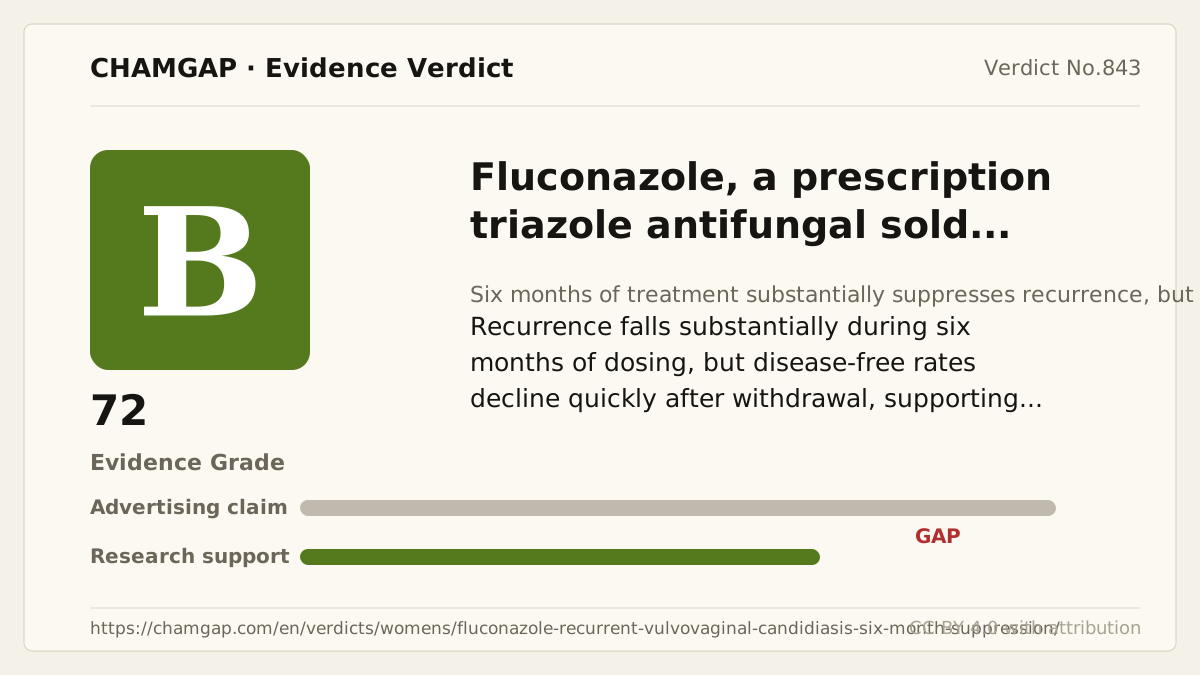
[Chamgap] Fluconazole x six-month suppression and reduced recurrent vulvovaginal candidiasis — Evidence Grade B·72. 4 cited sources checked. Source: https://chamgap.com/en/verdicts/womens/fluconazole-recurrent-vulvovaginal-candidiasis-six-month-suppression/ · CC BY 4.0CC BY 4.0 — free to use with attribution; do not distort grades, numbers, or verdict meaning.
What this document does and does not do
Chamgap is an information source. It reports what research has and has not confirmed; it does not tell readers what to take or buy. That decision belongs to readers and, when needed, medical or legal professionals. This verdict reflects literature available up to the search date and may change as new research appears. Nothing here is medical advice.