
Exemestane,
does it really help with Primary prevention of invasive breast cancer in high-risk postmenopausal women?
research showsExemestane is rated B because it reduces invasive breast-cancer incidence in postmenopausal women at increased risk who do not have breast cancer. In the 4,560-participant placebo-controlled MAP.3 trial, annual incidence was 0.19% versus 0.55% over a median of 35 months, with a hazard ratio of 0.35. Breast-cancer mortality and all-cause mortality benefits were not established, and the population was selected for high risk.
ads claimA claim of 65% prevention can turn a relative reduction in selected high-risk women into an implication of a large absolute benefit for every woman or of proven mortality prevention. Individual absolute benefit depends on baseline risk.
Useful facts when choosing a product
- Exemestane is a steroidal irreversible aromatase inhibitor; MAP.3 used 25 mg orally once daily in high-risk postmenopausal women.
- Primary prevention is distinct from adjuvant treatment after a breast-cancer diagnosis, and regulatory status for prevention varies by jurisdiction.
- Arthralgia, hot flashes, fatigue, and loss of bone mineral density can occur, so baseline bone health, fracture risk, symptoms, and adherence require review.
- This evidence should not be extrapolated to premenopausal women or pregnancy; absolute breast-cancer risk and medication harms require individualized counseling.
Chamgap Semantic Classification Code
Candidate index · review held
M.exemestane.oral.primary-prevention-of-invasive-breast-cancer.prevent.placeboMedicinal interventions > Exemestane > Oral > Primary prevention of invasive breast cancer > Occurrence-prevention claim > Placebo
An automated migration candidate, not an issued permanent code; exact claim scope remains under review. This machine-generated migration candidate helps retrieval but is not a permanent assignment. The original verdict ID and URL remain authoritative.
What the research actually shows
MAP.3 was an international double-blind placebo-controlled phase 3 trial of 4,560 postmenopausal women selected by age, Gail risk, prior atypia or lobular carcinoma in situ, or treated ductal carcinoma in situ. At a median 35 months, invasive cancers numbered 11 versus 32, yielding a hazard ratio of 0.35; the combined invasive-plus-ductal-carcinoma-in-situ endpoint also decreased. Mortality outcomes were not mature or proven. The USPSTF recommends offering risk-reducing medicines, including aromatase inhibitors, to women at increased breast-cancer risk and low risk of adverse effects.
Why this is classified as B (76)
A large placebo-controlled trial directly reduced invasive breast-cancer incidence, but the selected high-risk postmenopausal population and unproven mortality benefit give B with 76 points.
Counterpoint. Women with sufficiently high absolute risk and low risk of skeletal or symptomatic harm may obtain a meaningful incidence reduction.
Rejudgment record. New verdict — Accepted the direct reduction in invasive breast-cancer incidence in the placebo-controlled MAP.3 trial while accounting for the selected high-risk postmenopausal population, short follow-up, and unproven breast-cancer and all-cause mortality benefit
Sub-claim grades by effect
This ingredient is marketed for several effects. A single overall grade blends strong and weak claims together, so each effect is graded separately here. The overall grade reflects the strongest disconfirming or core claim.
| Effect (sub-claim) | Grade | Basis |
|---|---|---|
| Prevention of invasive breast cancer in high-risk postmenopausal women | B | MAP.3 found HR 0.35, with allowance for selected risk and short follow-up. |
| Prevention of the combined incidence of invasive breast cancer and ductal carcinoma in situ | B | The combined incidence endpoint also decreased in MAP.3, but event counts were small. |
| Prevention of breast-cancer incidence including noninvasive in-situ lesions | B | The invasive-plus-DCIS composite also decreased, but event counts were small and breast-cancer and all-cause mortality benefits remain unproven. |
Cross-check — AI research and Codex final gate
Evidence Table
| Study | Design | Sample | Funding | Endpoint | Result | Weight |
|---|---|---|---|---|---|---|
| Goss PE et al. MAP.3, 2011 | International multicenter randomized double-blind placebo-controlled phase 3 trial | 4,560 high-risk postmenopausal women | Canadian Cancer Society Research Institute, Pfizer, and others | Incidence of invasive breast cancer | Annual incidence was 0.19% versus 0.55%; HR 0.35 (95% CI 0.18 to 0.70) over a median 35 months. | Key direct prevention evidence |
| Nelson HD et al. USPSTF evidence review, 2019 | Systematic review | Two placebo-controlled aromatase-inhibitor trials with 8,424 participants | United States Agency for Healthcare Research and Quality | Invasive breast-cancer incidence and medication harms | Pooled exemestane and anastrozole RR was 0.45 (95% CI 0.26 to 0.70); mortality benefit was not established. | Independent synthesis |
Receipt — 3 References
All 3 cited sources were verified for existence at the original page (as of 2026-07-23).
Final verification and publication gate: Codex · Evidence date: 2026-07-23 · Corrections: none
Cite this verdict
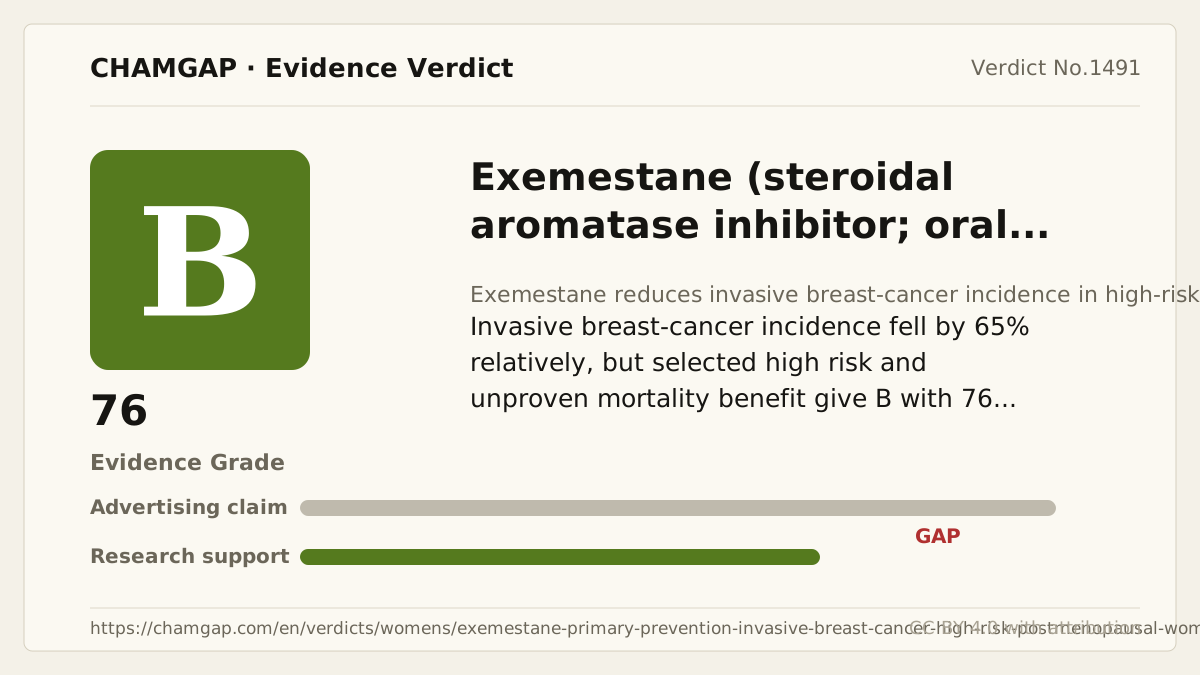
[Chamgap] Exemestane x primary prevention of invasive breast cancer in high-risk postmenopausal women — Evidence Grade B·76. 3 cited sources checked. Source: https://chamgap.com/en/verdicts/womens/exemestane-primary-prevention-invasive-breast-cancer-high-risk-postmenopausal-women/ · CC BY 4.0CC BY 4.0 — free to use with attribution; do not distort grades, numbers, or verdict meaning.
What this document does and does not do
Chamgap is an information source. It reports what research has and has not confirmed; it does not tell readers what to take or buy. That decision belongs to readers and, when needed, medical or legal professionals. This verdict reflects literature available up to the search date and may change as new research appears. Nothing here is medical advice.