
Estradiol,
does it really help with Reduction of moderate-to-severe menopausal hot flashes and vasomotor symptoms?
research showsSystemic estrogen therapy, including estradiol, is rated A because it markedly reduces the frequency and severity of moderate-to-severe menopausal hot flashes and night sweats. A Cochrane review of 24 double-blind placebo-controlled randomized trials involving 3,329 women found about 18 fewer hot flashes per week than with placebo and an approximately 75% relative reduction in frequency. An independent NIH clinical-network trial of low-dose 17β-estradiol also confirmed improvements in symptom frequency and severity at eight weeks. Effect size and individual response vary across formulations and doses, but the direct symptom benefit is large and consistent, and hormone therapy remains the most effective treatment for vasomotor symptoms. Thrombosis, stroke, breast-cancer risk, and the need for endometrial protection in women with a uterus are recorded separately under safety.
ads claimMarketing may expand relief of vasomotor symptoms into complete resolution of menopause, restoration of youth, or prevention of chronic disease. The strong evidence applies to relief of moderate-to-severe hot flashes and night sweats, not to prevention of cardiovascular disease or dementia or to anti-aging claims.
Useful facts when choosing a product
- Estradiol is available in systemic oral, patch, and gel formulations whose doses, absorption, and thrombotic risks are not identical, so the prescribed formulation and directions should be followed.
- A woman with an intact uterus who uses systemic estrogen generally also needs an appropriate progestogen to reduce the risk of endometrial hyperplasia and cancer.
- Treatment should aim for the lowest effective dose after considering age, time since menopause, symptom burden, and contraindications, with periodic reassessment of the need to continue.
- Unexplained vaginal bleeding, estrogen-dependent cancer, and a history of thromboembolism or stroke require specialist assessment for contraindications, and symptom treatment should not be confused with chronic-disease prevention.
Chamgap Semantic Classification Code
Candidate index · review held
M.estradiol.UNK.moderate-to-severe-menopausal-hot-flashes-and-vasomotor-symptoms.reduce.MULTIMedicinal interventions > Estradiol > Unknown > moderate-to-severe menopausal hot flashes and vasomotor symptoms > Reduction claim > Multiple: primary unresolved
An automated migration candidate, not an issued permanent code; exact claim scope remains under review. This machine-generated migration candidate helps retrieval but is not a permanent assignment. The original verdict ID and URL remain authoritative.
What the research actually shows
The MacLennan Cochrane review included 24 double-blind placebo-controlled randomized trials and 3,329 participants. Hormone therapy produced 17.92 fewer weekly hot flashes than placebo, a 75.3% relative frequency reduction, and a large severity benefit, although effect sizes were heterogeneous and attrition was substantial in some trials. The 2014 Joffe MsFLASH trial randomized 339 community women to low-dose oral 17β-estradiol, venlafaxine, or placebo. Estradiol reduced symptom frequency by 52.9% from baseline at eight weeks versus 28.6% with placebo. The 2022 NAMS statement identifies hormone therapy as the most effective vasomotor-symptom treatment while emphasizing that risks vary by type, dose, route, timing, and progestogen use. Long-term hard-endpoint safety findings from the Women's Health Initiative inform a separate benefit-risk decision rather than negating symptom efficacy.
Why this is classified as A (88)
An approximately 75% relative reduction in hot-flash frequency across 24 double-blind placebo-controlled trials involving 3,329 women, a large severity benefit, and independent replication in an NIH-supported low-dose 17β-estradiol trial yield A with 88 points. Heterogeneity across formulations and doses and limitations of some older trials reduce the score, but the direct clinical symptom effect is larger and more established than for nonhormonal treatments such as paroxetine. Thrombotic, breast, and endometrial risks remain separate safety considerations.
Counterpoint. For a symptomatic woman without contraindications who is generally younger than 60 years or within 10 years of menopause onset, the benefit-risk balance of systemic hormone therapy may be favorable. Evidence-based nonhormonal options should be compared when cancer or vascular risk, contraindications, or personal preference preclude estrogen.
Rejudgment record. New verdict — Centered the verdict on the large hot-flash frequency and severity effects across 24 double-blind placebo-controlled trials and replication on direct symptom endpoints in an independent NIH-supported 17β-estradiol trial, while deducting for formulation and dose heterogeneity and keeping safety separate from efficacy
Sub-claim grades by effect
This ingredient is marketed for several effects. A single overall grade blends strong and weak claims together, so each effect is graded separately here. The overall grade reflects the strongest disconfirming or core claim.
| Effect (sub-claim) | Grade | Basis |
|---|---|---|
| Reduction in the frequency of moderate-to-severe hot flashes | A | Twenty-four placebo-controlled trials showed a large reduction in weekly and relative frequency, replicated in a low-dose estradiol trial. |
| Reduction in night sweats and vasomotor-symptom severity | A | A meta-analytic severity odds ratio of 0.13 and consistent improvements in severity and bother in an independent trial support the claim. |
| Greater vasomotor-symptom efficacy than nonhormonal medication | A | Professional evidence reviews identify hormone therapy as the most effective treatment while requiring individualized risk assessment. |
Cross-check — AI research and Codex final gate
Evidence Table
| Study | Design | Sample | Funding | Endpoint | Result | Weight |
|---|---|---|---|---|---|---|
| MacLennan AH et al. 2004 | Systematic review and meta-analysis of double-blind placebo-controlled randomized trials | 24 trials and 3,329 participants | Academic Cochrane review; included trials had mixed public and industry support | Weekly hot-flash frequency and vasomotor-symptom severity | Hormone therapy produced 17.92 fewer weekly hot flashes than placebo, a 75.3% relative frequency reduction, and a severity odds ratio of 0.13. | Key large direct synthesis |
| Joffe H et al. 2014 | Multicenter randomized double-blind placebo- and active-controlled trial | 339 participants; 97 estradiol, 96 venlafaxine, and 146 placebo | United States NIH-supported MsFLASH clinical network | Daily vasomotor-symptom frequency at eight weeks; severity, bother, and interference | Low-dose oral 17β-estradiol reduced symptom frequency by 52.9% at eight weeks and by 2.3 more episodes per day than placebo. | Independent direct estradiol replication |
| The 2022 Hormone Therapy Position Statement Advisory Panel. 2022 | Professional-society evidence review and position statement | Review of the randomized and observational evidence base | North American Menopause Society | Vasomotor-symptom efficacy and benefit-risk by age, route, and dose | Identified hormone therapy as the most effective vasomotor-symptom treatment and recommended individualization and periodic reassessment. | Current evidence context and applicability |
| Rossouw JE et al.; Writing Group for the Women's Health Initiative Investigators. 2002 | Large randomized double-blind placebo-controlled safety and prevention trial | 16,608 postmenopausal women with an intact uterus | United States NIH Women's Health Initiative | Long-term hard endpoints including breast cancer, coronary disease, stroke, and pulmonary embolism | Combined hormone therapy increased breast-cancer, stroke, and pulmonary-embolism risks, requiring safety assessment to remain separate from symptom efficacy and discouraging prevention-only use. | Key separate safety evidence |
Receipt — 4 References
All 4 cited sources were verified for existence at the original page (as of 2026-07-21).
Final verification and publication gate: Codex · Evidence date: 2026-07-21 · Corrections: none
Cite this verdict
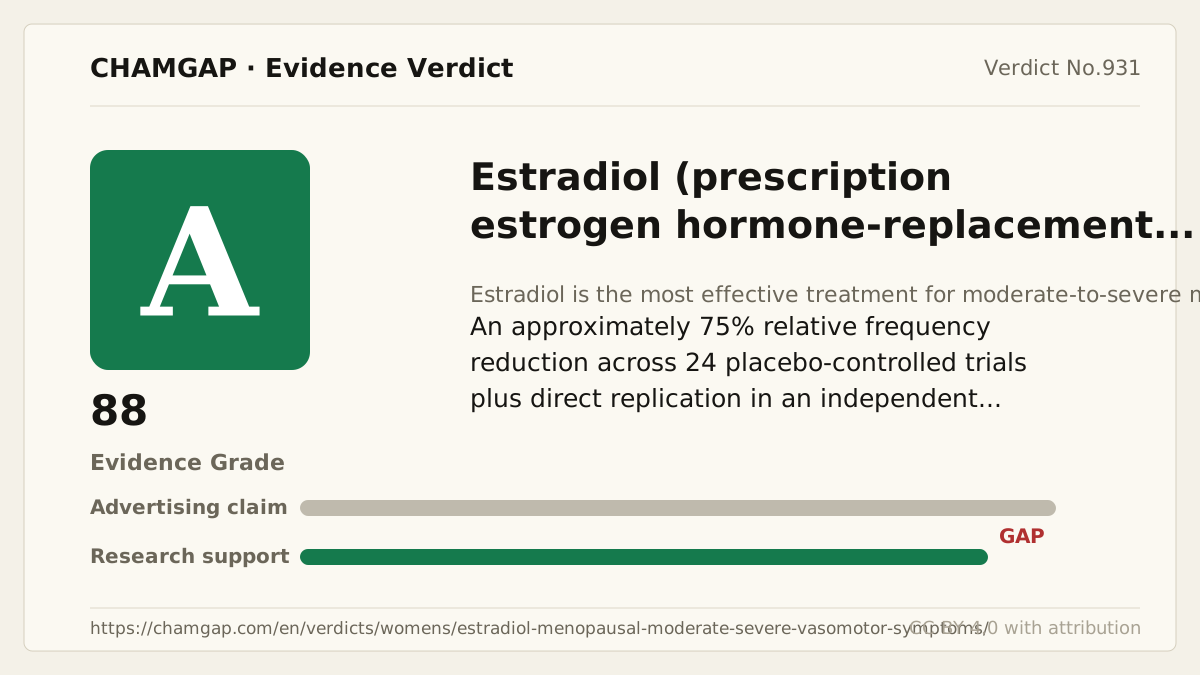
[Chamgap] Estradiol x reduction of moderate-to-severe menopausal hot flashes and vasomotor symptoms — Evidence Grade A·88. 4 cited sources checked. Source: https://chamgap.com/en/verdicts/womens/estradiol-menopausal-moderate-severe-vasomotor-symptoms/ · CC BY 4.0CC BY 4.0 — free to use with attribution; do not distort grades, numbers, or verdict meaning.
What this document does and does not do
Chamgap is an information source. It reports what research has and has not confirmed; it does not tell readers what to take or buy. That decision belongs to readers and, when needed, medical or legal professionals. This verdict reflects literature available up to the search date and may change as new research appears. Nothing here is medical advice.