
Elagolix,
does it really help with Response in endometriosis-associated dysmenorrhea and nonmenstrual pelvic pain?
research showsElagolix is rated C for endometriosis-associated pain. The actual modified intention-to-treat primary analyses included 865 of 872 randomized participants in EM-I and 799 of 817 in EM-II. Both trials met the month-3 coprimary responder endpoints for dysmenorrhea and nonmenstrual pelvic pain. Response required a reduction on the 0-to-3 pain scale meeting a prespecified ROC-derived threshold without increased rescue analgesic use. All decisive evidence belongs to the AbbVie development program, so the I0 ceiling limits the grade to C.
ads claimThe supported fact is increased pain response over three to six months. Claims of permanent cure or lesion removal go beyond the evidence.
Useful facts when choosing a product
- A responder met a trial-specific prespecified ROC-derived reduction on the 0-to-3 pain diary and did not increase rescue analgesic use.
- verdict 653, which is B with 66 points, concerns dienogest in the same indication. Verdict 1626, which is B with 75 points, concerns linzagolix in uterine fibroids, a different indication, so its evidence was not transferred.
Chamgap Semantic Classification Code
Candidate index · review held
M.elagolix.MULTI.response-in-endometriosis-associated-dysmenorrhea-and-nonmenstrual-pelvic-pain.assess.placeboMedicinal interventions > Elagolix > Multiple: primary unresolved > Response in endometriosis-associated dysmenorrhea and nonmenstrual pelvic pain > Association or change assessment > Placebo
An automated migration candidate, not an issued permanent code; exact claim scope remains under review. This machine-generated migration candidate helps retrieval but is not a permanent assignment. The original verdict ID and URL remain authoritative.
What the research actually shows
Taylor and colleagues randomized 872 women in EM-I and analyzed 865 by modified intention to treat; EM-II randomized 817 and analyzed 799. The month-3 coprimary endpoints combined a clinically meaningful pain reduction with decreased or stable rescue-analgesic use. Prespecified ROC-derived thresholds were -0.81 for dysmenorrhea and -0.36 for nonmenstrual pain in EM-I, and -0.85 and -0.43 in EM-II. High-dose dysmenorrhea response was 75.8% and 72.4% versus 19.6% and 22.7%; nonmenstrual pain response was 54.5% and 57.8% versus 36.5% in both placebo groups. AbbVie sponsored, designed, and analyzed both trials, so they are not independent replication.
Why this is classified as C (54)
The profile is P, R1, I0, E+, and B0. The same AbbVie development program is not independent replication, and manufacturer-only evidence caps the result at C with 54 points.
Counterpoint. Choice against dienogest and other therapies should separately weigh contraindications, cost, pregnancy plans, and hypoestrogenic effects.
Rejudgment record. Cross-check applied — Accepted two positive phase 3 trials while rating the same AbbVie development program as R1 and I0
| Endpoint | P | Symptom or function itself is the target - including patient reports and performance tests |
| Replication | R1 | Single confirmatory trial |
| Independence | I0 | Evidence comes only from manufacturer studies |
| Effect size | E+ | Meets the clinically important threshold |
Stored derived and displayed grades match; this is not a current recalculation or validity check (C).
Sub-claim grades by effect
This ingredient is marketed for several effects. A single overall grade blends strong and weak claims together, so each effect is graded separately here. The overall grade reflects the strongest disconfirming or core claim.
| Effect (sub-claim) | Grade | Basis |
|---|---|---|
| Response in endometriosis-associated dysmenorrhea | C | A large clinical response was replicated in two phase 3 trials, but evidence is manufacturer-only. |
| Response in endometriosis-associated nonmenstrual pelvic pain | C | The coprimary endpoint succeeded in both trials, but the I0 ceiling applies. |
| Maintenance of endometriosis pain improvement through three to six months | C | Response persisted through six months within the same manufacturer program. |
Cross-check — AI research and Codex final gate
Evidence Table
| Study | Design | Sample | Funding | Endpoint | Result | Weight |
|---|---|---|---|---|---|---|
| Taylor HS et al. 2017 ELARIS EM-I | Phase 3 double-blind randomized placebo-controlled trial | 872 randomized; actual modified intention-to-treat primary analysis 865 | Manufacturer funding, design, and analysis by AbbVie | Coprimary month-3 dysmenorrhea and nonmenstrual pelvic-pain response | Both doses met both coprimary endpoints; high dose was 75.8% and 54.5% versus 19.6% and 36.5% with placebo. | Pivotal manufacturer confirmatory trial |
| Taylor HS et al. 2017 ELARIS EM-II | Phase 3 double-blind randomized placebo-controlled trial | 817 randomized; actual modified intention-to-treat primary analysis 799 | Manufacturer funding, design, and analysis by AbbVie | Coprimary month-3 dysmenorrhea and nonmenstrual pelvic-pain response | Both doses met both coprimary endpoints; high dose was 72.4% and 57.8% versus 22.7% and 36.5% with placebo. | Replication within the same manufacturer program |
Receipt — 2 References
All 2 cited sources were verified for existence at the original page (as of 2026-07-24).
Final verification and publication gate: Codex · Evidence date: 2026-07-24 · Corrections: none
Cite this verdict
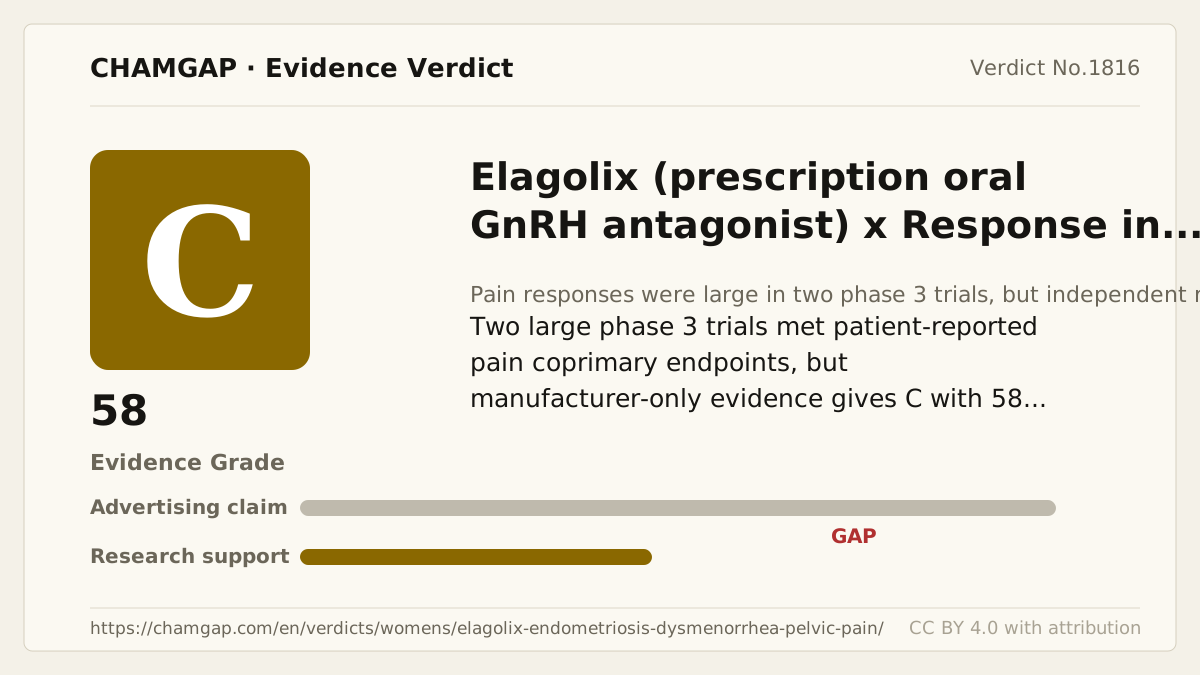
[Chamgap] Elagolix x reduced endometriosis-associated pain — Evidence Grade C·54. 2 cited sources checked. Source: https://chamgap.com/en/verdicts/womens/elagolix-endometriosis-dysmenorrhea-pelvic-pain/ · CC BY 4.0CC BY 4.0 — free to use with attribution; do not distort grades, numbers, or verdict meaning.
What this document does and does not do
Chamgap is an information source. It reports what research has and has not confirmed; it does not tell readers what to take or buy. That decision belongs to readers and, when needed, medical or legal professionals. This verdict reflects literature available up to the search date and may change as new research appears. Nothing here is medical advice.