
Dienogest,
does it really help with Reduction of endometriosis-associated pelvic pain and dysmenorrhea?
research showsDienogest is rated B because randomized trials repeatedly show direct reductions in endometriosis-associated pelvic pain and dysmenorrhea. In a 198-participant placebo-controlled 12-week trial, the between-group difference in pain reduction was 12.3 mm on a visual analogue scale. In a 255-participant Chinese phase 3 trial over 24 weeks, pain fell 24.54 mm more than with placebo. Pain is directly important to patients, but it is subjectively measured, pivotal studies involved Bayer, and active-comparator and long-term evidence is heterogeneous. Symptom suppression is not lesion cure or proven fertility benefit; irregular bleeding, possible bone loss, and mood changes remain separate safety issues.
ads claimMarketing can turn pain relief into lesion cure, permanent prevention of recurrence, or increased pregnancy success. Dienogest suppresses symptoms during hormonal treatment; it has not been shown to permanently eradicate disease or improve every reproductive outcome.
Useful facts when choosing a product
- Dienogest is an oral progestin used to treat endometriosis and is generally taken continuously each day according to the prescription and product information.
- Irregular bleeding, spotting, or amenorrhea is common, and headache, breast discomfort, weight change, and mood symptoms can occur.
- Possible bone-mineral-density changes should be considered during longer use, especially in adolescents and in patients with additional bone risk.
- It should not be used during pregnancy, and contraindications such as severe liver disease, hormone-dependent tumors, and relevant thrombotic conditions must be reviewed before prescribing.
Chamgap Semantic Classification Code
Candidate index · review held
M.dienogest.intrauterine.endometriosis-associated-pelvic-pain-and-dysmenorrhea.reduce.placeboMedicinal interventions > Dienogest > Intrauterine > endometriosis-associated pelvic pain and dysmenorrhea > Reduction claim > Placebo
An automated migration candidate, not an issued permanent code; exact claim scope remains under review. This machine-generated migration candidate helps retrieval but is not a permanent assignment. The original verdict ID and URL remain authoritative.
What the research actually shows
Strowitzki and colleagues randomized 198 women with laparoscopically confirmed endometriosis and pelvic-pain scores of at least 30 mm to dienogest 2 mg or placebo for 12 weeks. VAS scores fell 27.4 and 15.1 mm, respectively, a 12.3-mm between-group difference. Lang and colleagues randomized 255 Chinese women for 24 weeks and reported an adjusted mean pain difference of -24.54 mm versus placebo. A 2015 systematic review of nine randomized trials concluded that dienogest reduced pelvic pain versus placebo and provided symptom control similar to GnRH agonists, while noting a lack of comparisons with less expensive first-line progestins and combined oral contraceptives.
Why this is classified as B (66)
Patient-centered pain outcomes improved repeatedly in 12- and 24-week placebo-controlled trials, supporting B. Subjective measurement, manufacturer involvement, heterogeneity in long-term and comparator data, and lack of proof for lesion cure or pregnancy success limit the score to 66. Bleeding, bone, and mood effects are separate safety concerns.
Counterpoint. It is a meaningful option when pain impairs function and quality of life. Benefits and adverse effects should be reassessed over time alongside pregnancy plans, bone risk, bleeding pattern, and mood symptoms.
Rejudgment record. New verdict — Accepted repeated patient-centered pelvic-pain reduction in separate placebo-controlled randomized trials, while accounting for subjective measurement, manufacturer involvement, heterogeneous long-term and comparator evidence, and no proof of lesion cure or pregnancy success
Sub-claim grades by effect
This ingredient is marketed for several effects. A single overall grade blends strong and weak claims together, so each effect is graded separately here. The overall grade reflects the strongest disconfirming or core claim.
| Effect (sub-claim) | Grade | Basis |
|---|---|---|
| Reduction of endometriosis-associated pelvic pain and dysmenorrhea | B | Separate placebo-controlled trials repeatedly improved direct pain outcomes, with subjective measurement and manufacturer involvement. |
| Permanent lesion cure and improved pregnancy success | ? | Symptom-suppression trials do not establish this composite claim, and direct reproductive-outcome evidence is insufficient. |
| Irregular bleeding, bone-mineral-density change, and mood effects | ? | This is a separate safety subclaim requiring individualized risk assessment rather than an efficacy claim. |
Cross-check — AI research and Codex final gate
Evidence Table
| Study | Design | Sample | Funding | Endpoint | Result | Weight |
|---|---|---|---|---|---|---|
| Strowitzki T et al. 2010 | Multicenter randomized double-blind placebo-controlled trial | 198 women with laparoscopically confirmed endometriosis | Schering/Bayer development program with company-affiliated authors | Twelve-week pelvic-pain VAS change and rescue-analgesic use composite | VAS reduction was 27.4 mm versus 15.1 mm, favoring dienogest by 12.3 mm. | Pivotal direct pain-endpoint trial with manufacturer involvement |
| Lang J et al. 2018 | Multicenter randomized double-blind placebo-controlled phase 3 trial | 255 Chinese women | Bayer AG involvement and company-affiliated authors | Change in endometriosis-associated pelvic-pain VAS at week 24 | Adjusted mean difference versus placebo was -24.54 mm (95% CI -29.93 to -19.15). | Regional randomized replication on a direct pain endpoint |
| Andres MP et al. 2015 | Systematic review of randomized trials | Nine randomized trials | Academic review; included trials may have sponsor concentration | Pelvic pain, lesions, and symptom control versus comparators | Dienogest reduced pain versus placebo and was similar to GnRH agonists, but comparisons with less expensive first-line hormonal treatments were absent. | Synthesis confirming consistency and comparator gaps |
Receipt — 3 References
All 3 cited sources were verified for existence at the original page (as of 2026-07-19).
Final verification and publication gate: Codex · Evidence date: 2026-07-19 · Corrections: none
Cite this verdict
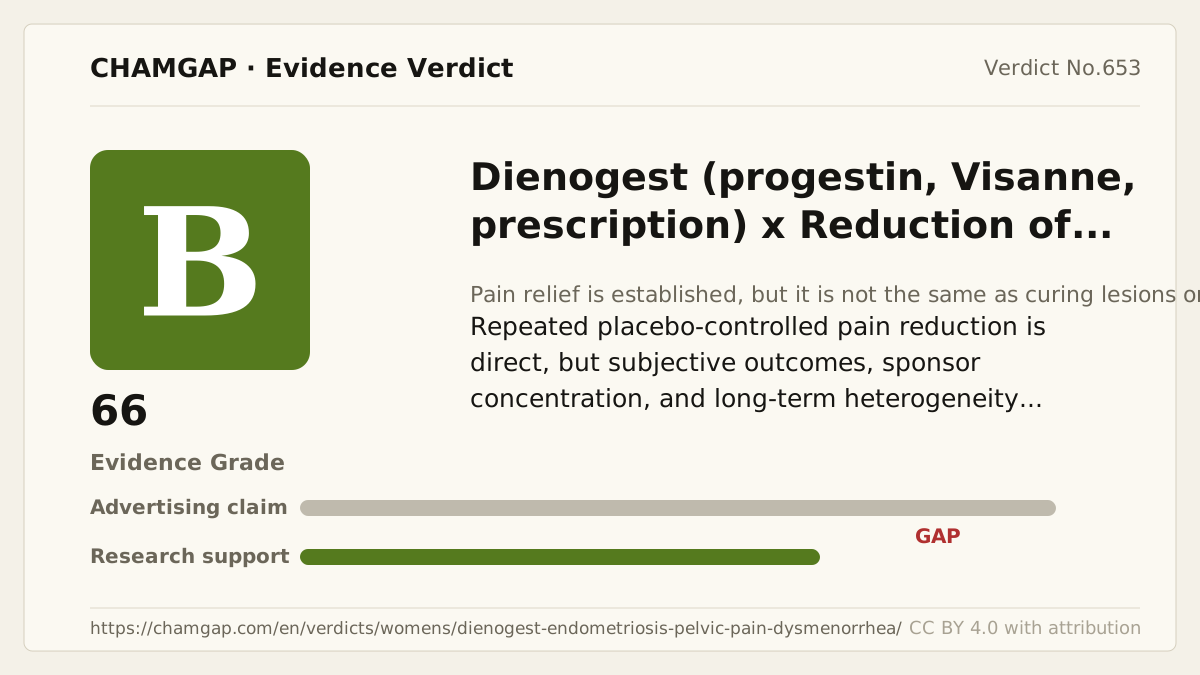
[Chamgap] Dienogest x reduction of endometriosis-associated pelvic pain and dysmenorrhea — Evidence Grade B·66. 3 cited sources checked. Source: https://chamgap.com/en/verdicts/womens/dienogest-endometriosis-pelvic-pain-dysmenorrhea/ · CC BY 4.0CC BY 4.0 — free to use with attribution; do not distort grades, numbers, or verdict meaning.
What this document does and does not do
Chamgap is an information source. It reports what research has and has not confirmed; it does not tell readers what to take or buy. That decision belongs to readers and, when needed, medical or legal professionals. This verdict reflects literature available up to the search date and may change as new research appears. Nothing here is medical advice.