
Omega-3 fatty acids during pregnancy,
does it really help with Reduced risk of preterm and early preterm birth?
research showsEvidence for preventing preterm birth with long-chain omega-3 supplementation during pregnancy is rated B. The 2018 Cochrane review of 70 randomized trials and 19,927 women reported risk ratios of 0.89 for birth before 37 weeks and 0.58 for birth before 34 weeks, but its search preceded publication of ORIP. In the subsequent independent ORIP trial of 5,544 pregnancies, the primary outcome before 34 weeks was 2.2% versus 2.0%, adjusted risk ratio 1.13 (0.79–1.63), and birth before 37 weeks was also null. A benefit signal among women with low DHA status is promising but not yet confirmatory.
ads claimPrenatal omega-3 marketing may combine prevention of preterm birth, fetal brain development, vision, and maternal mood into one package. This verdict concerns birth before 37 or 34 weeks; cognition and vision are separate evidence axes.
Useful facts when choosing a product
- EPA- and DHA-containing supplements are widely marketed in South Korea, but Korean authorized claims mainly concern triglycerides, circulation, memory, and dry eyes rather than prevention of preterm birth.
- The trials varied in source and dose: ORIP used 900 mg/day of long-chain omega-3, while ADORE compared 200 with 1,000 mg/day DHA.
- Pregnant users should verify actual DHA and EPA content, oxidation and contaminant quality, and overlap with other prenatal products.
- Anticoagulant or antiplatelet use, bleeding disorders, fish allergy, and high-risk pregnancy warrant obstetric review.
Chamgap Semantic Classification Code
Candidate index · review held
UNK.dha-and-long-chain-omega-3-fatty-acids-during-pregnancy.UNK.risk-of-preterm-and-early-preterm-birth.reduce.UNKUnknown > DHA and long-chain omega-3 fatty acids during pregnancy > Unknown > risk of preterm and early preterm birth > Reduction claim > Unknown
An automated migration candidate, not an issued permanent code; exact claim scope remains under review. This machine-generated migration candidate helps retrieval but is not a permanent assignment. The original verdict ID and URL remain authoritative.
What the research actually shows
The 2018 Middleton Cochrane review of 70 trials and 19,927 women reported that preterm birth before 37 weeks fell from 13.4% to 11.9% and early preterm birth before 34 weeks fell from 4.6% to 2.7%. In the 2019 ORIP trial, 900 mg/day beginning before 20 weeks did not reduce early preterm birth among 5,486 analyzed pregnancies: 2.2% versus 2.0%, adjusted risk ratio 1.13. The 2021 ADORE trial compared 1,000 mg with 200 mg DHA and observed early preterm birth rates of 1.7% versus 2.4%, with a larger dose effect among participants with low baseline DHA.
Why this is classified as B (74)
The pre-ORIP Cochrane synthesis of 70 randomized trials supports fewer births before 37 and 34 weeks, but the subsequent independent ORIP trial of 5,544 pregnancies was null for the primary outcome before 34 weeks and for birth before 37 weeks. Higher-dose benefit among women with low DHA status is promising but remains unconfirmed, so randomized evidence is divided and supports B with 74 points.
Counterpoint. Additional high-dose supplementation may provide little or no benefit when baseline omega-3 status is already sufficient.
Rejudgment record. Reassessment (cross-check reflected) — Evaluated the pre-ORIP randomized meta-analysis together with subsequent independent ORIP outcomes before 34 and 37 weeks, while separating exploratory modification by baseline DHA status
Sub-claim grades by effect
This ingredient is marketed for several effects. A single overall grade blends strong and weak claims together, so each effect is graded separately here. The overall grade reflects the strongest disconfirming or core claim.
| Effect (sub-claim) | Grade | Basis |
|---|---|---|
| Universal prevention of preterm birth before 37 or 34 weeks in the general pregnant population | B | Cochrane was positive, but the independent large ORIP trial was null, leaving the evidence divided. |
| Higher-dose prevention of early preterm birth among women with low DHA status | B | The status-dependent signal is promising but has not yet been confirmed. |
| Improved neonatal cognition and vision | ? | This is a different efficacy axis requiring separate evidence. |
Cross-check — AI research and Codex final gate
Evidence Table
| Study | Design | Sample | Funding | Endpoint | Result | Weight |
|---|---|---|---|---|---|---|
| Middleton et al. 2018 | Cochrane systematic review of randomized trials | 19,927 | Cochrane; 11 included trials reported industry funding | Preterm birth before 37 weeks and early preterm birth before 34 weeks | Risk ratios were 0.89 for preterm birth and 0.58 for early preterm birth, with little or no change after exclusion of industry-funded trials. | Key |
| Makrides et al. 2019 ORIP | Multicenter double-blind randomized trial | 5,486 | Australian public and foundation funding; capsules donated | Early preterm birth before 34 weeks | The overall primary outcome was null at 2.2% versus 2.0%, adjusted risk ratio 1.13. | Key counterevidence |
| Carlson et al. 2021 ADORE | Multicenter double-blind adaptive dose randomized trial | 1,032 | United States NICHD | Early preterm birth before 34 weeks with 1,000 versus 200 mg DHA | Rates were 1.7% versus 2.4% overall and 2.0% versus 4.1% among participants with low baseline DHA, suggesting a larger high-dose signal in the low-status group. | Supportive |
Receipt — 3 References
All 3 cited sources were verified for existence at the original page (as of 2026-07-18).
Final verification and publication gate: Codex · Evidence date: 2026-07-18 · Corrections: none
Cite this verdict
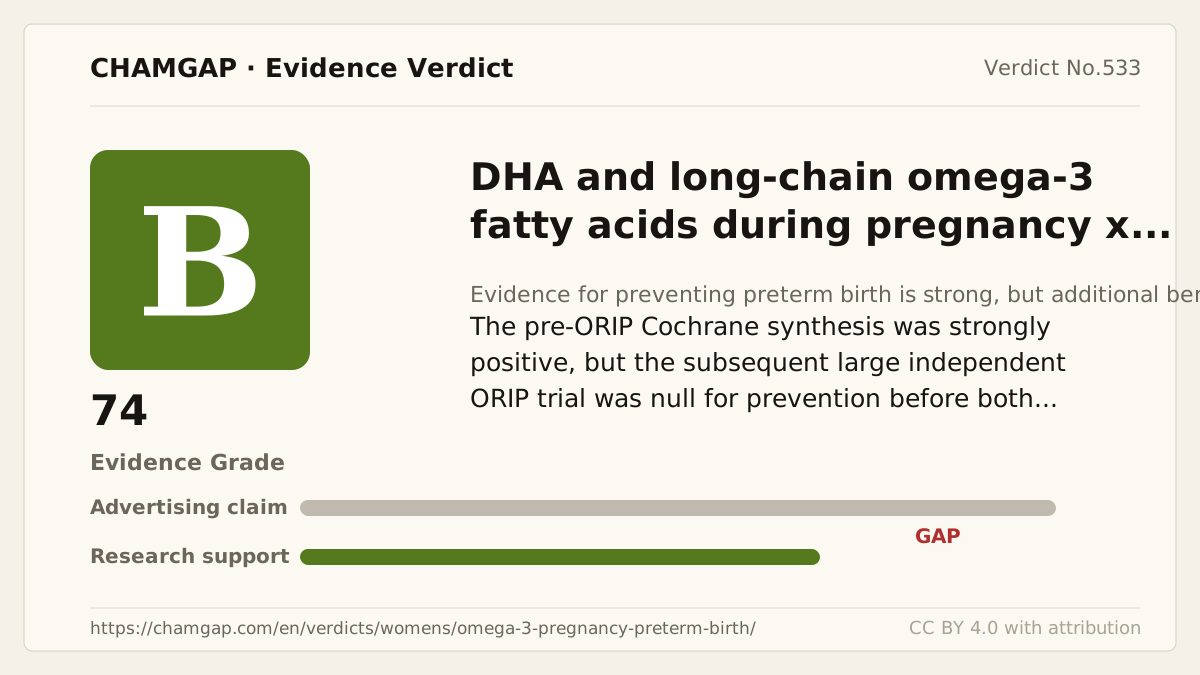
[Chamgap] Omega-3 fatty acids during pregnancy x prevention of preterm birth — Evidence Grade B·74. 3 cited sources checked. Source: https://chamgap.com/en/verdicts/womens/omega-3-pregnancy-preterm-birth/ · CC BY 4.0CC BY 4.0 — free to use with attribution; do not distort grades, numbers, or verdict meaning.
What this document does and does not do
Chamgap is an information source. It reports what research has and has not confirmed; it does not tell readers what to take or buy. That decision belongs to readers and, when needed, medical or legal professionals. This verdict reflects literature available up to the search date and may change as new research appears. Nothing here is medical advice.