
Clomiphene citrate,
does it really help with Increased ovulation, clinical pregnancy, and live birth in women with PCOS-related anovulatory infertility?
research showsClomiphene is rated B because direct randomized evidence shows increased ovulation, pregnancy, and live birth in PCOS-related anovulatory infertility. In a 626-participant NIH multicenter trial, live birth was 22.5% with clomiphene versus 7.2% with metformin, and conception among women who ovulated was 39.5% versus 21.7%. A network meta-analysis of 54 randomized trials with 7,173 women found pharmacologic treatments, including clomiphene, superior to placebo or no treatment for pregnancy and ovulation. In a separate 750-participant NIH trial, however, letrozole outperformed clomiphene for live birth, 27.5% versus 19.1%, and cumulative ovulation, 61.7% versus 48.3%. The hard live-birth benefit is real, but a more effective comparator and risks including multiple pregnancy and antiestrogenic effects support B with 72 points.
ads claimPromotion can reduce the message to ovulation means pregnancy success or present clomiphene as the best treatment for PCOS infertility. The final goal is live birth; clomiphene is effective but has a lower average success rate than letrozole, and outcomes also depend on age, body mass index, semen testing, tubal status, and other infertility factors.
Useful facts when choosing a product
- Clomiphene is an oral prescription SERM that blocks hypothalamic estrogen feedback to stimulate follicle-stimulating hormone release and ovulation. It does not treat the metabolic or long-term complications of PCOS itself.
- A common initial regimen is 50 mg for five days early in the menstrual cycle, with dose adjustment in a later cycle if ovulation does not occur. A clinician should monitor follicular or ovulatory response and pregnancy, and the prescription and product label take priority.
- It should not be used during pregnancy or with unexplained uterine bleeding, active liver disease, or an ovarian cyst unrelated to PCOS. Other infertility factors should be evaluated first.
- Prolonged repeated treatment is not recommended, and attempts are usually limited to a defined number of cycles. Blurred vision, flashes, or double vision requires immediate discontinuation and medical assessment.
Chamgap Semantic Classification Code
Candidate index · review held
M.clomiphene-citrate.UNK.ovulation-clinical-pregnancy-and-live-birth-with-pcos-related-anovulatory-infertility.increase.MULTIMedicinal interventions > Clomiphene citrate > Unknown > ovulation, clinical pregnancy, and live birth with PCOS-related anovulatory infertility > Increase claim > Multiple: primary unresolved
An automated migration candidate, not an issued permanent code; exact claim scope remains under review. This machine-generated migration candidate helps retrieval but is not a permanent assignment. The original verdict ID and URL remain authoritative.
What the research actually shows
The 2007 Cooperative Multicenter Reproductive Medicine Network trial randomized 626 infertile women with PCOS to clomiphene plus placebo, extended-release metformin plus placebo, or both. Live-birth rates were 22.5%, 7.2%, and 26.8%; clomiphene was significantly superior to metformin, while the combination was not significantly superior to clomiphene alone. Multiple pregnancy among pregnancies occurred in 6.0%, 0%, and 3.1%. The 2014 NICHD Reproductive Medicine Network trial compared letrozole and clomiphene in 750 women and found live birth of 27.5% versus 19.1%, rate ratio 1.44, cumulative ovulation of 61.7% versus 48.3%, and twin pregnancy of 3.4% versus 7.4%. The 2017 BMJ network meta-analysis synthesized 54 randomized trials with 7,173 women and found every pharmacologic treatment superior to placebo or no treatment for pregnancy and ovulation, while letrozole and clomiphene plus metformin were superior to clomiphene alone for pregnancy.
Why this is classified as B (72)
A direct live-birth benefit in the 626-participant multicenter trial supports the overall B. The 54-trial network supports superior ovulation and clinical pregnancy versus placebo or no treatment, but both are intermediate outcomes for live birth and their subclaims are capped at C under boundary rule ①. An independent publicly funded 750-participant trial found letrozole superior for live birth, 27.5% versus 19.1%, and cumulative ovulation, 61.7% versus 48.3%, yielding an overall B with 72 points. Multiple pregnancy, ovarian hyperstimulation, and visual symptoms are separate safety issues.
Counterpoint. Clomiphene remains an evidence-based oral option when letrozole is unsuitable or unavailable. If ovulation or pregnancy does not occur over several cycles, repeating dose escalation alone is insufficient and the diagnosis and treatment strategy should be reassessed.
Rejudgment record. New verdict — Applied B by recognizing superior live birth versus metformin in a 626-participant multicenter randomized trial and superior ovulation and pregnancy versus placebo or no treatment in a 54-trial network, while accounting for direct evidence from a 750-participant publicly funded trial that letrozole was superior to clomiphene for live birth and cumulative ovulation
Sub-claim grades by effect
This ingredient is marketed for several effects. A single overall grade blends strong and weak claims together, so each effect is graded separately here. The overall grade reflects the strongest disconfirming or core claim.
| Effect (sub-claim) | Grade | Basis |
|---|---|---|
| Increased ovulation in women with PCOS-related anovulatory infertility | C | Clomiphene outperformed placebo or no treatment and metformin for ovulation, but ovulation is an intermediate outcome for live birth and cumulative ovulation was higher with letrozole. |
| Increased clinical pregnancy in women with PCOS-related anovulatory infertility | C | The randomized-trial network supports increased clinical pregnancy versus placebo or no treatment, but clinical pregnancy is an intermediate outcome for live birth and letrozole was superior to clomiphene. |
| Increased live birth in women with PCOS-related anovulatory infertility | B | It exceeded metformin in the 626-participant trial but was inferior to letrozole, 27.5% versus 19.1%, in the 750-participant trial. |
Cross-check — AI research and Codex final gate
Evidence Table
| Study | Design | Sample | Funding | Endpoint | Result | Weight |
|---|---|---|---|---|---|---|
| Legro RS et al.; Cooperative Multicenter Reproductive Medicine Network. 2007 | Multicenter double-blind randomized active- and placebo-combination controlled trial | 626 infertile women with PCOS; 209 clomiphene, 208 metformin, and 209 combination | Public funding from the United States NIH, including NICHD and NCRR | Live birth after up to six months of treatment; ovulation, conception, pregnancy loss, and multiple pregnancy | Live-birth rates were 22.5% with clomiphene, 7.2% with metformin, and 26.8% with combination; clomiphene was superior to metformin. | Direct live-birth hard-outcome randomized evidence |
| Legro RS et al.; NICHD Reproductive Medicine Network. 2014 | Multicenter double-blind double-dummy randomized active-controlled trial | 750 women with PCOS-related anovulatory infertility; 374 letrozole and 376 clomiphene | Public and academic support including the United States NICHD | Cumulative live birth as the primary endpoint; ovulation, pregnancy loss, and multiple pregnancy | Letrozole was superior to clomiphene for live birth, 27.5% versus 19.1%, and cumulative ovulation, 61.7% versus 48.3%. | Direct randomized evidence establishing inferiority to the best comparator |
| Wang R et al. 2017 network meta-analysis | Systematic review and network meta-analysis of randomized treatments for WHO group II anovulation | 54 randomized trials and 7,173 women | Public and academic support including NHMRC | Clinical pregnancy preferentially, plus live birth, ovulation, miscarriage, and multiple pregnancy | All pharmacologic treatments were superior to placebo or no treatment for pregnancy and ovulation, while letrozole was superior to clomiphene for pregnancy. | Large comparative-effectiveness synthesis |
Receipt — 3 References
All 3 cited sources were verified for existence at the original page (as of 2026-07-22).
Final verification and publication gate: Codex · Evidence date: 2026-07-22 · Corrections: none
Cite this verdict
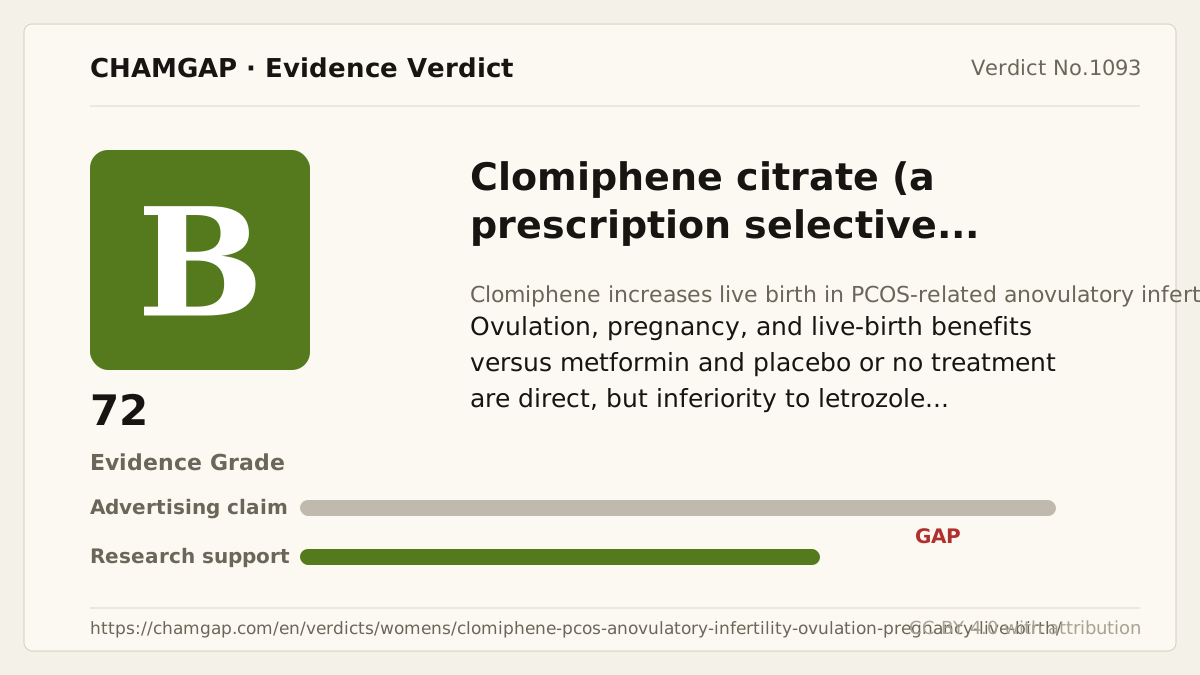
[Chamgap] Clomiphene citrate x increased ovulation, clinical pregnancy, and live birth in PCOS-related anovulatory infertility — Evidence Grade B·72. 3 cited sources checked. Source: https://chamgap.com/en/verdicts/womens/clomiphene-pcos-anovulatory-infertility-ovulation-pregnancy-live-birth/ · CC BY 4.0CC BY 4.0 — free to use with attribution; do not distort grades, numbers, or verdict meaning.
What this document does and does not do
Chamgap is an information source. It reports what research has and has not confirmed; it does not tell readers what to take or buy. That decision belongs to readers and, when needed, medical or legal professionals. This verdict reflects literature available up to the search date and may change as new research appears. Nothing here is medical advice.