
Single-dose intrapartum azithromycin,
does it really help with Reduced composite of postpartum maternal sepsis or death after a single 2-g intrapartum dose in women planning vaginal birth; the standalone maternal-mortality effect was null?
research showsThe efficacy of a single intrapartum 2-g azithromycin dose for preventing maternal sepsis is rated B. In the publicly funded 29,278-participant A-PLUS trial, maternal sepsis or death occurred in 1.6% versus 2.4%, RR 0.67, driven by sepsis at 1.5% versus 2.3%, RR 0.65. Maternal mortality remained 0.1% in both groups, and neonatal sepsis or death did not differ. A 2025 Cochrane synthesis confirmed maternal-sepsis RR 0.65 across four randomized trials and 42,430 women. WHO nevertheless recommends against universal intrapartum prophylaxis for vaginal birth because the absolute benefit is modest, the number needed to treat is approximately 167, and antimicrobial-resistance, infant-microbiome, and regional-heterogeneity concerns remain. Efficacy is molecule-specific and randomized on a clinical endpoint, but its scope is limited to maternal sepsis, supporting B.
ads claimPromotion can bundle this into one dose that protects mother and baby from sepsis and death. The demonstrated benefit was mainly reduced maternal sepsis; maternal death and neonatal sepsis or death did not fall. The 2-g regimen amounts to several conventional tablets and is not intended for self-directed use.
Useful facts when choosing a product
- The A-PLUS regimen was a single 2-g oral azithromycin dose during labor in women planning vaginal birth; it differs from ordinary infection-treatment doses and is not a universally approved standard obstetric prophylaxis regimen.
- WHO in 2025 recommended against routine antibiotic prophylaxis for all women in labor for vaginal birth, favoring targeted prophylaxis for established indications plus prompt diagnosis and treatment of infection.
- Azithromycin should be used only for bacterial treatment or prevention indications; unnecessary population-wide use can select macrolide resistance and alter maternal and neonatal microbiota.
- Nausea, diarrhea, and abdominal pain can occur, along with hepatotoxicity, severe allergy, QT prolongation, and rare fatal arrhythmia. Particular caution applies with known QT prolongation, hypokalemia or hypomagnesemia, bradycardia, or other QT-prolonging drugs.
Chamgap Semantic Classification Code
Candidate index · review held
M.azithromycin.UNK.composite-of-postpartum-maternal-sepsis-or-death-after-a-single-intrapartum-dose-planning-vaginal-birth-the-standalone-maternal-mortality-effect-was-null.reduce.placeboMedicinal interventions > Azithromycin > Unknown > composite of postpartum maternal sepsis or death after a single intrapartum dose planning vaginal birth; the standalone maternal-mortality effect was null > Reduction claim > Placebo
An automated migration candidate, not an issued permanent code; exact claim scope remains under review. This machine-generated migration candidate helps retrieval but is not a permanent assignment. The original verdict ID and URL remain authoritative.
What the research actually shows
A-PLUS randomized 29,278 women at 28 weeks' gestation or later who were planning vaginal birth in facilities in Bangladesh, the Democratic Republic of the Congo, Guatemala, India, Kenya, Pakistan, and Zambia to oral azithromycin 2 g or placebo during labor. Maternal sepsis or death occurred in 1.6% versus 2.4%, RR 0.67, and the trial stopped early at an interim analysis for maternal benefit. Sepsis was 1.5% versus 2.3%, while maternal death was 0.1% in each group and neonatal sepsis-or-death was 10.5% versus 10.3%. A 2025 Cochrane review confirmed maternal-sepsis RR 0.65 with I-squared of 0% across four trials and 42,430 women, with no mortality or neonatal benefit. WHO subsequently recommended against universal prophylaxis because azithromycin is a Watch antibiotic, the number needed to treat is about 167, and resistance and early-life microbiome effects are concerning.
Why this is classified as B (70)
The large double-blind placebo-controlled A-PLUS trial found RR 0.67 for the maternal sepsis-or-death composite, and the four-trial Cochrane synthesis replicated maternal-sepsis benefit with RR 0.65. Standalone maternal mortality and neonatal outcomes were null, evidence came mainly from low- and middle-income countries, and WHO's recommendation against universal administration plus absolute-benefit, resistance, and applicability limitations give B with 70 points. Resistance and QT or hepatic risks remain separate safety and public-health judgments.
Counterpoint. Targeted implementation research may be valuable in settings with high maternal-sepsis incidence and weak infection-prevention infrastructure. This is not a self-medication regimen and should be considered only within local obstetric guidance and antimicrobial-stewardship systems.
Rejudgment record. Cross-check applied — The publicly funded large double-blind placebo-controlled A-PLUS trial and a four-trial synthesis showed molecule-specific reductions in maternal sepsis, but maternal mortality and neonatal outcomes were negative and absolute-benefit, regional-applicability, and resistance limitations support B
Sub-claim grades by effect
This ingredient is marketed for several effects. A single overall grade blends strong and weak claims together, so each effect is graded separately here. The overall grade reflects the strongest disconfirming or core claim.
| Effect (sub-claim) | Grade | Basis |
|---|---|---|
| Reduced maternal sepsis within six weeks after birth | B | A-PLUS RR 0.65 and the four-trial pooled RR 0.65 provide direct replication, but absolute benefit and regional applicability are limited. |
| Reduced composite of postpartum maternal sepsis or death | B | The A-PLUS primary composite had RR 0.67, but the benefit was driven by reduced sepsis. |
| Reduced postpartum maternal mortality | D | A-PLUS found 0.1% in both groups, RR 1.23 (95% CI 0.51 to 2.97), and the four-trial pooled RR 1.21 was also negative. |
Cross-check — AI research and Codex final gate
Evidence Table
| Study | Design | Sample | Funding | Endpoint | Result | Weight |
|---|---|---|---|---|---|---|
| Tita ATN et al. 2023 A-PLUS | Multicountry randomized double-blind placebo-controlled trial | 29,278 women planning vaginal birth | Public and academic support including the U.S. NICHD | Maternal sepsis or death within six weeks; stillbirth or neonatal sepsis or death | The maternal composite was 1.6% versus 2.4%, RR 0.67; sepsis fell, but maternal death and the neonatal composite did not differ. | Pivotal large direct clinical-outcome trial |
| Suzuki D et al. 2025 Cochrane review | Systematic review and meta-analysis of randomized intrapartum antibiotic-prophylaxis trials | Four trials; 42,430 women for maternal sepsis | Academic support with partial WHO HRP support | Maternal sepsis and death, neonatal sepsis and death, and resistance | Maternal sepsis RR was 0.65 (95% CI 0.56 to 0.77), I-squared 0%; maternal mortality and neonatal outcomes did not differ. | Multitrial replication with moderate certainty |
| World Health Organization 2025 guideline | International guideline using GRADE evidence-to-decision methods | Four trials with 42,846 women plus resistance, values, cost, and equity evidence | World Health Organization | Efficacy, mortality, neonatal outcomes, resistance, microbiome, and feasibility | Recommended against universal intrapartum prophylaxis for vaginal birth because of modest absolute benefit and resistance and microbiome concerns. | Current independent applicability and public-health judgment |
Receipt — 3 References
All 3 cited sources were verified for existence at the original page (as of 2026-07-23).
Final verification and publication gate: Codex · Evidence date: 2026-07-23 · Corrections: none
Cite this verdict
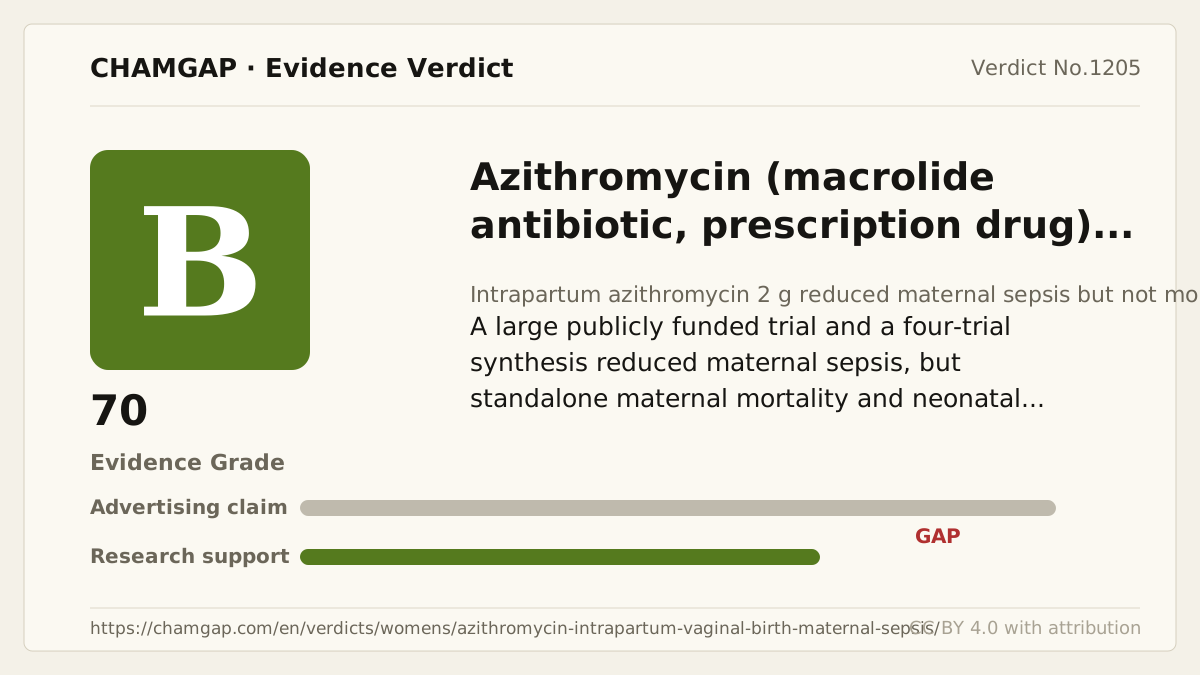
[Chamgap] Single-dose intrapartum azithromycin x reduced postpartum maternal sepsis or death — Evidence Grade B·70. 3 cited sources checked. Source: https://chamgap.com/en/verdicts/womens/azithromycin-intrapartum-vaginal-birth-maternal-sepsis/ · CC BY 4.0CC BY 4.0 — free to use with attribution; do not distort grades, numbers, or verdict meaning.
What this document does and does not do
Chamgap is an information source. It reports what research has and has not confirmed; it does not tell readers what to take or buy. That decision belongs to readers and, when needed, medical or legal professionals. This verdict reflects literature available up to the search date and may change as new research appears. Nothing here is medical advice.