
Anastrozole,
does it really help with Prevention of recurrence after surgery for hormone-receptor-positive early breast cancer in postmenopausal women?
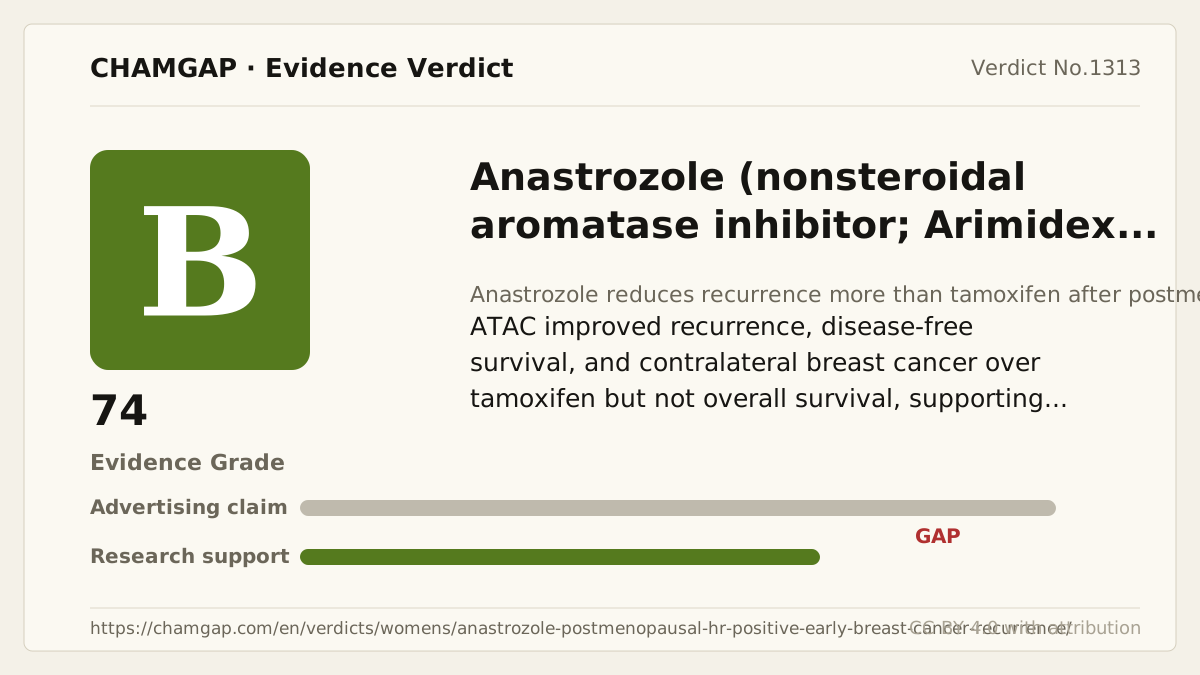
research showsAnastrozole is rated B because it improved disease-free survival and recurrence outcomes over tamoxifen as adjuvant endocrine therapy for postmenopausal hormone-receptor-positive early breast cancer. ATAC randomized 9,366 participants overall; in the hormone-receptor-positive monotherapy comparison at 100 months, the hazard ratios were 0.85 for disease-free survival, 0.76 for time to recurrence, and 0.60 for contralateral breast cancer. Overall survival was not superior, with a hazard ratio of 0.97. The comparative recurrence benefit is clear, but the absence of an overall-survival advantage supports B.
ads claimTreatment messaging may imply that anastrozole completely prevents breast cancer or prolongs life more than tamoxifen. ATAC established comparative superiority for recurrence-related outcomes, not overall survival.
Useful facts when choosing a product
- Anastrozole is a once-daily oral prescription anticancer medicine used for postmenopausal hormone-receptor-positive breast cancer. An oncology specialist determines duration according to surgery, stage, recurrence risk, and other treatment.
- Estrogen suppression can cause joint or muscle pain, hot flushes, and vaginal dryness. Bone-density loss and fractures make baseline and follow-up bone-health assessment and preventive measures important.
- Pregnancy potential and uncertain menopausal status require separate assessment. Its toxicity profile differs from tamoxifen, so bone and joint risks are weighed alongside thrombotic and endometrial risks.
Chamgap Semantic Classification Code
Candidate index · review held
M.anastrozole.UNK.recurrence-after-surgery-for-hormone-receptor-positive-early-breast-cancer.prevent.activeMedicinal interventions > Anastrozole > Unknown > recurrence after surgery for hormone-receptor-positive early breast cancer > Occurrence-prevention claim > Active comparator
An automated migration candidate, not an issued permanent code; exact claim scope remains under review. This machine-generated migration candidate helps retrieval but is not a permanent assignment. The original verdict ID and URL remain authoritative.
What the research actually shows
Baum and colleagues for the ATAC Trialists' Group randomized 9,366 postmenopausal patients with invasive early breast cancer who had completed primary therapy to anastrozole, tamoxifen, or their combination. At the initial median 33.3-month analysis, three-year disease-free survival was 89.4% with anastrozole and 87.4% with tamoxifen, for a hazard ratio of 0.83. The 100-month analysis by Cuzick and colleagues evaluated 6,241 monotherapy participants and 5,216 with hormone-receptor-positive disease. In the positive subgroup, hazard ratios favored anastrozole for disease-free survival at 0.85, time to recurrence at 0.76, time to distant recurrence at 0.84, and new contralateral breast cancer at 0.60, but overall survival was not different at 0.97. This verdict is restricted to postsurgical adjuvant treatment of postmenopausal hormone-receptor-positive early breast cancer.
Why this is classified as B (74)
The 9,366-participant ATAC trial and 100-month follow-up consistently showed better disease-free survival, recurrence, and contralateral breast-cancer outcomes over tamoxifen in postmenopausal hormone-receptor-positive early breast cancer. It was active-comparator superiority, however, and overall survival was not better at a hazard ratio of 0.97, supporting B with 74 points. Bone loss, fractures, and arthralgia remain separate safety considerations.
Counterpoint. Tamoxifen or sequential therapy may fit better according to recurrence risk, osteoporosis, thrombotic and endometrial risks, joint symptoms, and patient preference, so treatment should not be switched or stopped without oncology guidance.
Rejudgment record. New verdict — Applied B because the large randomized ATAC trial improved disease-free survival, recurrence, and contralateral breast cancer over tamoxifen in postmenopausal hormone-receptor-positive early breast cancer, but this was active-comparator superiority without an overall-survival advantage
Sub-claim grades by effect
This ingredient is marketed for several effects. A single overall grade blends strong and weak claims together, so each effect is graded separately here. The overall grade reflects the strongest disconfirming or core claim.
| Effect (sub-claim) | Grade | Basis |
|---|---|---|
| Improved disease-free survival and recurrence prevention in postmenopausal hormone-receptor-positive early breast cancer | B | In the 100-month ATAC analysis, hazard ratios versus tamoxifen were 0.85 for disease-free survival and 0.76 for time to recurrence. |
| Reduced contralateral breast cancer | B | New contralateral breast cancer was reduced in the hormone-receptor-positive population, with a hazard ratio of 0.60. |
| Improved overall survival versus tamoxifen | C | At 100 months, overall survival was not superior, with a hazard ratio of 0.97 and P=0.7. |
Cross-check — AI research and Codex final gate
Evidence Table
| Study | Design | Sample | Funding | Endpoint | Result | Weight |
|---|---|---|---|---|---|---|
| Baum M et al., ATAC Trialists' Group. 2002 | Multicenter double-blind randomized three-group active-controlled trial | 9,366 postmenopausal patients with early invasive breast cancer | Supported by AstraZeneca | Disease-free survival, recurrence, contralateral breast cancer, and safety | Three-year disease-free survival was 89.4% with anastrozole and 87.4% with tamoxifen, hazard ratio 0.83. | Pivotal large active-controlled randomized trial |
| Forbes JF et al., ATAC Trialists' Group. 2008 | One-hundred-month follow-up analysis of the randomized ATAC trial | 6,241 monotherapy participants; 5,216 with hormone-receptor-positive disease | Supported by AstraZeneca | Disease-free survival, recurrence, distant recurrence, contralateral breast cancer, and overall survival | In hormone-receptor-positive disease, hazard ratios were 0.85 for disease-free survival, 0.76 for recurrence, and 0.60 for contralateral breast cancer, but overall survival was unchanged at 0.97. | Long-term confirmation of recurrence benefit and survival limitation |
Receipt — 2 References
All 2 cited sources were verified for existence at the original page (as of 2026-07-23).
Final verification and publication gate: Codex · Evidence date: 2026-07-23 · Corrections: none
Cite this verdict
[Chamgap] Anastrozole x prevention of recurrence after surgery for postmenopausal hormone-receptor-positive early breast cancer — Evidence Grade B·74. 2 cited sources checked. Source: https://chamgap.com/en/verdicts/womens/anastrozole-postmenopausal-hr-positive-early-breast-cancer-recurrence/ · CC BY 4.0CC BY 4.0 — free to use with attribution; do not distort grades, numbers, or verdict meaning.
What this document does and does not do
Chamgap is an information source. It reports what research has and has not confirmed; it does not tell readers what to take or buy. That decision belongs to readers and, when needed, medical or legal professionals. This verdict reflects literature available up to the search date and may change as new research appears. Nothing here is medical advice.