
Reishi mushroom extract,
does it really help with Improved sleep onset, nocturnal awakenings, and sleep quality from reishi monotherapy in adults with insomnia?
research showsReishi monotherapy is rated D because no direct human clinical trial was identified for sleep onset, nocturnal awakenings, or sleep quality in adults with insomnia. The direct sleep evidence found is preclinical, measuring sleep latency and duration in pentobarbital-treated rodents. A Ganopoly trial in 132 patients with neurasthenia assessed fatigue, well-being, and clinical global impression rather than sleep outcomes in an insomnia population. This sleep verdict therefore addresses a different efficacy axis from the C rating for immune effects in reishi verdict 082, and immune or fatigue findings were not repurposed as sleep evidence.
ads claimMarketing can combine a GABA mechanism, traditional calming use, and deeper sleep into what sounds like human insomnia evidence. What is actually documented is a drug-induced animal sleep signal, with no adult-insomnia estimates for sleep onset, awakenings, or sleep quality.
Useful facts when choosing a product
- Reishi supplements include fruiting-body, mycelial, and spore-powder products and aqueous or alcohol extracts, with substantial variation in polysaccharide and triterpene content.
- The extract, manufacturing method, standardization, and dose used in an animal study cannot be assumed to match a commercial supplement, so preclinical findings cannot be transferred directly to a specific product.
- Short human studies mainly report mild effects such as gastrointestinal discomfort, but rare liver-injury cases associated with reishi or reishi powder have been published. Jaundice, dark urine, or marked fatigue warrants stopping the product and seeking care.
- People taking anticoagulants or antiplatelet drugs or preparing for surgery should discuss use with a clinician. A small healthy-volunteer study did not find impaired hemostasis, but interaction uncertainty and product variation remain.
Chamgap Semantic Classification Code
Candidate index · review held
S.reishi-mushroom-extract.UNK.sleep-onset-nocturnal-awakenings-and-sleep-quality-from-reishi-monotherapy-with-insomnia.improve.placeboSupplements and nutraceuticals > Reishi mushroom extract > Unknown > sleep onset, nocturnal awakenings, and sleep quality from reishi monotherapy with insomnia > Improvement claim > Placebo
An automated migration candidate, not an issued permanent code; exact claim scope remains under review. This machine-generated migration candidate helps retrieval but is not a permanent assignment. The original verdict ID and URL remain authoritative.
What the research actually shows
Chu and colleagues in 2007 administered an aqueous reishi extract to normal and pentobarbital-treated rodents. Sleep architecture did not change in normal rats, whereas latency shortened and sleep time and non-REM sleep increased in pentobarbital-treated rats; flumazenil inhibited part of the effect. Tang and colleagues in 2005 randomized 132 patients with neurasthenia to Ganopoly 1,800 mg three times daily or placebo for eight weeks and reported changes in fatigue, well-being, and global clinical status, not sleep efficacy outcomes. Major gaps remain between these studies: animal versus human, a drug-induced combination model versus monotherapy, and neurasthenia versus insomnia.
Why this is classified as D (25)
Direct reishi sleep efficacy is confined to a pentobarbital rodent model, while the identified 132-person Ganopoly trial studied fatigue and well-being in neurasthenia without insomnia sleep endpoints. The absence of human evidence matching the adult-insomnia claim yields D with 25 points. Gastrointestinal effects, rare hepatotoxicity, and anticoagulant-interaction caution remain safety matters independent of efficacy.
Counterpoint. Some individuals may feel calmer after taking reishi. Persistent insomnia still warrants evaluation for sleep apnea, depression or anxiety, pain, medicines, caffeine, and other causes, with cognitive behavioral therapy prioritized rather than delayed by a supplement trial.
Rejudgment record. Cross-check revision — Applied preclinical grade D because no direct human trial of reishi monotherapy for sleep onset, nocturnal awakenings, or sleep quality in adults with insomnia was identified, direct sleep data remain in a pentobarbital rodent model, and the neurasthenia trial did not measure sleep; kept the sleep axis separate from the immune C verdict
Sub-claim grades by effect
This ingredient is marketed for several effects. A single overall grade blends strong and weak claims together, so each effect is graded separately here. The overall grade reflects the strongest disconfirming or core claim.
| Effect (sub-claim) | Grade | Basis |
|---|---|---|
| Reduced sleep-onset latency from reishi monotherapy in adults with insomnia | D | No direct human trial was identified; the onset signal comes only from pentobarbital-treated rodents. |
| Reduced nocturnal awakenings from reishi monotherapy in adults with insomnia | D | No monotherapy clinical evidence measuring human nocturnal awakenings was identified. |
| Improved sleep quality from reishi monotherapy in adults with insomnia | D | Fatigue and well-being in the neurasthenia trial were not sleep-quality endpoints and did not come from an insomnia population. |
Cross-check — AI research and Codex final gate
Evidence Table
| Study | Design | Sample | Funding | Endpoint | Result | Weight |
|---|---|---|---|---|---|---|
| Chu QP et al. 2007 | Preclinical rodent pharmacology and polysomnography study | Normal and pentobarbital-treated rats and mice; group counts were inadequately reported in the abstract | Funding not reported in the abstract | Sleep latency, total sleep, non-REM sleep, and response to GABAergic antagonism | Sleep architecture was unchanged in normal rats, while shortened latency and longer sleep appeared in pentobarbital-treated rats. | Direct sleep measurement but preclinical and dependent on a drug-induced model |
| Tang W et al. 2005 | Randomized double-blind placebo-controlled human trial | 132 patients with neurasthenia; 123 evaluable | Evaluation of the branded Ganopoly extract; detailed funding not reported in the abstract | Clinical global impression, fatigue, and well-being; no sleep endpoint | Some neurasthenia measures improved versus placebo after eight weeks, but the trial did not assess an insomnia population or sleep onset, awakenings, or sleep quality. | Human evidence but highly indirect for sleep efficacy |
| Wanmuang H et al. 2007 | Hepatotoxicity case report | One case of fulminant hepatitis after reishi powder with discussion of an earlier similar case | Not reported | Liver injury and fulminant hepatitis | Severe hepatitis followed a switch to reishi powder, although other medicines and formulation differences leave causal uncertainty. | Rare safety signal kept separate from the efficacy grade |
Receipt — 3 References
All 3 cited sources were verified for existence at the original page (as of 2026-07-21).
Final verification and publication gate: Codex · Evidence date: 2026-07-21 · Corrections: none
Cite this verdict
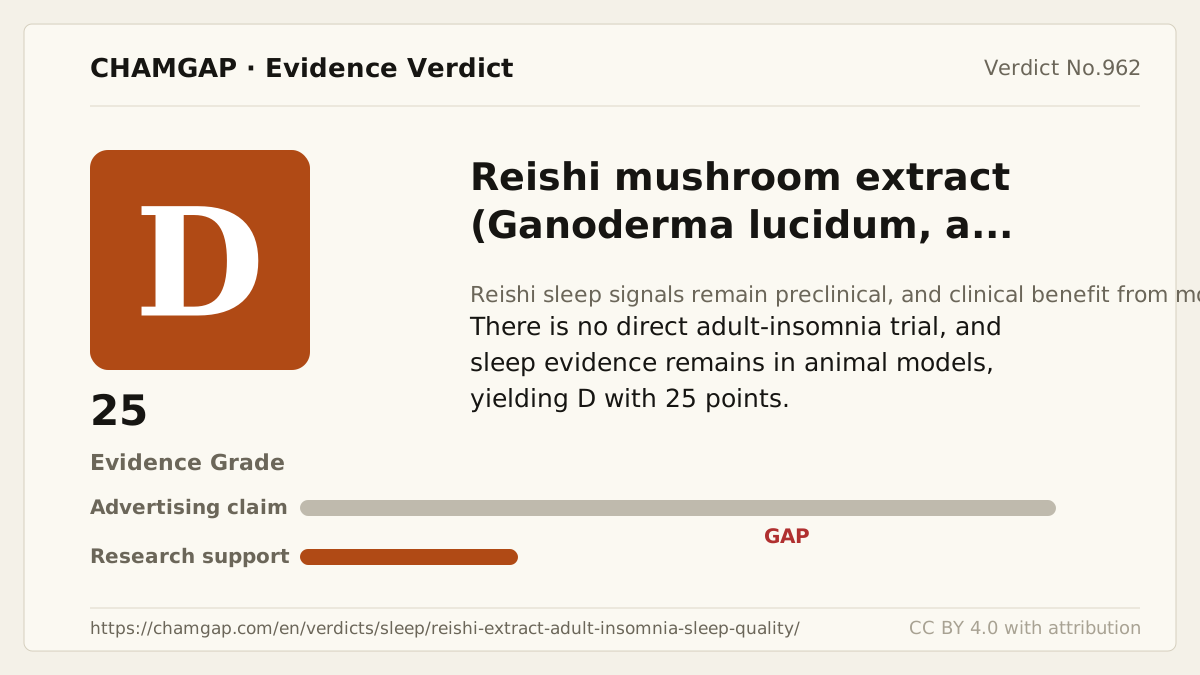
[Chamgap] Reishi mushroom extract x sleep onset, nocturnal awakenings, and sleep quality in adult insomnia — Evidence Grade D·25. 3 cited sources checked. Source: https://chamgap.com/en/verdicts/sleep/reishi-extract-adult-insomnia-sleep-quality/ · CC BY 4.0CC BY 4.0 — free to use with attribution; do not distort grades, numbers, or verdict meaning.
What this document does and does not do
Chamgap is an information source. It reports what research has and has not confirmed; it does not tell readers what to take or buy. That decision belongs to readers and, when needed, medical or legal professionals. This verdict reflects literature available up to the search date and may change as new research appears. Nothing here is medical advice.