
OnabotulinumtoxinA,
does it really help with Reduced sleep bruxism, clenching, and related jaw pain?
research showsOnabotulinumtoxinA injections are rated C because they may improve patient-perceived sleep bruxism and reduce contraction intensity, while evidence is small and conflicting. Ondo 2018 randomized 23 participants and analyzed 22, with 13 receiving toxin and nine placebo. The primary CGI succeeded: six of 13 were much or very much improved versus none of nine, P<.05, but Allergan funded the trial. An independent trial randomized 30 and analyzed 23 completers; the primary-family bruxism-event frequency result failed with P>.05, while only EMG contraction intensity fell with P=.001. Rules ①-ⓒ and ②-b for small, short, conflicting, and industry-concentrated evidence limit the grade to C with 45 points.
ads claimPromotion can imply that one injection removes the cause of grinding and permanently prevents joint or tooth damage. Evidence instead concerns short-term patient perception and contraction intensity; prevention of bruxism events and long-term dental protection remain unconfirmed.
Useful facts when choosing a product
- Injection for sleep bruxism is off label, and potency units are not interchangeable among botulinum toxin products.
- Trials used the masseter alone or the masseter plus temporalis with different total doses, leaving no standardized optimal protocol.
- The effect is temporary and repeat treatment is proposed, but evidence on long-term repeated exposure, muscle or alveolar-bone changes, and sustained efficacy is limited.
- This efficacy axis differs from verdict 1694, which is C with 55 points, on chronic migraine; migraine evidence was not repurposed as bruxism evidence.
Chamgap Semantic Classification Code
Candidate index · review held
M.onabotulinumtoxina.UNK.sleep-bruxism-clenching-and-related-jaw-pain.reduce.placeboMedicinal interventions > OnabotulinumtoxinA > Unknown > sleep bruxism, clenching, and related jaw pain > Reduction claim > Placebo
An automated migration candidate, not an issued permanent code; exact claim scope remains under review. This machine-generated migration candidate helps retrieval but is not a permanent assignment. The original verdict ID and URL remain authoritative.
What the research actually shows
Ondo 2018 randomized 23 participants and analyzed 22. Its prespecified four-to-eight-week CGI primary endpoint succeeded at 6/13 versus 0/9, P<.05, and Allergan funded the trial. Daewoong funded Shim 2020, which randomized 30 and analyzed 23. Bruxism event frequency and duration failed, while only peak EMG decreased at P=.001.
Why this is classified as C (45)
An Allergan-funded trial randomized 23 and analyzed 22, meeting its primary CGI endpoint, but an independent trial randomized 30 and analyzed 23 completers, failing on bruxism-event frequency while only EMG intensity decreased. With just 137 participants across nine randomized trials, rules ①-ⓒ and ②-b give C with 45 points.
Counterpoint. When pain and morning jaw fatigue are the principal problems, reduced contraction intensity may produce a meaningful perceived benefit. Sleep apnea, medicines, stress, and dental-protection needs still require assessment.
Rejudgment record. Cross-check applied — Rule ①-ⓑ was not applied because the prespecified CGI primary endpoint in Ondo 2018 succeeded. Grade C reflects the small Allergan-funded sample of 23 randomized and 22 analyzed participants plus the Daewoong-funded Shim 2020 failure on event frequency and duration, with only peak EMG reduced.
Sub-claim grades by effect
This ingredient is marketed for several effects. A single overall grade blends strong and weak claims together, so each effect is graded separately here. The overall grade reflects the strongest disconfirming or core claim.
| Effect (sub-claim) | Grade | Basis |
|---|---|---|
| Patient-perceived improvement in sleep bruxism | C | CGI was positive in 22 analyzed participants, but the trial was small and manufacturer-funded. |
| Reduced frequency of sleep-bruxism events | D | The overall event-frequency result failed with P>.05 in an independent polysomnographic trial. |
| Reduced contraction intensity and related jaw pain | C | EMG intensity and selected pain signals are positive, but evidence is small, short term, and protocol-heterogeneous. |
Cross-check — AI research and Codex final gate
Evidence Table
| Study | Design | Sample | Funding | Endpoint | Result | Weight |
|---|---|---|---|---|---|---|
| Ondo WG et al. 2018 | Randomized double-blind placebo-injection controlled trial | 23 randomized and 22 analyzed (13 injection and nine placebo) | Funded by Allergan Pharmaceuticals; manufacturer funding | Primary endpoint of Clinical Global Impression at four to eight weeks | Much or very much improved in six of 13 versus none of nine, P<.05; successful. | Key small manufacturer-funded trial |
| Shim YJ et al. 2020 | Randomized double-blind placebo-controlled polysomnographic trial | 30 randomized and 23 completers analyzed (13 injection and 10 placebo) | Research grant and prabotulinumtoxinA supplied by Daewoong Pharmaceutical Co.; manufacturer support | Sleep-bruxism event variables and EMG intensity | Event frequency and duration failed with P>.05; only peak EMG amplitude decreased with P=.001. | Independent conflicting objective-outcome evidence |
Receipt — 2 References
All 2 cited sources were verified for existence at the original page (as of 2026-07-24).
Final verification and publication gate: Codex · Evidence date: 2026-07-24 · Corrections: none
Cite this verdict
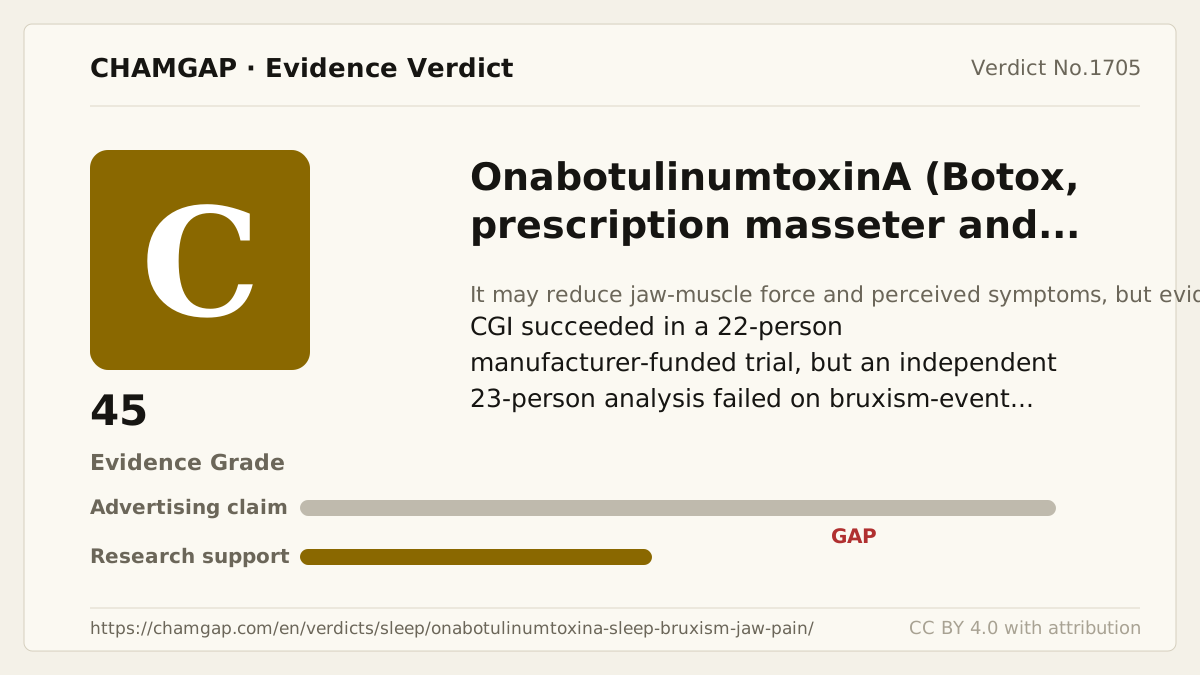
[Chamgap] OnabotulinumtoxinA x reduced sleep bruxism and jaw pain — Evidence Grade C·45. 2 cited sources checked. Source: https://chamgap.com/en/verdicts/sleep/onabotulinumtoxina-sleep-bruxism-jaw-pain/ · CC BY 4.0CC BY 4.0 — free to use with attribution; do not distort grades, numbers, or verdict meaning.
What this document does and does not do
Chamgap is an information source. It reports what research has and has not confirmed; it does not tell readers what to take or buy. That decision belongs to readers and, when needed, medical or legal professionals. This verdict reflects literature available up to the search date and may change as new research appears. Nothing here is medical advice.