
Z-track intramuscular injection,
does it really help with Reduced medication leakage onto the skin after injection?
research showsThe grade is C. In a randomized 60-person comparison, skin-surface leakage after 3 mL diclofenac was 6.93±4.62 mm with Z-track and 10.03±3.69 mm with standard injection (P=.008). The 3.10-mm difference divided by the pooled standard deviation is about 0.74, a medium-to-large magnitude. However, this measured leakage on paper, not tissue injury, failed absorption, or treatment benefit. Allocation concealment, blinding of the leakage assessor, and prospective registration were not confirmed in this single small trial, giving C with 50 points.
ads claimZ-track truly reduced the length of medication found on paper in this trial. That does not prove complete absorption or reduced tissue injury, pain, or treatment failure.
Useful facts when choosing a product
- Z-track displaces skin and subcutaneous tissue laterally before injection and releases it after needle withdrawal, offsetting the needle path.
- Both groups received prescribed 3-mL diclofenac.
- Leakage was measured immediately after injection on a 7-by-7-cm sterile paper with a millimeter ruler.
Chamgap Semantic Classification Code
Candidate index · review held
M.z-track-technique.intramuscular.medication-leakage-onto-the-skin-after-injection.reduce.UNKMedicinal interventions > Z-track technique > Intramuscular > medication leakage onto the skin after injection > Reduction claim > Unknown
An automated migration candidate, not an issued permanent code; exact claim scope remains under review. This machine-generated migration candidate helps retrieval but is not a permanent assignment. The original verdict ID and URL remain authoritative.
What the research actually shows
Yilmaz D, Khorshid L, Dedeoğlu Y et al. randomized 60 adult patients at a Turkish government hospital, 30 per group, to gluteal injection of prescribed 3-mL diclofenac by Z-track or standard technique. Immediately afterward, a 7-by-7-cm sterile paper was applied and leakage length measured with a millimeter ruler. A different nurse masked to technique assessed pain, but masking of the leakage assessor was not reported in publicly available material. No trial registration exists, and the original funding or acknowledgment section could not be verified.
Why this is classified as C (50)
Leakage decreased significantly with an approximate standardized magnitude of 0.74, but the outcome was a process surrogate from one small trial with unconfirmed concealment, leakage-assessor masking, and preregistration. This gives C with 50 points.
Counterpoint. Actual tissue injury, absorption failure, infection, and treatment effectiveness were not measured.
Rejudgment record. Cross-check applied — The original abstract and later systematic review were cross-checked for the 60-person analysis, leakage and pain means and standard deviations, measurement method, masked pain assessor, and unconfirmed concealment, registration, and funding.
| Endpoint | S | Surrogate marker - laboratory or imaging measures |
| Replication | R1 | Single confirmatory trial |
| Independence | I1 | Mixed funding sources |
| Effect size | E+ | Meets the clinically important threshold |
Stored derived and displayed grades match; this is not a current recalculation or validity check (C).
Sub-claim grades by effect
This ingredient is marketed for several effects. A single overall grade blends strong and weak claims together, so each effect is graded separately here. The overall grade reflects the strongest disconfirming or core claim.
| Effect (sub-claim) | Grade | Basis |
|---|---|---|
| Reduced skin-surface medication leakage | C | Leakage decreased from 10.03 to 6.93 mm. |
| Reduced injection pain | D | The pain difference was not significant. |
Cross-check — AI research and Codex final gate
Evidence Table
| Study | Design | Sample | Funding | Endpoint | Result | Weight |
|---|---|---|---|---|---|---|
| Yilmaz D, Khorshid L, Dedeoğlu Y et al., 2016 | Single-center semiexperimental randomized comparison | 60 randomized and analyzed, 30 per group | Original funding and acknowledgment section could not be verified | Skin-surface medication leakage length immediately after injection and VAS pain | Leakage 6.93±4.62 versus 10.03±3.69 mm, P=.008, calculated d≈0.74; pain 28.30±23.0 versus 36.40±28.40, not significant | Single small process-surrogate trial |
Receipt — 2 References
Of 2 cited sources, 1 had limited original-page access (blocked or summary-only) and were verified via index/summary, marked partial; the rest were verified at the original page. As of 2026-08-14.
Final verification and publication gate: Codex · Evidence date: 2026-08-14 · Corrections: none
Cite this verdict
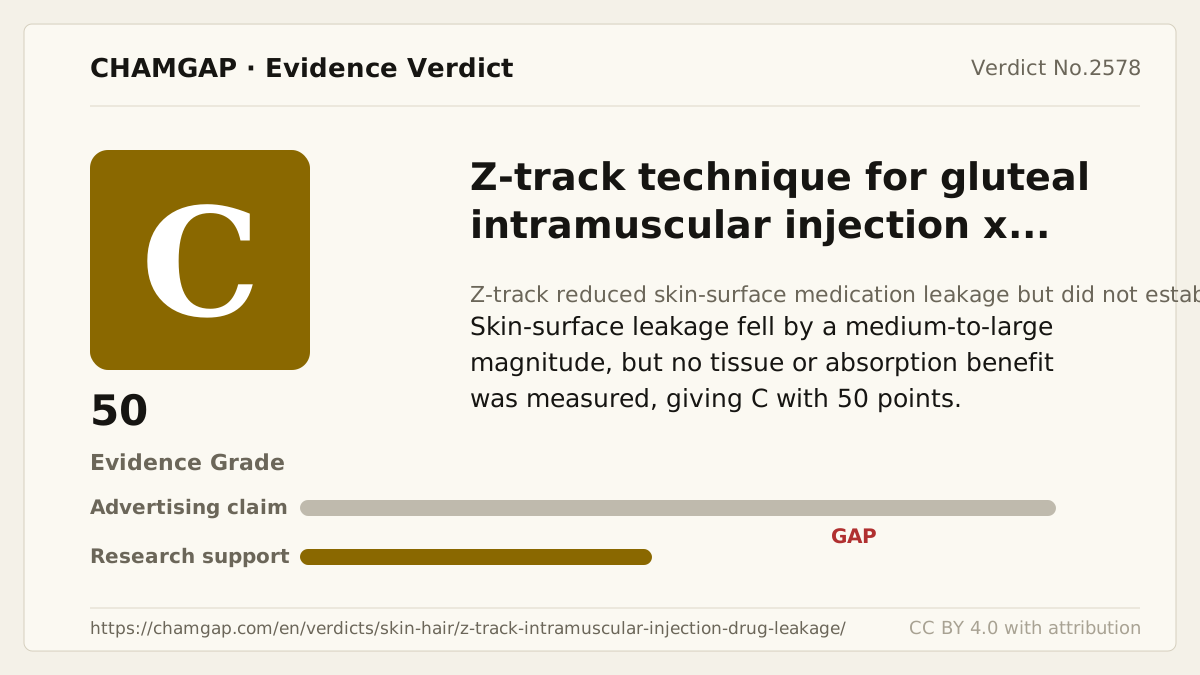
[Chamgap] Z-track intramuscular injection x medication leakage — Evidence Grade C·50. 2 cited sources checked. Source: https://chamgap.com/en/verdicts/skin-hair/z-track-intramuscular-injection-drug-leakage/ · CC BY 4.0CC BY 4.0 — free to use with attribution; do not distort grades, numbers, or verdict meaning.
What this document does and does not do
Chamgap is an information source. It reports what research has and has not confirmed; it does not tell readers what to take or buy. That decision belongs to readers and, when needed, medical or legal professionals. This verdict reflects literature available up to the search date and may change as new research appears. Nothing here is medical advice.