
Topical vitamin E,
does it really help with Cosmetic improvement of postsurgical scars and prevention of hypertrophic scarring?
research showsTopical vitamin E is rated F for improving postsurgical scar appearance or preventing hypertrophic scars. In a double-blind split-scar study after skin-cancer surgery, vitamin E had no effect or worsened appearance in 90% of cases and caused contact dermatitis in 33%. A separate randomized trial of 122 patients with recent surgical scars found no advantage of 5% topical tocotrienol over placebo on patient, observer, photographic, or laser-Doppler outcomes. Repeated contradiction keeps the grade at F, but a positive single-blind pediatric study of 428 participants places it at the upper end of F with 16 points.
ads claimMarketing directly links vitamin E's antioxidant chemistry and the moisturizing feel of oil to scar remodeling, less color or elevation, and keloid prevention. Antioxidant mechanisms and a moisturized feel do not establish postsurgical cosmetic outcomes, and contact dermatitis can worsen appearance.
Useful facts when choosing a product
- Vitamin E skin oils may contain alpha-tocopherol, tocopheryl acetate, or mixed tocopherols together with fragrance and plant oils, so a retail formula may not match a trial preparation.
- Do not apply an arbitrary cosmetic oil to an incompletely closed surgical wound, a possibly infected wound, or a site before suture removal; follow the surgical team's instructions.
- Redness, itching, blisters, weeping, or an expanding rash may indicate irritant or allergic contact dermatitis and warrants stopping the product and seeking care.
- For high-risk or already raised and symptomatic scars, discuss scar-specific evidence-based options such as silicone, pressure, or injections with dermatology or the surgical team.
Chamgap Semantic Classification Code
Candidate index · review held
S.vitamin-e.topical-skin.cosmetic-improvement-of-postsurgical-scars-and-prevention-of-hypertrophic-scarring.prevent.placeboSupplements and nutraceuticals > Vitamin E > Topical skin > Cosmetic improvement of postsurgical scars and prevention of hypertrophic scarring > Occurrence-prevention claim > Placebo
An automated migration candidate, not an issued permanent code; exact claim scope remains under review. This machine-generated migration candidate helps retrieval but is not a permanent assignment. The original verdict ID and URL remain authoritative.
What the research actually shows
Baumann and Spencer divided each scar in 15 patients after skin-cancer surgery, applying Aquaphor to one half and vitamin-E-containing Aquaphor to the other for four weeks while patients, physicians, and a photographic assessor were blinded. Vitamin E made no difference or looked worse in 90%, and 33% developed contact dermatitis. A 1986 study by Jenkins and colleagues in 111 patients after burn-contracture reconstruction also found no reduction in scar formation or thickness. Khoo and colleagues randomized 122 patients with new surgical scars to 5% tocotrienol or placebo under double masking. Among 85 completers, 16-week POSAS, photographic, and laser-Doppler outcomes did not differ. By contrast, the 2010 single-blind prospective study by Zampieri and colleagues in 428 children reported better subjective cosmesis and fewer keloids, but had greater potential for design and assessment bias.
Why this is classified as F (16)
A placebo-controlled split-scar study found no cosmetic benefit, with 90% null or worse and 33% contact dermatitis; a separate 111-participant vitamin E study and a 122-participant randomized double-blind tocotrienol trial were also null for scar and hypertrophic-scar measures. Repeated direct contradiction retains F, but the positive 428-participant pediatric single-blind study places the verdict at the upper end of F with 16 points. Contact dermatitis is also an important safety issue independent of efficacy failure.
Counterpoint. A bland moisturizer or wound covering can improve comfort, but that is not a vitamin-E-specific scar effect. Scar management should reflect wound closure, location, skin type, hypertrophic risk, and symptoms.
Rejudgment record. Cross-check revision — Retained F because the direct split-scar trial and the 111-participant reconstruction study were repeatedly null, but moved the score to the upper end of F because a 428-participant pediatric single-blind study was positive. The 122-participant tocotrienol trial was also null, and the contact-dermatitis harm signal was considered separately
Sub-claim grades by effect
This ingredient is marketed for several effects. A single overall grade blends strong and weak claims together, so each effect is graded separately here. The overall grade reflects the strongest disconfirming or core claim.
| Effect (sub-claim) | Grade | Basis |
|---|---|---|
| Cosmetic improvement of postsurgical scars | F | A direct split-scar trial found no benefit, with most scars unchanged or worse. |
| Prevention of hypertrophic scars or keloids | F | A 122-participant double-blind placebo-controlled trial was null, and a limited positive pediatric study does not overturn it. |
| Improved scar color, elevation, and perfusion measures | F | Placebo-controlled photographic, observer-rated, and laser-Doppler measures showed no improvement. |
Cross-check — AI research and Codex final gate
Evidence Table
| Study | Design | Sample | Funding | Endpoint | Result | Weight |
|---|---|---|---|---|---|---|
| Baumann LS and Spencer J. 1999 | Randomized double-blind within-patient split-scar controlled trial | Fifteen patients after primary closure of skin-cancer excisions | Inadequately reported in the indexed abstract | Patient, physician, and photographic scar-cosmesis ratings at weeks 1, 4, and 12 plus dermatitis | Vitamin E had no effect or worsened appearance in 90%, and 33% developed contact dermatitis. | Key direct-formulation, direct-scar evidence with a harm signal |
| Khoo TL et al. 2011 | Prospective randomized double-blind placebo-controlled trial | 122 patients with recent surgical scars randomized and 85 fully assessed | Inadequately reported in the indexed abstract | Sixteen-week POSAS, photographic assessment, and laser-Doppler perfusion | No scar parameter differed significantly between 5% tocotrienol and placebo. | Replicated null evidence for hypertrophic-scar prevention |
| Jenkins M et al. 1986 | Prospective double-blind topical-treatment comparison | 111 patients after reconstructive surgery for burn contractures | Inadequately reported | Scar thickness, appearance, and photographic assessment through one year | Topical vitamin E did not reduce scar formation or thickness relative to the control topical treatment. | Separate direct replication of null topical-vitamin-E efficacy |
| Zampieri N et al. 2010 | Prospective single-blind controlled study | 428 children undergoing elective inguinal surgery | Inadequately reported in the indexed abstract | Six-month subjective cosmesis, keloids, and infection | Cosmetic ratings and keloid occurrence favored vitamin E, but single masking and subjective assessment limited confidence. | Conflicting positive evidence with methodological limitations |
Receipt — 5 References
All 5 cited sources were verified for existence at the original page (as of 2026-07-21).
Final verification and publication gate: Codex · Evidence date: 2026-07-21 · Corrections: none
Cite this verdict
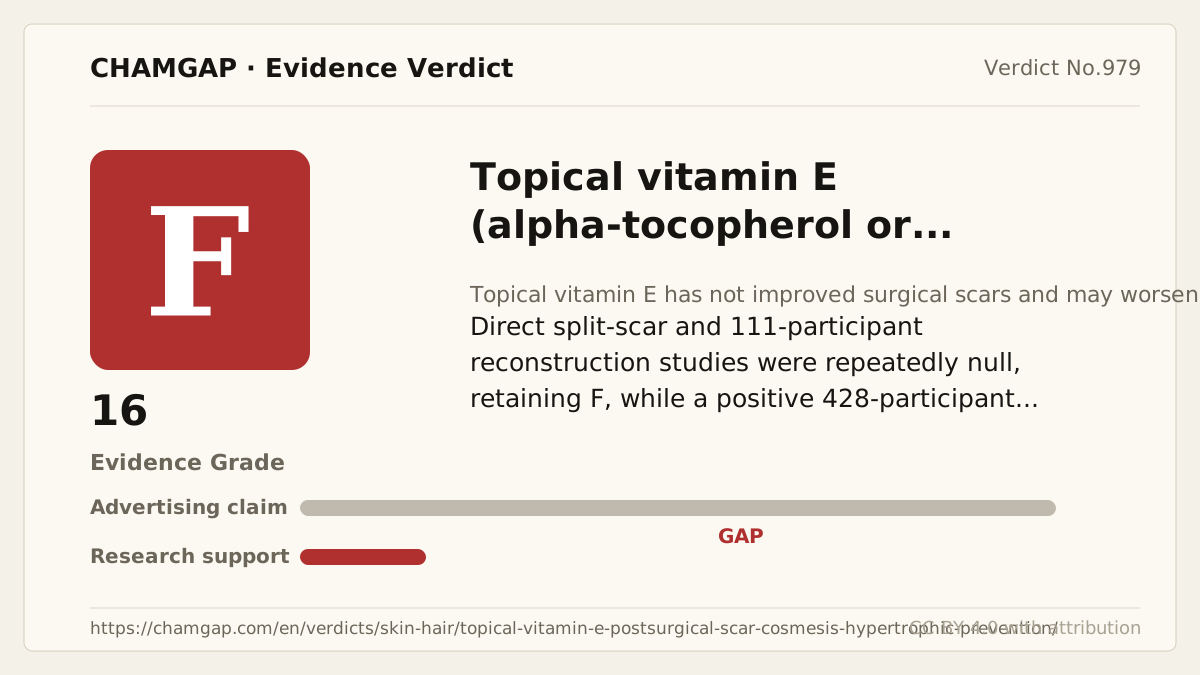
[Chamgap] Topical vitamin E x cosmetic improvement of postsurgical scars and prevention of hypertrophic scars — Evidence Grade F·16. 5 cited sources checked. Source: https://chamgap.com/en/verdicts/skin-hair/topical-vitamin-e-postsurgical-scar-cosmesis-hypertrophic-prevention/ · CC BY 4.0CC BY 4.0 — free to use with attribution; do not distort grades, numbers, or verdict meaning.
What this document does and does not do
Chamgap is an information source. It reports what research has and has not confirmed; it does not tell readers what to take or buy. That decision belongs to readers and, when needed, medical or legal professionals. This verdict reflects literature available up to the search date and may change as new research appears. Nothing here is medical advice.