
Topical fluorouracil 5%,
does it really help with Reduced squamous cell carcinoma incidence and surgery in people at high risk of actinic keratosis and skin cancer?
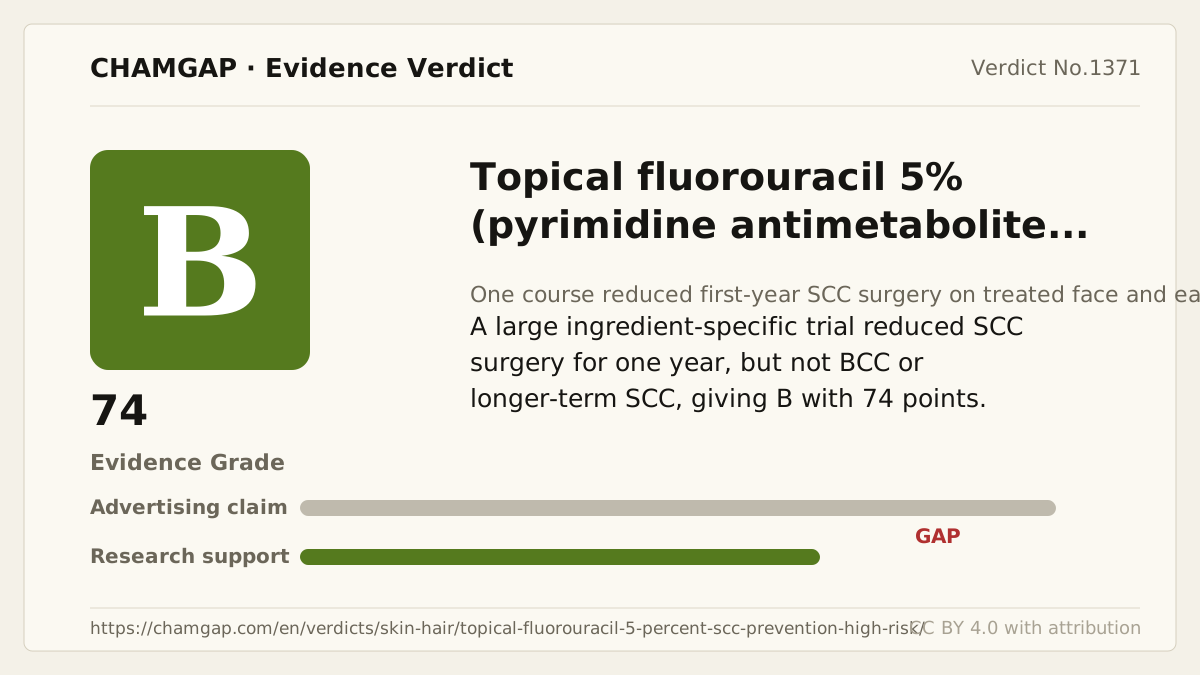
research showsTopical fluorouracil 5% is rated B because a large randomized trial found that one two-to-four-week course on the face and ears reduced squamous cell carcinomas requiring surgery during the first year in people at high risk of keratinocyte carcinoma. Among 932 VAKCC participants, first-year SCC risk fell by 75%, but the benefit did not persist across four years and basal cell carcinoma was not reduced. The same trial also showed fewer actinic keratoses and less need for lesion-directed treatment. Restriction to SCC, treated sites, and the first year prevents an A grade.
ads claimMarketing may imply that clearing actinic keratoses prevents every skin cancer for years. The trial supports a first-year reduction in SCC surgery on treated face and ear sites among patients with a heavy prior keratinocyte-carcinoma burden, not BCC prevention or lifelong whole-body protection.
Useful facts when choosing a product
- Topical fluorouracil is a pyrimidine antimetabolite that disrupts DNA synthesis and is prescribed for sun-damaged lesions such as actinic keratoses.
- VAKCC used fluorouracil 5% on the face and ears twice daily for up to four weeks; its cancer-prevention result should not be transferred automatically to other concentrations, sites, or regimens.
- Erythema, inflammation, erosion, crusting, burning, and pain are common during treatment, and treated skin can become more photosensitive.
- Pregnancy potential, dihydropyrimidine dehydrogenase deficiency, severe local reactions, or suspected infection require review with the prescriber.
Chamgap Semantic Classification Code
Candidate index · review held
M.fluorouracil-5-percent.topical-skin.squamous-cell-carcinoma-incidence-and-surgery-at-high-risk-of-actinic-keratosis-and-skin-cancer.reduce.UNKMedicinal interventions > fluorouracil 5% > Topical skin > squamous cell carcinoma incidence and surgery at high risk of actinic keratosis and skin cancer > Reduction claim > Unknown
An automated migration candidate, not an issued permanent code; exact claim scope remains under review. This machine-generated migration candidate helps retrieval but is not a permanent assignment. The original verdict ID and URL remain authoritative.
What the research actually shows
Weinstock and the VAKCC Group compared fluorouracil 5% with vehicle in 932 participants. First-year SCC surgery risk fell by 75%, but there was no significant four-year overall keratinocyte-carcinoma benefit and no BCC benefit. In a VAKCC analysis by Pomerantz, mean actinic-keratosis counts at six months were 3.0 versus 8.1, complete clearance was 38% versus 17%, and reductions in lesions and spot treatments persisted beyond two years. These findings support actinic-keratosis treatment and one-year SCC chemoprevention, not durable prevention of all skin cancers.
Why this is classified as B (74)
An ingredient-specific randomized trial of 932 participants reduced the direct outcome of SCC requiring surgery by 75% during year one and also reduced actinic keratoses. No BCC benefit, no sustained four-year cancer effect, and limited population and treatment sites give B with 74 points. Local inflammation and photosensitivity are separate safety issues.
Counterpoint. This verdict is distinct from oral nicotinamide for nonmelanoma skin-cancer recurrence prevention. Fluorouracil is a topical antimetabolite and does not replace dermatologic surveillance or sun protection.
Rejudgment record. New verdict — Credited the direct first-year reduction in SCC requiring surgery in a large ingredient-specific randomized trial, while accounting for no BCC effect, no persistence across four years, and limited generalizability beyond high-risk veterans and treated face and ear sites
Sub-claim grades by effect
This ingredient is marketed for several effects. A single overall grade blends strong and weak claims together, so each effect is graded separately here. The overall grade reflects the strongest disconfirming or core claim.
| Effect (sub-claim) | Grade | Basis |
|---|---|---|
| Reduced SCC requiring surgery during the first year on treated face and ear sites in high-risk patients | B | VAKCC found a 75% reduction, but it did not persist across the full four-year period. |
| Reduced actinic-keratosis lesion counts and additional spot treatments | B | Secondary outcomes from the same randomized trial showed fewer lesions and treatments beyond two years. |
| Prevention of basal cell carcinoma or long-term keratinocyte carcinoma | D | BCC was not reduced and the overall four-year primary outcome was not significant. |
Cross-check — AI research and Codex final gate
Evidence Table
| Study | Design | Sample | Funding | Endpoint | Result | Weight |
|---|---|---|---|---|---|---|
| Weinstock MA et al.; VAKCC Group. 2018 | Multicenter randomized double-blind vehicle-controlled trial | 932 high-risk veterans | United States Department of Veterans Affairs Cooperative Studies Program | SCC and BCC requiring surgery on the face or ears and four-year keratinocyte carcinoma | First-year SCC risk fell by 75%, but the SCC effect did not persist across four years and BCC was not reduced. | Key direct clinical-outcome evidence |
| Pomerantz H et al.; VAKCC Trial Group. 2015 | Actinic-keratosis secondary-outcome analysis of the same randomized trial | 932 participants; 468 assigned to fluorouracil 5% and 464 to vehicle | United States Department of Veterans Affairs Cooperative Studies Program | Actinic-keratosis counts, complete clearance, and additional spot treatment | At six months, lesion counts were 3.0 versus 8.1 and complete clearance was 38% versus 17%; fewer lesions and spot treatments persisted beyond two years. | Supportive actinic-keratosis efficacy |
Receipt — 2 References
All 2 cited sources were verified for existence at the original page (as of 2026-07-23).
Final verification and publication gate: Codex · Evidence date: 2026-07-23 · Corrections: none
Cite this verdict
[Chamgap] Topical fluorouracil 5% x reduced squamous cell carcinoma incidence and surgery in high-risk patients — Evidence Grade B·74. 2 cited sources checked. Source: https://chamgap.com/en/verdicts/skin-hair/topical-fluorouracil-5-percent-scc-prevention-high-risk/ · CC BY 4.0CC BY 4.0 — free to use with attribution; do not distort grades, numbers, or verdict meaning.
What this document does and does not do
Chamgap is an information source. It reports what research has and has not confirmed; it does not tell readers what to take or buy. That decision belongs to readers and, when needed, medical or legal professionals. This verdict reflects literature available up to the search date and may change as new research appears. Nothing here is medical advice.