
Topical castor oil,
does it really help with Hair growth and reversal of hair loss through scalp application?
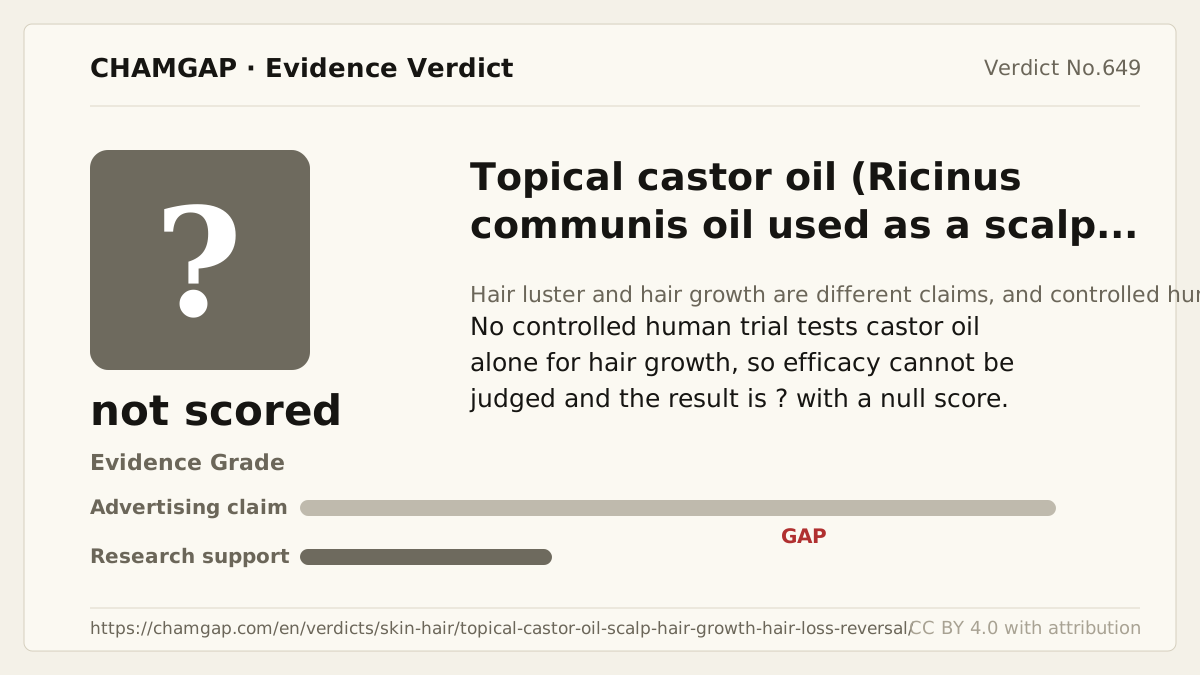
research showsThe claim that scalp-applied castor oil grows hair or reverses hair loss is ungraded (?). A 2022 systematic review found only weak evidence that castor oil might improve cosmetic luster and no strong evidence for hair growth, while a 2020 review of natural alopecia ingredients found no clinical evidence for black castor oil. The key issue is not a negative large human trial but the absence of a controlled human hair-growth trial of castor oil alone, so the claim is not graded F. Castor oil is distinct from minoxidil, rosemary oil, and biotin and cannot borrow their evidence.
ads claimMarketing converts claims about circulation, ricinoleic-acid nourishment, and a thicker-looking coating into new follicles and reversal of hair loss. Before-and-after images or uncontrolled testimonials for multi-ingredient oils are not controlled human trials of castor oil alone.
Useful facts when choosing a product
- Castor oil is a highly viscous oil from Ricinus communis seeds and is distinct from minoxidil, rosemary oil, and biotin. Evidence for another ingredient cannot be transferred to castor oil.
- Coating the hair shaft can change luster or apparent thickness, but cosmetic conditioning does not show an increased follicle count or a greater proportion of hairs in anagen.
- Scalp application can cause irritant or allergic contact reactions; stinging, rash, or swelling warrants washing it off and discontinuing use.
- Very high viscosity combined with long hair and friction during washing may rarely cause acute hair felting, sometimes requiring the matted hair to be cut. Delaying diagnosis of the cause of hair loss is another practical risk.
Chamgap Semantic Classification Code
Candidate index · review held
UNK.castor-oil.topical-skin.hair-growth-and-reversal-of-hair-loss-through-scalp-application.assess.UNKUnknown > castor oil > Topical skin > Hair growth and reversal of hair loss through scalp application > Association or change assessment > Unknown
An automated migration candidate, not an issued permanent code; exact claim scope remains under review. This machine-generated migration candidate helps retrieval but is not a permanent assignment. The original verdict ID and URL remain authoritative.
What the research actually shows
Phong and colleagues systematically reviewed 22 publications on coconut, castor, and argan oils in 2022 and concluded that evidence for castor oil improving luster was weak and strong support for hair growth was absent. Ezekwe and colleagues searched natural ingredients used for alopecia in 2020 but found no clinical evidence for black castor oil and no randomized controlled study for central centrifugal cicatricial alopecia. Maduri and colleagues reported a 20-year-old woman in 2017 whose long hair acutely formed a hard matted mass after coconut and castor oil application and washing, requiring cutting. That report informs safety, not efficacy.
Why this is classified as ?
Two systematic reviews found no controlled human hair-growth trial of castor oil alone. Weak cosmetic-luster information and a case report of acute hair felting concern conditioning and safety, not hair-growth efficacy. Because human efficacy literature is absent rather than showing a large negative trial, the grade is ? and the score is null.
Counterpoint. Using a small amount as a cosmetic conditioner is a different choice from treating alopecia medically. Sudden loss, inflammation or scarring, round patches, or signs of anemia or thyroid disease require diagnosis and evidence-based treatment.
Rejudgment record. New verdict — Applied ? for absence of controlled human efficacy literature on standalone topical castor oil, rather than F, which would require large human null results or repeated refutation
Sub-claim grades by effect
This ingredient is marketed for several effects. A single overall grade blends strong and weak claims together, so each effect is graded separately here. The overall grade reflects the strongest disconfirming or core claim.
| Effect (sub-claim) | Grade | Basis |
|---|---|---|
| Hair growth and reversal of hair loss through scalp application | ? | No controlled human trial of standalone castor oil permits an efficacy judgment. |
| Scalp conditioning and improved hair appearance | ? | Weak luster information exists but is insufficient to establish a controlled or durable clinical effect. |
| Established safety of scalp application | ? | Systematic safety trials are absent, with possible local irritation and a case report of acute hair felting. |
Cross-check — AI research and Codex final gate
Evidence Table
| Study | Design | Sample | Funding | Endpoint | Result | Weight |
|---|---|---|---|---|---|---|
| Phong C et al. 2022 | Systematic review of coconut, castor, and argan oils for hair | Twenty-two publications overall; no controlled human hair-growth trial of standalone castor oil | No external funding reported | Hair growth, hair quality, and treatment of infestation | Evidence for improved luster was weak, and there was no strong evidence supporting castor oil for hair growth. | Key evidence-gap assessment |
| Ezekwe N et al. 2020 | Systematic review of natural ingredients for alopecia | Eight clinical studies selected; zero trials of black castor oil | Reported no funding and no relevant conflicts | Hair retention and growth in central centrifugal cicatricial and other alopecias | Found no clinical efficacy evidence for black castor oil and no randomized study of natural ingredients for central centrifugal cicatricial alopecia. | Independent evidence-gap confirmation |
| Maduri VR et al. 2017 | Single case report of acute hair felting | One 20-year-old woman | Not reported | Acute hair felting after castor and coconut oil use | Long hair became irreversibly matted immediately after washing and required cutting. | Safety case report; not efficacy evidence |
Receipt — 3 References
All 3 cited sources were verified for existence at the original page (as of 2026-07-19).
Final verification and publication gate: Codex · Evidence date: 2026-07-19 · Corrections: none
Cite this verdict
[Chamgap] Topical castor oil x hair growth and reversal of hair loss — Evidence Grade ?. 3 cited sources checked. Source: https://chamgap.com/en/verdicts/skin-hair/topical-castor-oil-scalp-hair-growth-hair-loss-reversal/ · CC BY 4.0CC BY 4.0 — free to use with attribution; do not distort grades, numbers, or verdict meaning.
What this document does and does not do
Chamgap is an information source. It reports what research has and has not confirmed; it does not tell readers what to take or buy. That decision belongs to readers and, when needed, medical or legal professionals. This verdict reflects literature available up to the search date and may change as new research appears. Nothing here is medical advice.