
Skin-protection wheelchair cushions,
does it really help with Prevention of six-month ischial pressure ulcers versus segmented foam in high-risk nursing-home residents?
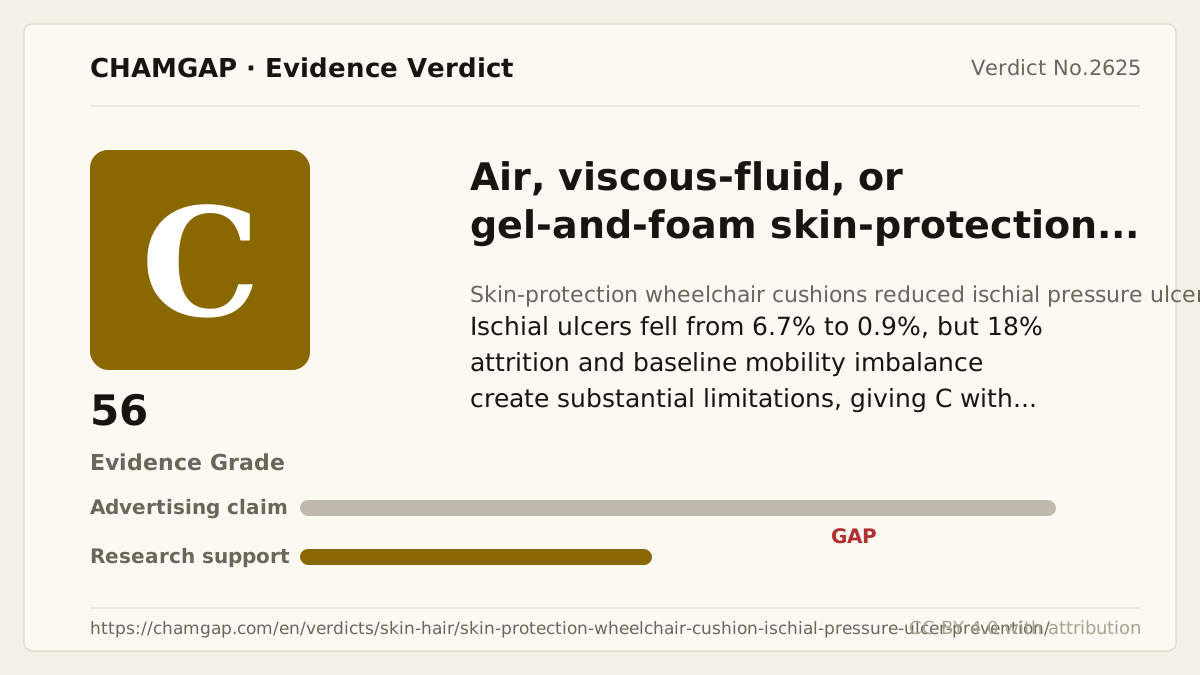
research showsThe grade is C. In a 232-person trial, ischial pressure ulcers occurred in 1/113 (0.9%) with skin-protection cushions versus 8/119 (6.7%) with segmented foam, two-sided P<.04. However, 42 (18.1%) were lost to follow-up, and baseline inability to walk, a pressure-ulcer risk factor, was imbalanced without an adjusted primary analysis. Combined ischial and sacral ulcers were 10.6% versus 17.6%, P=.14, giving C with 56 points.
ads claimSkin protection is not a guarantee that every product performs alike. The trial pooled air, viscous-fluid, and gel-and-foam cushions installed by seating specialists in fitted wheelchairs.
Useful facts when choosing a product
- The intervention pooled air, viscous-fluid-and-foam, and gel-and-foam cushions; control was 7.6-cm crosscut segmented foam.
- Both groups received professionally fitted wheelchairs.
- Prevention also requires skin inspection, repositioning, moisture control, and nutrition management.
Chamgap Semantic Classification Code
Candidate index · review held
UNK.air.UNK.ischial-pressure-ulcers.prevent.UNKUnknown > Air > Unknown > ischial pressure ulcers > Occurrence-prevention claim > Unknown
An automated migration candidate, not an issued permanent code; exact claim scope remains under review. This machine-generated migration candidate helps retrieval but is not a permanent assignment. The original verdict ID and URL remain authoritative.
What the research actually shows
Twelve US nursing homes randomized 232 residents aged at least 65 who used wheelchairs at least six hours daily and had Braden scores of 18 or less: 113 to skin-protection cushions and 119 to 7.6-cm crosscut segmented foam. Both groups received fitted wheelchairs, and outcome assessors were masked. Ischial ulcers were 1 versus 8, two-sided P<.04; combined ischial and sacral ulcers were 12 versus 21, P=.14. NICHD National Center for Medical Rehabilitation Research grant R01HD04109 funded the trial. Manufacturers supplied cushions at no cost, while the paper reported no sponsor role. NCT00178126 was confirmed, but exact agreement of the full registered primary analysis with the paper could not be completely reconstructed.
Why this is classified as C (56)
A publicly funded randomized trial substantially reduced ischial ulcers, but high attrition and unadjusted baseline mobility imbalance give C with 56 points.
Counterpoint. Treatment after ulcer development, bed mattresses, and ring cushions are different questions from this prevention verdict.
Rejudgment record. Cross-check applied — The Brienza paper and NCT00178126 were checked for allocation, attrition, intervention nonreceipt, two-sided testing, baseline mobility, assessor masking, funding, and product grouping
| Endpoint | H | Hard endpoint - actual events such as death |
| Replication | R1 | Single confirmatory trial |
| Independence | I2 | Decisive evidence is publicly or non-profit funded |
| Effect size | E+ | Meets the clinically important threshold |
Stored derived and displayed grades match; this is not a current recalculation or validity check (C).
Sub-claim grades by effect
This ingredient is marketed for several effects. A single overall grade blends strong and weak claims together, so each effect is graded separately here. The overall grade reflects the strongest disconfirming or core claim.
| Effect (sub-claim) | Grade | Basis |
|---|---|---|
| Prevention of ischial pressure ulcers | C | Rates were 0.9% versus 6.7%, with attrition and baseline mobility imbalance. |
| Prevention of all ischial and sacral ulcers | D | The combined outcome was 10.6% versus 17.6%, P=.14. |
Cross-check — AI research and Codex final gate
Evidence Table
| Study | Design | Sample | Funding | Endpoint | Result | Weight |
|---|---|---|---|---|---|---|
| Brienza D et al. 2010 | Outcome-assessor-masked randomized clinical trial in 12 nursing homes | 232 randomized, 113 versus 119; 180 reached an endpoint, 42 lost, 10 did not receive intervention | NICHD National Center for Medical Rehabilitation Research grant R01HD04109; cushions supplied free by manufacturers | Six-month ischial pressure-ulcer incidence | 1/113 (0.9%) versus 8/119 (6.7%), two-sided P<.04; combined ischial plus sacral 12/113 versus 21/119, P=.14 | Only direct randomized trial, with substantial risk of bias |
Receipt — 1 References
All 1 cited sources were verified for existence at the original page (as of 2026-08-15).
Final verification and publication gate: Codex · Evidence date: 2026-08-15 · Corrections: none
Cite this verdict
[Chamgap] Skin-protection wheelchair cushions x prevention of ischial pressure ulcers — Evidence Grade C·56. 1 cited sources checked. Source: https://chamgap.com/en/verdicts/skin-hair/skin-protection-wheelchair-cushion-ischial-pressure-ulcer-prevention/ · CC BY 4.0CC BY 4.0 — free to use with attribution; do not distort grades, numbers, or verdict meaning.
What this document does and does not do
Chamgap is an information source. It reports what research has and has not confirmed; it does not tell readers what to take or buy. That decision belongs to readers and, when needed, medical or legal professionals. This verdict reflects literature available up to the search date and may change as new research appears. Nothing here is medical advice.