
Silver-containing surgical dressing,
does it really help with Prevention of surgical-site infection in closed surgical wounds?
research showsSilver-containing surgical dressings are rated C because the latest synthesis supports a probable reduction in surgical-site infection. The 2016 Cochrane clean-surgery comparison was highly uncertain, RR 1.11 (95% CI 0.47 to 2.62), with very-low-certainty GRADE evidence. A 2026 meta-analysis available before the verification date, however, found RR 0.78 (0.62 to 0.97), I²=43%, with moderate GRADE certainty across 21 randomized trials and 5,504 participants. Heterogeneous procedures and products, a borderline effect, and the prior uncertain synthesis keep the grade at C with 58 points.
ads claimAn antimicrobial mechanism can be expanded into universal infection prevention, faster healing, and better scar and pain outcomes. The current SSI signal does not establish those separate endpoints.
Useful facts when choosing a product
- A silver surgical dressing covers a closed incision and locally delivers silver ions or compounds through an antimicrobial wound-contact material.
- Products differ in silver form, amount, release behavior, and substrate, so results from one formulation cannot automatically be assigned to all silver dressings.
- Local irritation and contact dermatitis can occur, while discoloration or silver deposition is rare and is mainly a concern with prolonged or extensive exposure.
- Costs can exceed those of basic dressings, and cost-effectiveness depends on baseline infection risk and product price.
Chamgap Semantic Classification Code
Candidate index · review held
P.silver-containing-surgical-dressing.device.surgical-site-infection-in-closed-surgical-wounds.prevent.UNKProcedures, devices and tests > Silver-containing surgical dressing > Device delivered > surgical-site infection in closed surgical wounds > Occurrence-prevention claim > Unknown
An automated migration candidate, not an issued permanent code; exact claim scope remains under review. This machine-generated migration candidate helps retrieval but is not a permanent assignment. The original verdict ID and URL remain authoritative.
What the research actually shows
The 2016 Cochrane review examined 29 trials and 5,718 participants. Silver versus basic dressings in clean surgery was RR 1.11 (0.47 to 2.62) in two trials and 496 participants, with very low certainty; the potentially contaminated surgery estimate was RR 0.83 (0.51 to 1.37) in five trials and 1,353 participants, also very low certainty. The 2026 BJS meta-analysis included 35 randomized trials and 8,718 participants overall; its 21 silver trials and 5,504 participants yielded SSI RR 0.78 (0.62 to 0.97), I²=43%, with moderate certainty.
Why this is classified as C (58)
The 2016 Cochrane RR of 1.11 (0.47 to 2.62) with very low certainty was inconclusive, but the 2026 synthesis updated the evidence to RR 0.78 (0.62 to 0.97), I²=43%, with moderate GRADE certainty across 21 trials and 5,504 participants. Positive current evidence plus heterogeneity and borderline precision gives C with 58 points.
Counterpoint. Absolute benefit varies with baseline SSI risk, procedure, and silver formulation.
Rejudgment record. New verdict — Recorded the uncertain very-low-certainty 2016 Cochrane result but prioritized the pre-verification 2026 synthesis of 21 randomized trials and 5,504 participants, RR 0.78 with moderate GRADE certainty, while limiting the grade to C for heterogeneity
Sub-claim grades by effect
This ingredient is marketed for several effects. A single overall grade blends strong and weak claims together, so each effect is graded separately here. The overall grade reflects the strongest disconfirming or core claim.
| Effect (sub-claim) | Grade | Basis |
|---|---|---|
| Prevention of surgical-site infection | C | The current 21-trial meta-analysis found RR 0.78 with moderate certainty, but products and procedures were heterogeneous. |
| Faster wound healing | D | No consistent synthesis establishes faster healing of closed surgical wounds. |
| Improved scarring or pain | D | The Cochrane review found limited low- or very-low-certainty data. |
Cross-check — AI research and Codex final gate
Evidence Table
| Study | Design | Sample | Funding | Endpoint | Result | Weight |
|---|---|---|---|---|---|---|
| Dumville JC et al. 2016 | Cochrane systematic review of randomized trials | 29 trials and 5,718 participants; two clean-surgery silver trials and 496 participants | Public support from NIHR | Surgical-site infection, scarring, and pain | Clean-surgery SSI RR was highly uncertain at 1.11 (0.47 to 2.62), with very low certainty. | Earlier key inconclusive GRADE evidence |
| Yusuf SM et al. 2026 | Systematic review and meta-analysis of randomized trials | 21 silver-dressing randomized trials and 5,504 participants | Academic research as disclosed in the article | SSI within 30 days or 90 days for prosthetic surgery | RR was 0.78 (0.62 to 0.97), I²=43%, with moderate certainty. | Current key synthesis |
Receipt — 2 References
All 2 cited sources were verified for existence at the original page (as of 2026-07-23).
Final verification and publication gate: Codex · Evidence date: 2026-07-23 · Corrections: none
Cite this verdict
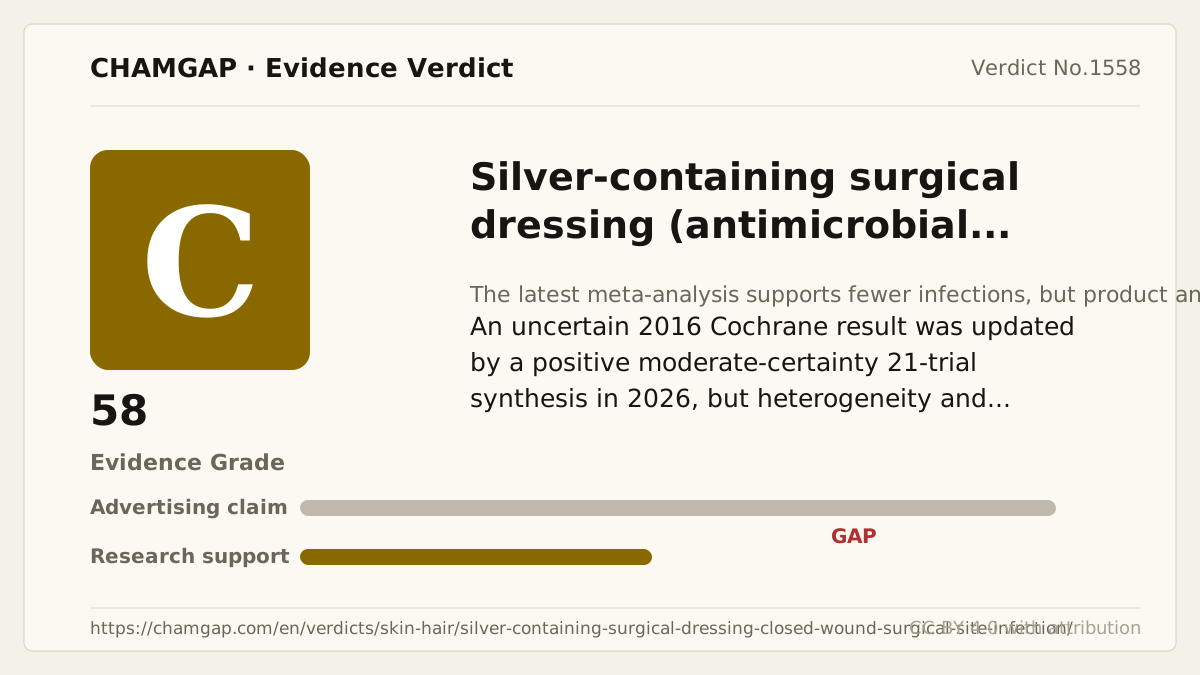
[Chamgap] Silver-containing surgical dressing x prevention of surgical-site infection in closed surgical wounds — Evidence Grade C·58. 2 cited sources checked. Source: https://chamgap.com/en/verdicts/skin-hair/silver-containing-surgical-dressing-closed-wound-surgical-site-infection/ · CC BY 4.0CC BY 4.0 — free to use with attribution; do not distort grades, numbers, or verdict meaning.
What this document does and does not do
Chamgap is an information source. It reports what research has and has not confirmed; it does not tell readers what to take or buy. That decision belongs to readers and, when needed, medical or legal professionals. This verdict reflects literature available up to the search date and may change as new research appears. Nothing here is medical advice.