
Selenium sulfide 2.5% shampoo,
does it really help with Dandruff reduction?
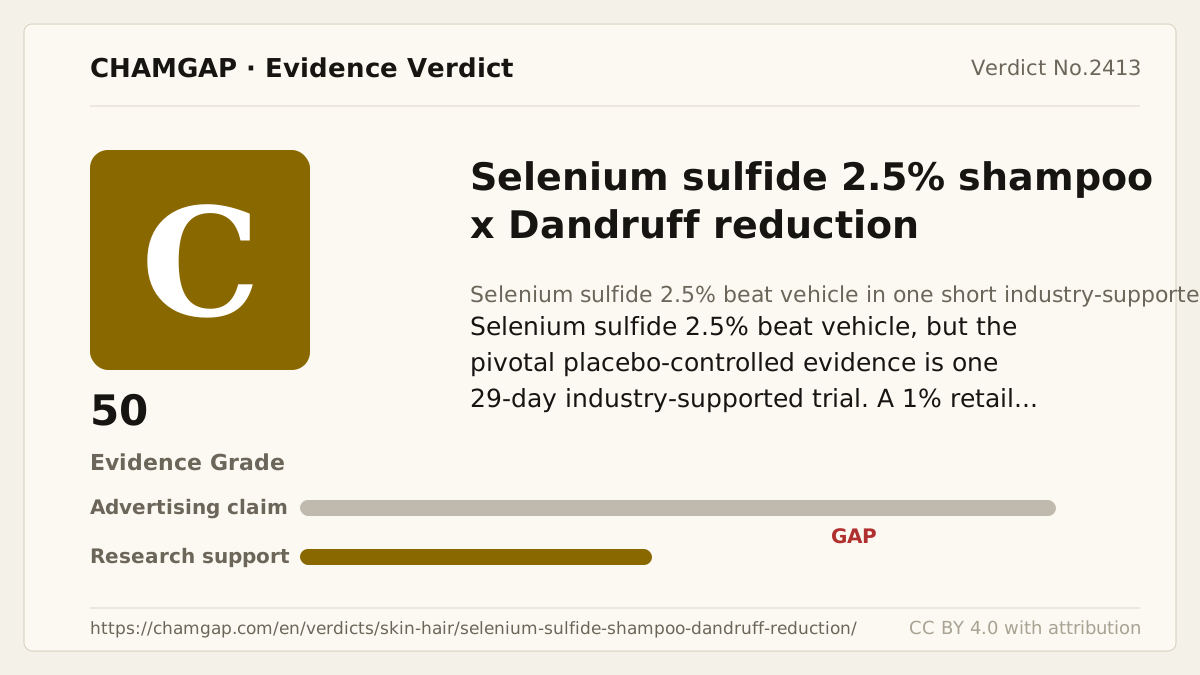
research showsThe grade is C with 50 points. In a 246-person double-blind trial, adherent dandruff scores fell 66.7% with 2.5% selenium sulfide and 44.5% with shampoo vehicle. Complete, excellent, or good response occurred in 54.7% versus 28.6% (P=.004), without a reported confidence interval.
ads claimUnited States 1% nonprescription and 2.5% prescription formulations differ, and classifications vary by country. Korean pharmacy or supermarket products should be checked for actual ingredient and concentration.
Useful facts when choosing a product
- The pivotal regimen used selenium sulfide 2.5% twice weekly for 29 days.
- The trial included both ketoconazole 2% active control and shampoo vehicle.
- The paper states: Supported by Janssen Pharmaceutica Inc.
- One-percent and 2.5% formulations are not interchangeable evidence.
Chamgap Semantic Classification Code
Candidate index · review held
UNK.selenium-sulfide-2-5-percent-shampoo.UNK.dandruff-reduction.reduce.MULTIUnknown > Selenium sulfide 2.5% shampoo > Unknown > Dandruff reduction > Reduction claim > Multiple: primary unresolved
An automated migration candidate, not an issued permanent code; exact claim scope remains under review. This machine-generated migration candidate helps retrieval but is not a permanent assignment. The original verdict ID and URL remain authoritative.
What the research actually shows
Danby 1993 randomized 246 participants in a 2:2:1 ratio to ketoconazole 2% (97), selenium sulfide 2.5% (100), or shampoo vehicle (49) for 29 days, used twice weekly. Outcomes included adherent and loose dandruff, erythema, itch, yeast, and investigator global improvement. Adherent dandruff fell 66.7% with selenium sulfide and 44.5% with vehicle; global response was 54.7% versus 28.6% (P=.004). Final arm-level absolute scores, variances, confidence intervals, and recurrence were not reported in the accessible article. Ketoconazole was an active comparator. Funding was stated as “Supported by Janssen Pharmaceutica Inc.” Provision of the trial shampoos was not stated.
Why this is classified as C (50)
A notable placebo-controlled response is supported by only one short industry-funded trial, limiting the grade to C.
Counterpoint. Ketoconazole shampoo in verdict 710 is B with 64 points because it has a broader placebo-controlled evidence base; this verdict concerns selenium sulfide 2.5%.
Rejudgment record. Cross-check applied — Concentration, comparators, endpoint reporting, and funding were checked against the original trial.
| Endpoint | P | Symptom or function itself is the target - including patient reports and performance tests |
| Replication | R1 | Single confirmatory trial |
| Independence | I0 | Evidence comes only from manufacturer studies |
| Effect size | E+ | Meets the clinically important threshold |
Stored derived and displayed grades match; this is not a current recalculation or validity check (C).
Sub-claim grades by effect
This ingredient is marketed for several effects. A single overall grade blends strong and weak claims together, so each effect is graded separately here. The overall grade reflects the strongest disconfirming or core claim.
| Effect (sub-claim) | Grade | Basis |
|---|---|---|
| Selenium sulfide 2.5% shampoo reduces dandruff | C | It beat vehicle, but the claim rests on one 29-day industry-supported trial. |
Cross-check — AI research and Codex final gate
Evidence Table
| Study | Design | Sample | Funding | Endpoint | Result | Weight |
|---|---|---|---|---|---|---|
| Danby et al. 1993 | Three-arm double-blind randomized trial | 246 randomized: ketoconazole 97, selenium sulfide 100, vehicle 49 | Supported by Janssen Pharmaceutica Inc. | Day-29 dandruff scores and investigator global response | Adherent dandruff reduction 66.7% versus 44.5%; response 54.7% versus 28.6%, P=.004 | Pivotal evidence |
Receipt — 2 References
All 2 cited sources were verified for existence at the original page (as of 2026-08-07).
Final verification and publication gate: Codex · Evidence date: 2026-08-07 · Corrections: none
Cite this verdict
[Chamgap] Selenium sulfide shampoo × dandruff reduction — Evidence Grade C·50. 2 cited sources checked. Source: https://chamgap.com/en/verdicts/skin-hair/selenium-sulfide-shampoo-dandruff-reduction/ · CC BY 4.0CC BY 4.0 — free to use with attribution; do not distort grades, numbers, or verdict meaning.
What this document does and does not do
Chamgap is an information source. It reports what research has and has not confirmed; it does not tell readers what to take or buy. That decision belongs to readers and, when needed, medical or legal professionals. This verdict reflects literature available up to the search date and may change as new research appears. Nothing here is medical advice.