
Prophylactic closed-incision negative-pressure wound therapy,
does it really help with Prevention of postoperative surgical-site infection?
research showsProphylactic negative-pressure wound therapy applied to primarily closed surgical incisions is rated B because it reduces surgical-site infection versus standard dressings with moderate GRADE certainty. In the 2022 Cochrane review of 44 randomized trials and 11,403 participants, infection occurred in 8.68% versus 11.75%, RR 0.73 (95% CI 0.63 to 0.85). Wound dehiscence was similar, RR 0.97, with moderate certainty, while reduced hematoma, mortality, or reoperation was not established.
ads claimMarketing can present a negative-pressure pump as equivalent to an antimicrobial or silver dressing, or expand the infection evidence into reductions in dehiscence, hematoma, and reoperation after every operation. This verdict compares prophylactic pump-based negative pressure on primarily closed incisions against standard dressings.
Useful facts when choosing a product
- Closed-incision NPWT covers a primarily closed incision with a sealed dressing and applies controlled negative pressure through a pump.
- It is distinct from NPWT for open therapeutic wounds, treatment of pressure ulcers, and silver-containing dressings in both indication and mechanism.
- Seal integrity, tubing and pump function, skin condition, and exudate require observation; duration and pressure vary by device and operation.
- Skin blistering, irritation, pain, and dressing discomfort can occur, and device and consumable costs may exceed those of standard dressings.
Chamgap Semantic Classification Code
Candidate index · review held
P.prophylactic-closed-incision-negative-pressure-wound-therapy.device.postoperative-surgical-site-infection.prevent.UNKProcedures, devices and tests > Prophylactic closed-incision negative-pressure wound therapy > Device delivered > postoperative surgical-site infection > Occurrence-prevention claim > Unknown
An automated migration candidate, not an issued permanent code; exact claim scope remains under review. This machine-generated migration candidate helps retrieval but is not a permanent assignment. The original verdict ID and URL remain authoritative.
What the research actually shows
The 2022 Norman Cochrane review included 62 randomized trials and 13,340 participants. In the surgical-site infection meta-analysis of 44 trials and 11,403 participants, events were 496/5,716 (8.68%) with NPWT and 668/5,687 (11.75%) with standard dressings, RR 0.73 (95% CI 0.63 to 0.85; I²=29%), with moderate certainty. Dehiscence among 8,724 participants had an RR of 0.97 (95% CI 0.82 to 1.16) with moderate certainty and little or no difference. Hematoma across 17 trials and 5,909 participants had an RR of 0.79 (95% CI 0.48 to 1.30) with very low certainty; mortality across 11 studies and 6,384 participants had an RR of 0.78 (95% CI 0.47 to 1.30) with low certainty. Skin blistering across 11 trials and 5,015 participants had an RR of 3.55 (95% CI 1.43 to 8.77) with low certainty. A 2023 updated meta-analysis incorporating newer trials also supported the infection-reduction direction, while risk-of-bias concerns remained.
Why this is classified as B (74)
Surgical-site infection versus standard dressings had an RR of 0.73 (95% CI 0.63 to 0.85) across 44 randomized trials and 11,403 participants, but risk of bias limited GRADE certainty to moderate, giving B with 74 points.
Counterpoint. Dehiscence showed little or no difference, reductions in hematoma, mortality, and reoperation are unestablished, and skin blistering may increase.
Rejudgment record. New verdict — Surgical-site infection is reduced versus standard dressings across 44 randomized trials and 11,403 participants with moderate GRADE certainty, setting a B ceiling; conflicting evidence for silver dressings was kept separate
Sub-claim grades by effect
This ingredient is marketed for several effects. A single overall grade blends strong and weak claims together, so each effect is graded separately here. The overall grade reflects the strongest disconfirming or core claim.
| Effect (sub-claim) | Grade | Basis |
|---|---|---|
| Prevention of surgical-site infection | B | Across 44 trials and 11,403 participants, RR was 0.73 (95% CI 0.63 to 0.85) with moderate GRADE certainty. |
| Reduced wound dehiscence and hematoma | C | Dehiscence showed little or no difference, RR 0.97, with moderate certainty; hematoma had RR 0.79 with very low certainty, so a reduction was not established. |
| Reduced mortality and reoperation | C | Mortality had an RR of 0.78 (95% CI 0.47 to 1.30) with low certainty, and reduced reoperation was also unclear. |
Cross-check — AI research and Codex final gate
Evidence Table
| Study | Design | Sample | Funding | Endpoint | Result | Weight |
|---|---|---|---|---|---|---|
| Norman G et al. 2022 | Cochrane systematic review and meta-analysis of randomized trials | 62 randomized trials and 13,340 participants; 44 trials and 11,403 participants for surgical-site infection | UK NIHR public support; some individual trials may have received device support | Surgical-site infection, mortality, wound dehiscence, hematoma, and skin blistering | SSI RR was 0.73 (95% CI 0.63 to 0.85), moderate certainty; dehiscence RR 0.97 (0.82 to 1.16), moderate; hematoma very low; mortality low; blistering RR 3.55 (1.43 to 8.77), low certainty. | Key endpoint-specific GRADE evidence |
| Groenen H et al. 2023 | Updated meta-analysis and trial sequential analysis of randomized trials | 57 randomized trials and 13,744 participants | See the article's funding and conflict-of-interest disclosures | Surgical-site infection in primarily closed incisions | The updated randomized synthesis and trial sequential analysis supported lower SSI with iNPWT, while influence from high-risk-of-bias trials remained. | Updated directional cross-check |
Receipt — 2 References
All 2 cited sources were verified for existence at the original page (as of 2026-07-23).
Final verification and publication gate: Codex · Evidence date: 2026-07-23 · Corrections: none
Cite this verdict
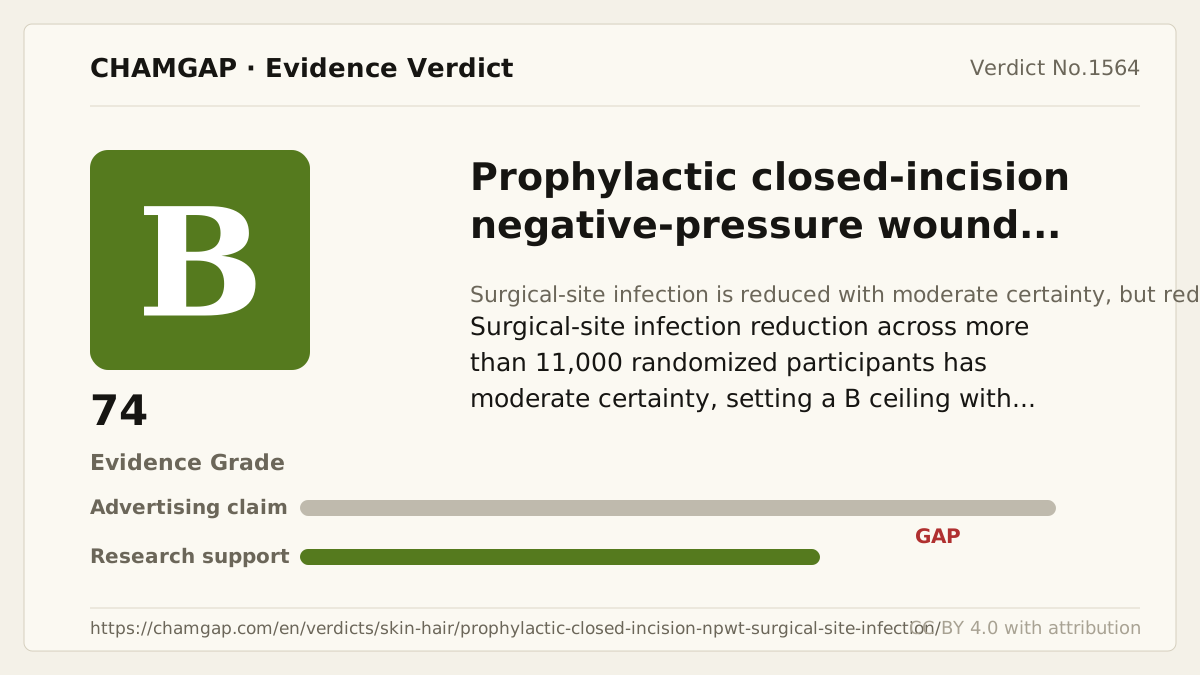
[Chamgap] Prophylactic closed-incision negative-pressure wound therapy x prevention of postoperative surgical-site infection — Evidence Grade B·74. 2 cited sources checked. Source: https://chamgap.com/en/verdicts/skin-hair/prophylactic-closed-incision-npwt-surgical-site-infection/ · CC BY 4.0CC BY 4.0 — free to use with attribution; do not distort grades, numbers, or verdict meaning.
What this document does and does not do
Chamgap is an information source. It reports what research has and has not confirmed; it does not tell readers what to take or buy. That decision belongs to readers and, when needed, medical or legal professionals. This verdict reflects literature available up to the search date and may change as new research appears. Nothing here is medical advice.