
Prophylactic systemic antibiotics,
does it really help with Prevention of infection in uncomplicated hand lacerations without bone, tendon, nerve, or major-vessel injury?
research showsThe grade is D. Roberts randomized 368 patients and found an overall infection rate of 9.8% without a significant difference among three groups. Grossman followed all 265 patients to suture removal or satisfactory healing and observed only three infections (1.1%), with no difference among oral cephalexin, injected cefazolin, and placebo. Existing confidence intervals are extremely wide and do not exclude benefit, giving D with 30 points.
ads claimAntibiotics can treat an established bacterial infection, but that does not prove added prevention after meticulous cleaning and suturing of a low-risk wound. The available randomized trials did not show that incremental preventive benefit.
Useful facts when choosing a product
- The trials covered cleaned and sutured simple hand lacerations and excluded bone, tendon, nerve, and major-vessel injury.
- Grossman compared oral cephalexin 250 mg every six hours for six days or one 1-g intramuscular cefazolin dose with placebo injection.
- Roberts compared three regimens with differing antibiotic type or route, limiting claims about one modern regimen.
- No duplicate ingredient-outcome verdict or reuse of either DOI and the confirmed PMID was found in the existing list.
Chamgap Semantic Classification Code
Candidate index · review held
P.prophylactic-systemic-antibiotics.UNK.infection-in-uncomplicated-hand-lacerations-without-bone-tendon-nerve-or-major-vessel-injury.prevent.placeboProcedures, devices and tests > Prophylactic systemic antibiotics > Unknown > infection in uncomplicated hand lacerations without bone, tendon, nerve, or major-vessel injury > Occurrence-prevention claim > Placebo
An automated migration candidate, not an issued permanent code; exact claim scope remains under review. This machine-generated migration candidate helps retrieval but is not a permanent assignment. The original verdict ID and URL remain authoritative.
What the research actually shows
Roberts randomized 368 participants, but arm-specific infections, allocation concealment, and assessor masking were not verified in the accessible report. Grossman was a prospective randomized three-arm study and followed all 265 participants, but allocation-sequence concealment and masking of infection assessors were likewise not verified. Neither trial was prospectively registered, and primary-paper funding statements were not available. Because infection required clinical judgment, these two reporting omissions were counted as two avoidable limitations. The older trials pointed in the same null direction, but independent funding and directly comparable arm-level precision were insufficiently documented for repeated-refutation credit.
Why this is classified as D (30)
Randomized trials measured a hard infection event but found no preventive benefit. Older reporting lacked allocation and masking detail, and sparse events left intervals compatible with benefit, so this is null evidence rather than definitive refutation, giving D with 30 points.
Counterpoint. This verdict is limited to low-risk simple hand lacerations after appropriate cleaning and suturing. Treatment of established infection and prophylaxis for bites, crush injury, open fracture, or other high-risk trauma are outside scope.
Rejudgment record. Cross-check applied — We distinguished randomized enrollment from actual follow-up, verified primary infection results, and cross-checked trial-level RRs and confidence intervals in the critical appraisal to separate null findings from imprecision.
| Endpoint | H | Hard endpoint - actual events such as death |
| Replication | R1 | Single confirmatory trial |
| Independence | I1 | Mixed funding sources |
| Effect size | E0 | Null |
| Precision | C0 | The confidence interval leaves room for benefit |
Stored derived and displayed grades match; this is not a current recalculation or validity check (D).
Sub-claim grades by effect
This ingredient is marketed for several effects. A single overall grade blends strong and weak claims together, so each effect is graded separately here. The overall grade reflects the strongest disconfirming or core claim.
| Effect (sub-claim) | Grade | Basis |
|---|---|---|
| Prophylactic systemic antibiotics reduce infection after sutured simple hand laceration. | D | Older randomized trials found no significant reduction, but confidence intervals did not exclude benefit. |
| Prophylactic antibiotics are unnecessary for high-risk hand wounds such as bites, crush injuries, or open fractures. | ? | The pivotal trials excluded these injuries and do not answer that question. |
Cross-check — AI research and Codex final gate
Evidence Table
| Study | Design | Sample | Funding | Endpoint | Result | Weight |
|---|---|---|---|---|---|---|
| Roberts and Teddy, British Journal of Surgery 1977 | Prospective three-arm randomized trial of sutured hand lacerations | 368 randomized and assessed at seven days | The primary-paper funding statement was not verified in the accessible record | Infection and imperfect healing at seven days | Overall infection rate 9.8%; no significant infection difference among three groups. Arm-specific infection counts and CIs were not verified in the accessible record | Largest older trial, but arm-level precision was unavailable |
| Grossman et al., JAMA 1981 | Prospective three-arm randomized trial of oral and injected antibiotics versus placebo | 265 randomized and all 265 followed | The primary-paper funding statement was not verified in the accessible record | Clinical infection through suture removal or satisfactory healing | Three infections among 265 (1.1%); no significant difference among oral cephalexin, intramuscular cefazolin, and placebo | Complete follow-up but only three infection events |
Receipt — 3 References
Of 3 cited sources, 2 had limited original-page access (blocked or summary-only) and were verified via index/summary, marked partial; the rest were verified at the original page. As of 2026-08-14.
Final verification and publication gate: Codex · Evidence date: 2026-08-14 · Corrections: none
Cite this verdict
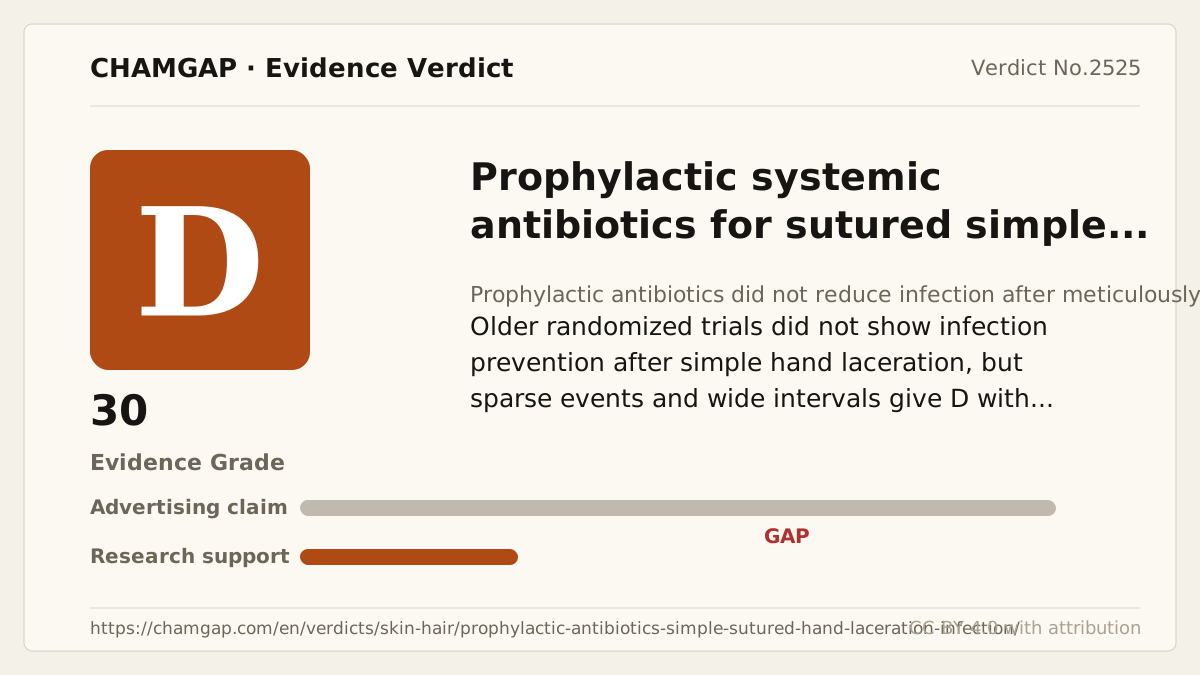
[Chamgap] Prophylactic systemic antibiotics x infection prevention after simple hand laceration — Evidence Grade D·30. 3 cited sources checked. Source: https://chamgap.com/en/verdicts/skin-hair/prophylactic-antibiotics-simple-sutured-hand-laceration-infection/ · CC BY 4.0CC BY 4.0 — free to use with attribution; do not distort grades, numbers, or verdict meaning.
What this document does and does not do
Chamgap is an information source. It reports what research has and has not confirmed; it does not tell readers what to take or buy. That decision belongs to readers and, when needed, medical or legal professionals. This verdict reflects literature available up to the search date and may change as new research appears. Nothing here is medical advice.