
Oral vitamin E 400 IU,
does it really help with Reduced pruritus and SCORAD severity in mild-to-moderate atopic dermatitis?
research showsOral vitamin E is rated D despite small positive trials for pruritus and SCORAD in mild-to-moderate atopic dermatitis. A four-month double-blind trial randomized 70 participants to 400 IU/day or placebo and reported greater improvement in pruritus and SCORAD, but both groups also used emollients, hydrocortisone, and hydroxyzine, and follow-up retention declined. A separate four-arm trial of 45 participants found a signal with 600 IU vitamin E, and a vitamin-specific meta-analysis calculated a SCORAD reduction, but the evidence effectively rests on two very small trials. No large independent replication or guideline endorsement exists for the 400-IU regimen, yielding D with 35 points.
ads claimClaims may connect antioxidant activity to restored skin barrier, controlled inflammation, and prevention of long-term relapse. Direct trials concern short-term pruritus and SCORAD as adjunctive treatment, not durable relapse prevention or replacement of standard care.
Useful facts when choosing a product
- The assessed regimen is oral alpha-tocopherol 400 IU/day, an exposure distinct from ordinary dietary vitamin E intake.
- In the 400-IU trial, both groups also used emollient, glycerin soap, hydroxyzine, and 1% hydrocortisone.
- Vitamin E is fat soluble, so prolonged high-dose use can produce sustained systemic exposure.
- High-dose vitamin E can increase bleeding risk and can interact with anticoagulants such as warfarin and with antiplatelet medicines.
Chamgap Semantic Classification Code
Candidate index · review held
UNK.vitamin-e.oral.pruritus-and-scorad-severity-in-mild-to-moderate-atopic-dermatitis.reduce.placeboUnknown > Vitamin E > Oral > pruritus and SCORAD severity in mild-to-moderate atopic dermatitis > Reduction claim > Placebo
An automated migration candidate, not an issued permanent code; exact claim scope remains under review. This machine-generated migration candidate helps retrieval but is not a permanent assignment. The original verdict ID and URL remain authoritative.
What the research actually shows
Jaffary et al. randomized 70 participants with mild-to-moderate atopic dermatitis to 400 IU/day vitamin E or placebo for four months. Changes in pruritus, -1.5 versus 0.218, and SCORAD, -11.12 versus -3.89, favored vitamin E; sleeplessness was not significant and relapse three months after treatment did not differ. Javanbakht et al. assigned 45 participants to placebo, vitamin D, vitamin E 600 IU, or both and reported SCORAD improvement, but each arm contained only 11 or 12 participants. Zhu 2019 estimated a vitamin E SCORAD or EASI mean difference of -5.72, with a borderline 95% confidence interval from -11.41 to -0.03 and very few contributing trials.
Why this is classified as D (35)
Positive signals from a 70-person 400-IU trial, a 45-person four-arm 600-IU trial, and a vitamin-specific meta-analysis were accepted. The effective vitamin E sample remains small, with co-treatment, attrition, dose differences, no large independent replication, and no guideline endorsement; boundary rule ② therefore yields D with 35 points.
Counterpoint. Short-term changes in pruritus and SCORAD were observed, but durable relapse, steroid sparing, infection, and quality-of-life benefits have not been independently established.
Rejudgment record. New verdict — Accepted positive pruritus and SCORAD signals from a 70-person 400-IU double-blind trial and a small four-arm 600-IU trial, but applied boundary rule ② because of co-treatment, small effective samples, dose differences, null long-term relapse, and absent large independent replication or guideline endorsement
Sub-claim grades by effect
This ingredient is marketed for several effects. A single overall grade blends strong and weak claims together, so each effect is graded separately here. The overall grade reflects the strongest disconfirming or core claim.
| Effect (sub-claim) | Grade | Basis |
|---|---|---|
| Reduced pruritus | D | A small 400-IU trial was positive, but no large independent replication exists. |
| Improved SCORAD severity | D | Two small dose-specific trials and a borderline pooled signal exist, but effective sample size and replication are limited. |
| Reduced relapse after treatment | D | Relapse three months after the 400-IU trial did not differ significantly from placebo. |
Cross-check — AI research and Codex final gate
Evidence Table
| Study | Design | Sample | Funding | Endpoint | Result | Weight |
|---|---|---|---|---|---|---|
| Jaffary F et al. 2015 | Randomized double-blind placebo-controlled trial | 70 participants with mild-to-moderate atopic dermatitis | Academic study at Isfahan University; limited funding detail | Pruritus, sleeplessness, lesion extent, SCORAD, and post-treatment relapse | Vitamin E 400 IU/day improved pruritus and SCORAD, while sleeplessness and post-treatment relapse did not differ significantly. | Key small direct trial |
| Javanbakht MH et al. 2011 | Randomized double-blind placebo-controlled four-arm trial | 45 total; 11 in the vitamin-E-only arm | Academic study at Tehran University | Change in SCORAD over 60 days | The 600-IU vitamin-E-only arm showed a SCORAD reduction signal, but each arm was very small. | Supportive small replication |
| Zhu Z et al. 2019 | Systematic review and meta-analysis of vitamin-supplement randomized trials | Ten studies with 456 participants; few trials contributed to vitamin E | Academic study; no external conflict reported in the article | SCORAD or EASI | The vitamin E mean difference was -5.72 (95% CI -11.41 to -0.03), based on very few trials. | Synthesis of a small evidence base |
Receipt — 3 References
All 3 cited sources were verified for existence at the original page (as of 2026-07-23).
Final verification and publication gate: Codex · Evidence date: 2026-07-23 · Corrections: none
Cite this verdict
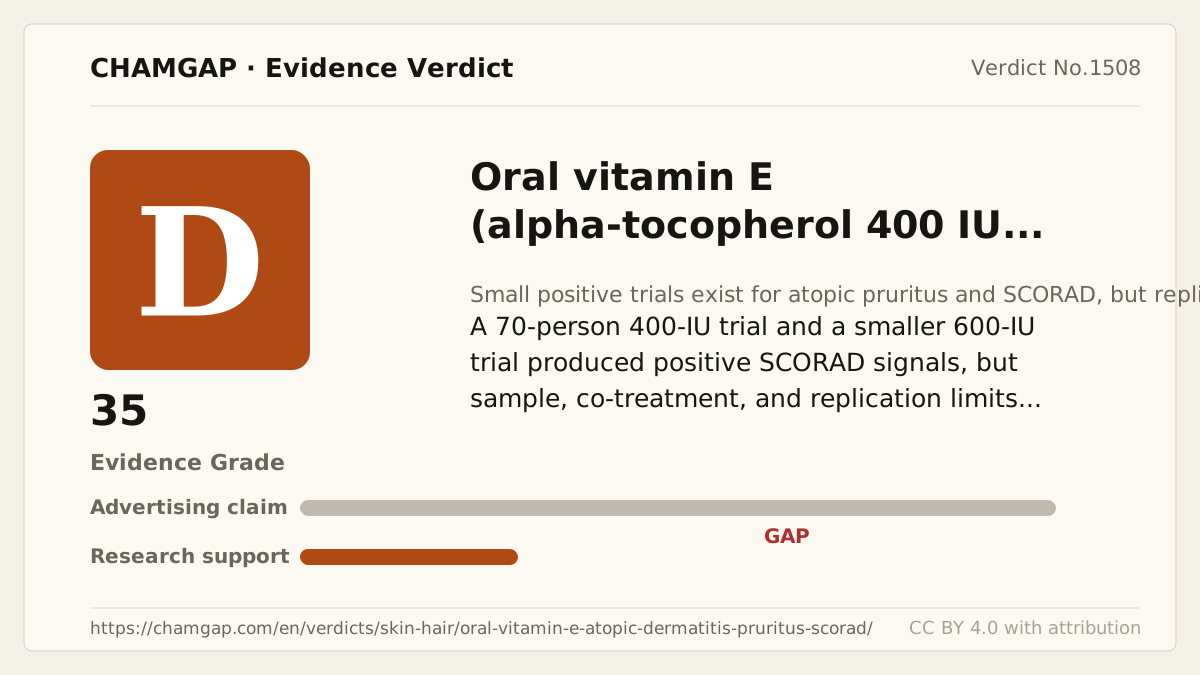
[Chamgap] Oral vitamin E 400 IU x reduced mild-to-moderate atopic dermatitis severity — Evidence Grade D·35. 3 cited sources checked. Source: https://chamgap.com/en/verdicts/skin-hair/oral-vitamin-e-atopic-dermatitis-pruritus-scorad/ · CC BY 4.0CC BY 4.0 — free to use with attribution; do not distort grades, numbers, or verdict meaning.
What this document does and does not do
Chamgap is an information source. It reports what research has and has not confirmed; it does not tell readers what to take or buy. That decision belongs to readers and, when needed, medical or legal professionals. This verdict reflects literature available up to the search date and may change as new research appears. Nothing here is medical advice.