
Nivolumab,
does it really help with Prevention of recurrence and distant metastasis as adjuvant therapy for completely resected stage III to IV melanoma?
research showsNivolumab is rated B because adjuvant treatment reduced recurrence and distant metastasis versus ipilimumab after complete resection of high-risk stage III to IV melanoma. Among 906 participants in CheckMate 238, one-year recurrence-free survival was 70.5% versus 60.8%, with a hazard ratio for recurrence or death of 0.65. At five years, recurrence-free survival remained 50% versus 39%, with a hazard ratio of 0.72, and distant metastasis-free survival was 58% versus 51%, with a hazard ratio of 0.79. This was a single sponsor-funded active-comparator trial, and five-year overall survival was 76% versus 72%, with a nonsignificant hazard ratio of 0.86. B with 73 points fits a recurrence endpoint with unconfirmed overall-survival superiority.
ads claimPromotion can turn prevention of recurrence into a promise that recurrence is eliminated or survival is definitively prolonged. Even at five years, half of the nivolumab group had experienced a recurrence or death event, and overall-survival superiority versus ipilimumab was not statistically established.
Useful facts when choosing a product
- Nivolumab is a prescription intravenous immunotherapy used after complete resection of melanoma at high risk of recurrence; common adult schedules are 240 mg every two weeks or 480 mg every four weeks for up to one year.
- The direct CheckMate 238 population had completely resected stage IIIB, IIIC, or IV disease under the seventh AJCC edition, so the same absolute benefit should not be assigned to every stage III risk group.
- Immune-mediated pneumonitis, colitis, hepatitis, nephritis, skin reactions, and thyroid, pituitary, adrenal, pancreatic, or other endocrine disorders can begin during treatment or after it ends.
- New shortness of breath, persistent diarrhea, jaundice, severe fatigue, headache or vision change, or endocrine symptoms require prompt assessment; severity may require withholding or stopping treatment and corticosteroids or other immunosuppression.
Chamgap Semantic Classification Code
Candidate index · review held
M.nivolumab.intravenous.recurrence-and-distant-metastasis-as-adjuvant-therapy-for-completely-resected-stage-iii-to-iv-melanoma.prevent.activeMedicinal interventions > Nivolumab > Intravenous > recurrence and distant metastasis as adjuvant therapy for completely resected stage III to IV melanoma > Occurrence-prevention claim > Active comparator
An automated migration candidate, not an issued permanent code; exact claim scope remains under review. This machine-generated migration candidate helps retrieval but is not a permanent assignment. The original verdict ID and URL remain authoritative.
What the research actually shows
The 2017 CheckMate 238 trial by Weber and colleagues randomized 906 participants with completely resected stage IIIB, IIIC, or IV melanoma to nivolumab 3 mg/kg every two weeks or an ipilimumab 10 mg/kg regimen for up to one year. One-year recurrence-free survival was 70.5% versus 60.8%, and grade 3 or 4 treatment-related adverse events occurred in 14.4% with nivolumab versus 45.9% with ipilimumab. In the 2023 five-year analysis of the same trial by Larkin and colleagues, recurrence-free survival was 50% versus 39% and distant metastasis-free survival was 58% versus 51%. Overall survival was 76% versus 72%, with a hazard ratio of 0.86 (95% CI 0.66 to 1.12), so superiority was not established. The two reports are early and long-term analyses of the same Bristol Myers Squibb and Ono-sponsored trial, not two independent trials.
Why this is classified as B (73)
The recurrence-free-survival hazard ratio of 0.65 in CheckMate 238 remained favorable at 0.72 at five years, and distant metastasis-free survival also favored nivolumab with a hazard ratio of 0.79. This is direct randomized evidence for durable recurrence and metastasis prevention. Because it remains one sponsor-funded active-comparator trial and overall-survival superiority was nonsignificant at a hazard ratio of 0.86, the recurrence-endpoint and unconfirmed-OS rule supports B with 73 points.
Counterpoint. Nivolumab caused fewer severe adverse events than ipilimumab, but this does not make immune toxicity trivial. Recurrence risk, BRAF-directed alternatives, autoimmune comorbidity, and potentially lasting endocrine injury all require individualized consideration.
Rejudgment record. Cross-check applied — Applied B because CheckMate 238 demonstrated durable five-year recurrence-free and distant metastasis-free survival benefits on direct disease outcomes, while the evidence remains one sponsor-funded active-comparator trial and overall-survival superiority has not been established
Sub-claim grades by effect
This ingredient is marketed for several effects. A single overall grade blends strong and weak claims together, so each effect is graded separately here. The overall grade reflects the strongest disconfirming or core claim.
| Effect (sub-claim) | Grade | Basis |
|---|---|---|
| Prolonged recurrence-free survival after complete resection of high-risk stage III to IV melanoma | B | Five-year recurrence-free survival remained 50% versus 39%, with a hazard ratio of 0.72, but evidence comes from one active-controlled trial. |
| Prevention of distant metastasis after complete resection of high-risk melanoma | B | Five-year distant metastasis-free survival was 58% versus 51%, with a hazard ratio of 0.79 favoring nivolumab. |
| Prolonged overall survival after complete resection of high-risk melanoma | D | Overall-survival hazard ratios were 0.86 at five years and 0.88 at nine years, neither statistically significant, so a mortality benefit remains unconfirmed. |
Cross-check — AI research and Codex final gate
Evidence Table
| Study | Design | Sample | Funding | Endpoint | Result | Weight |
|---|---|---|---|---|---|---|
| Weber J et al. 2017 CheckMate 238 | Multinational randomized double-blind active-controlled phase 3 trial | 906 participants with completely resected stage IIIB, IIIC, or IV melanoma | Sponsored by Bristol-Myers Squibb and Ono Pharmaceutical | Recurrence-free survival | Twelve-month recurrence-free survival was 70.5% versus 60.8%, with a hazard ratio for recurrence or death of 0.65 (97.56% CI 0.51 to 0.83). | Pivotal randomized recurrence-endpoint evidence |
| Larkin J et al. 2023 CheckMate 238 five-year analysis | Long-term analysis of the same randomized phase 3 trial | Original 906 randomized participants with a minimum follow-up of 62 months | Sponsored by Bristol Myers Squibb and Ono Pharmaceutical | Five-year recurrence-free, distant metastasis-free, and overall survival | Recurrence-free survival was 50% versus 39% (HR 0.72), distant metastasis-free survival 58% versus 51% (HR 0.79), and overall survival 76% versus 72% (HR 0.86; nonsignificant). | Durability and overall-survival limitation |
Receipt — 2 References
All 2 cited sources were verified for existence at the original page (as of 2026-07-24).
Final verification and publication gate: Codex · Evidence date: 2026-07-24 · Corrections: none
Cite this verdict
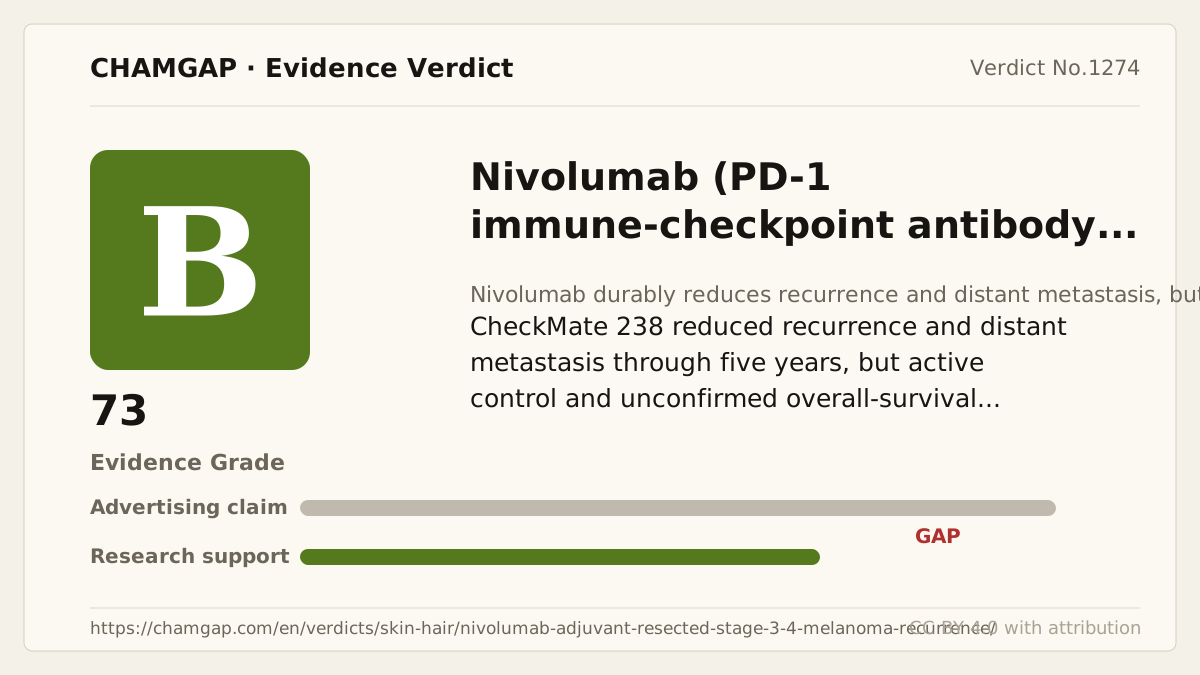
[Chamgap] Nivolumab x prevention of recurrence and distant metastasis after complete resection of stage III to IV melanoma — Evidence Grade B·73. 2 cited sources checked. Source: https://chamgap.com/en/verdicts/skin-hair/nivolumab-adjuvant-resected-stage-3-4-melanoma-recurrence/ · CC BY 4.0CC BY 4.0 — free to use with attribution; do not distort grades, numbers, or verdict meaning.
What this document does and does not do
Chamgap is an information source. It reports what research has and has not confirmed; it does not tell readers what to take or buy. That decision belongs to readers and, when needed, medical or legal professionals. This verdict reflects literature available up to the search date and may change as new research appears. Nothing here is medical advice.