
Low-glycemic-load diet,
does it really help with Reduction in acne lesions?
research showsThe grade is C with 50 points. Fifty-four males aged 15 to 25 were randomized, 27 per group; 43 completed, 23 versus 20, for 20.4% attrition. In the 12-week assessor-masked trial, total lesions changed by -23.5±3.9 SEM versus -12.0±3.5 (P=.03). After adjustment for BMI change, total lesions had P=.07 and inflammatory lesions P=.04, while weight changed by -2.9 versus +0.5 kg. The approximate d of 0.69 was back-calculated from the baseline-adjusted P value and completer counts, but intervention isolation failed.
ads claimLesions fell more and actual intake clearly separated. Because more than glycemic load changed, the result cannot be sold as the effect size of 'slower blood sugar rise' alone.
Useful facts when choosing a product
- During the trial, mean glycemic load was about 101.5 versus 174.3, a large real separation that does not support inadequate adherence.
- The intervention supplied 25% protein and 45% carbohydrate, so more than one dietary component differed from control.
- Although prescriptions were isocaloric, actual weight changed by -2.9 versus +0.5 kg, a difference of about 3.4 kg.
- Verdict 2009 is D with 34 points for a sunflower-seed food, and verdict 2057 is C with 54 points for skim-milk exposure; both interventions differ from this dietary pattern.
Chamgap Semantic Classification Code
Candidate index · review held
D.low-glycemic-load.dietary.acne-lesions.reduce.UNKDietary patterns and eating practices > Low-glycemic-load > Dietary regimen > acne lesions > Reduction claim > Unknown
An automated migration candidate, not an issued permanent code; exact claim scope remains under review. This machine-generated migration candidate helps retrieval but is not a permanent assignment. The original verdict ID and URL remain authoritative.
What the research actually shows
Smith randomized 54 participants, 27 per group, and 43 completed: 23 on low glycemic load and 20 on control, for 20.4% attrition. The intervention supplied 25% protein, 45% low-GI carbohydrate, and 30% fat; control emphasized carbohydrate-dense foods without mentioning GI. Mean glycemic load fell from about 174.7 to 101.5 in the intervention and from 181.5 to 174.3 in control. Food records, telephone interviews, and 24-hour urine urea-to-creatinine ratio supported adherence. Weight changed by -2.9 versus +0.5 kg; after adjustment for BMI change, total lesions had P=.07 and inflammatory lesions P=.04. Differential weight loss is central evidence that the intervention was not isolated. Meat and Livestock Australia funded the research.
Why this is classified as C (50)
Lesion reduction was of medium magnitude and intake separated, but 54 randomized with 43 completing and simultaneous differences in protein and weight loss give C with 50 points.
Counterpoint. Masked assessment and objective lesion counts are strengths. The result is closer to a compound diet-program effect than a glycemic-load-only effect.
Rejudgment record. Cross-check applied — Medium lesion reduction in a 12-week trial with genuine glycemic-load separation, limited by small size and simultaneous higher protein and differential weight loss
| Endpoint | P | Symptom or function itself is the target - including patient reports and performance tests |
| Replication | R1 | Single confirmatory trial |
| Independence | I1 | Mixed funding sources |
| Effect size | E+ | Meets the clinically important threshold |
Stored derived and displayed grades match; this is not a current recalculation or validity check (C).
Sub-claim grades by effect
This ingredient is marketed for several effects. A single overall grade blends strong and weak claims together, so each effect is graded separately here. The overall grade reflects the strongest disconfirming or core claim.
| Effect (sub-claim) | Grade | Basis |
|---|---|---|
| A low-glycemic-load, higher-protein compound diet reduces lesions in young males | C | The P-value-derived approximate standardized total-lesion reduction was 0.69, but evidence came from one small trial. |
| Independent lesion effect of lowering glycemic load alone | C | Protein proportion and body weight changed simultaneously, preventing isolation. |
Cross-check — AI research and Codex final gate
Evidence Table
| Study | Design | Sample | Funding | Endpoint | Result | Weight |
|---|---|---|---|---|---|---|
| Smith RN et al. 2007 | Assessor-masked 12-week randomized parallel dietary trial | 54 randomized (27 per group); 43 completed (23 versus 20); 20.4% attrition | Funded by Meat and Livestock Australia | Change in total and inflammatory acne lesion counts | Total lesions -23.5±3.9 SEM versus -12.0±3.5, P=.03; after BMI-change adjustment, total lesions P=.07 and inflammatory lesions P=.04; approximate d=0.69 back-calculated from P and completer counts | Positive clinical lesion primary outcome; compound diet and differential weight loss |
Receipt — 2 References
All 2 cited sources were verified for existence at the original page (as of 2026-08-04).
Final verification and publication gate: Codex · Evidence date: 2026-08-04 · Corrections: none
Cite this verdict
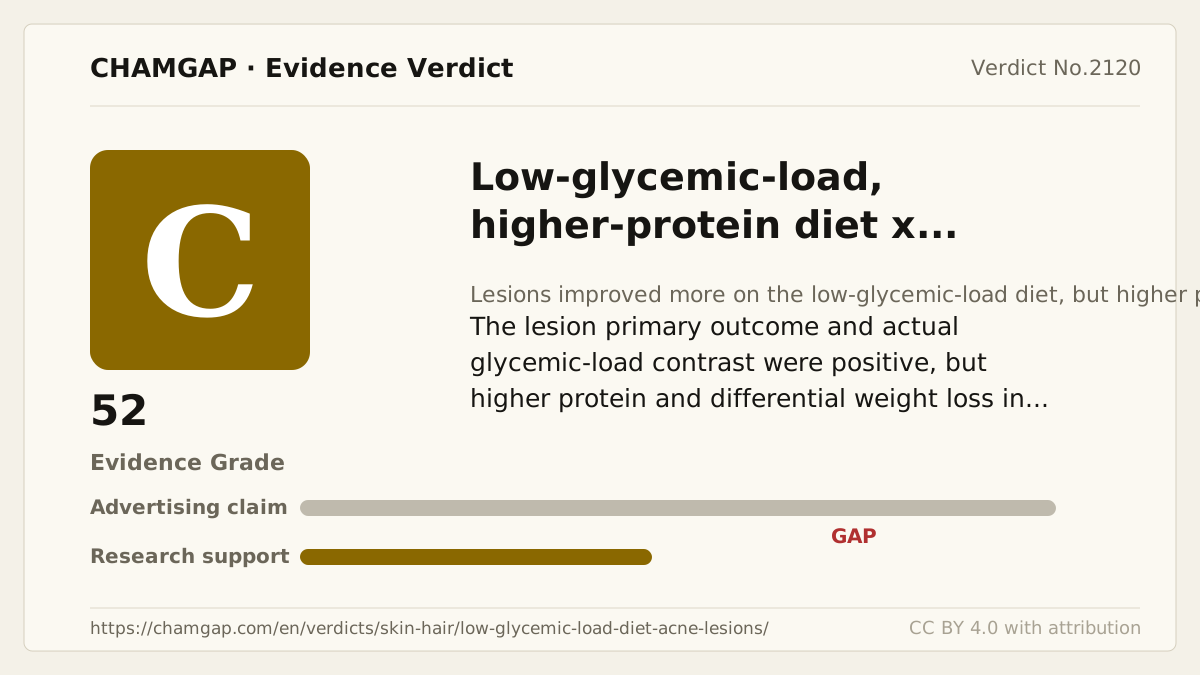
[Chamgap] Low-glycemic-load diet x reduced acne lesions — Evidence Grade C·50. 2 cited sources checked. Source: https://chamgap.com/en/verdicts/skin-hair/low-glycemic-load-diet-acne-lesions/ · CC BY 4.0CC BY 4.0 — free to use with attribution; do not distort grades, numbers, or verdict meaning.
What this document does and does not do
Chamgap is an information source. It reports what research has and has not confirmed; it does not tell readers what to take or buy. That decision belongs to readers and, when needed, medical or legal professionals. This verdict reflects literature available up to the search date and may change as new research appears. Nothing here is medical advice.