
Indoor tanning-device use,
does it really help with Higher melanoma incidence?
research showsThe grade is B. A prospective cohort followed 141,045 Norwegian women for an average of 13.7 years and documented 861 melanomas. The highest cumulative-use group had 32% higher incidence than never-users, and first use before age 30 was associated with 31% higher incidence. Adjustment included sun behavior and phenotype, but observational data cannot determine each individual's exact causal risk.
ads claimThe endpoint here is melanoma incidence, not mortality. The grade does not rest on an IARC classification label; it rests on the underlying prospective human incidence study.
Useful facts when choosing a product
- The cohort included 141,045 women followed for an average of 13.7 years and 1,930,583 person-years.
- Cancer-registry follow-up identified 861 incident melanomas.
- The highest cumulative-use tertile and first use before age 30 were each associated with higher incidence than never-use.
- Models adjusted for sunburn, sunbathing, hair color, skin color, and residence.
Chamgap Semantic Classification Code
Candidate index · review held
P.indoor-tanning-device-use.device.higher-melanoma-incidence.increase.UNKProcedures, devices and tests > Indoor tanning-device use > Device delivered > Higher melanoma incidence > Increase claim > Unknown
An automated migration candidate, not an issued permanent code; exact claim scope remains under review. This machine-generated migration candidate helps retrieval but is not a permanent assignment. The original verdict ID and URL remain authoritative.
What the research actually shows
Ghiasvand and colleagues followed 141,045 women in the Norwegian Women and Cancer study from 1991 through 2012. Questionnaires repeatedly collected indoor-tanning sessions and age at first use, while a cancer registry identified incident melanoma. Models considered attained age, birth cohort and residence, hair color, skin color, cumulative sunburns, and sunbathing. Direct adjustment for outdoor ultraviolet behavior is a strength, although residual self-report error remains. The exact original funding wording could not be confirmed. Zhang 2012 and Nielsen 2012 share no authors with the cited Ghiasvand team. They are not counted as direct replications because the key estimates and exposure definitions differ and Nielsen's funding wording could not be confirmed. None of the three studies provided exposure-group-specific absolute melanoma incidence.
Why this is classified as B (76)
Large prospective enrollment, repeated exposure assessment, a registry endpoint, and adjustment for sun and phenotype support concordant cumulative-use and initiation findings. The decisive evidence remains one observational cohort, giving B with 76 points.
Counterpoint. The association persisted after adjustment, but tanning was not randomized. Exact individual risk can vary with phenotype, device, and outdoor ultraviolet exposure.
Rejudgment record. Cross-check applied — Direct verification of cohort size, follow-up, events, initiation age, cumulative use, and sunlight adjustment
| Endpoint | H | Hard endpoint - actual events such as death |
| Replication | R1 | Single confirmatory trial |
| Independence | I2 | Decisive evidence is publicly or non-profit funded |
| Effect size | E+ | Meets the clinically important threshold |
Stored derived and displayed grades match; this is not a current recalculation or validity check (B).
Sub-claim grades by effect
This ingredient is marketed for several effects. A single overall grade blends strong and weak claims together, so each effect is graded separately here. The overall grade reflects the strongest disconfirming or core claim.
| Effect (sub-claim) | Grade | Basis |
|---|---|---|
| Cumulative indoor tanning and melanoma incidence | B | The highest tertile versus never-use had RR 1.32, 95% CI 1.08-1.63. |
| First use before age 30 and melanoma incidence | B | Versus never-use, RR was 1.31, 95% CI 1.07-1.59. |
| Indoor tanning and melanoma mortality | ? | This study assessed incidence, not mortality. |
Cross-check — AI research and Codex final gate
Evidence Table
| Study | Design | Sample | Funding | Endpoint | Result | Weight |
|---|---|---|---|---|---|---|
| Ghiasvand et al. 2017 NOWAC cohort | Prospective population cohort | 141,045 participants, mean 13.7 years, 1,930,583 person-years, 861 melanomas | The exact original funding wording could not be confirmed | Incident melanoma | Highest cumulative-session tertile RR 1.32 (1.08-1.63); first use before age 30 RR 1.31 (1.07-1.59) | Large prospective hard endpoint with sun-behavior and phenotype adjustment |
Receipt — 3 References
All 3 cited sources were verified for existence at the original page (as of 2026-08-05).
Final verification and publication gate: Codex · Evidence date: 2026-08-05 · Corrections: none
Cite this verdict
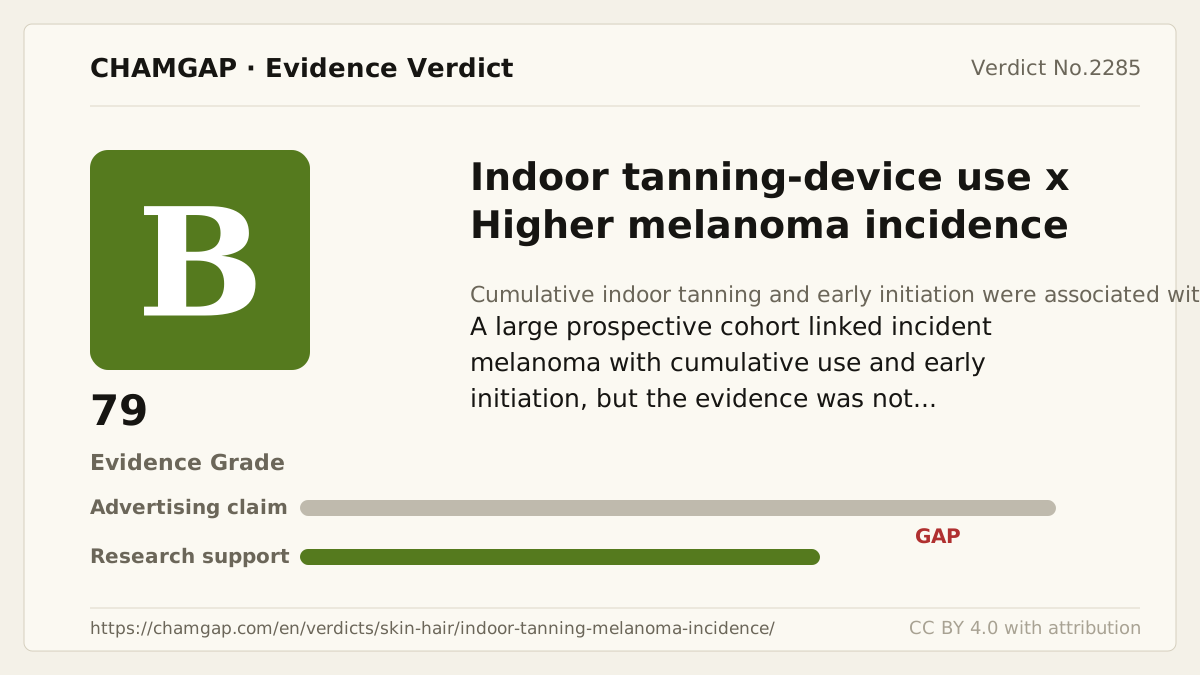
[Chamgap] Indoor tanning-device use x melanoma — Evidence Grade B·76. 3 cited sources checked. Source: https://chamgap.com/en/verdicts/skin-hair/indoor-tanning-melanoma-incidence/ · CC BY 4.0CC BY 4.0 — free to use with attribution; do not distort grades, numbers, or verdict meaning.
What this document does and does not do
Chamgap is an information source. It reports what research has and has not confirmed; it does not tell readers what to take or buy. That decision belongs to readers and, when needed, medical or legal professionals. This verdict reflects literature available up to the search date and may change as new research appears. Nothing here is medical advice.